O. hystera
was first described from Imathia (Greece) by Kreutz
and Peter in 1985 and is a member of the
widespread and increasingly confusing O. mammosa group
of Ophrys.
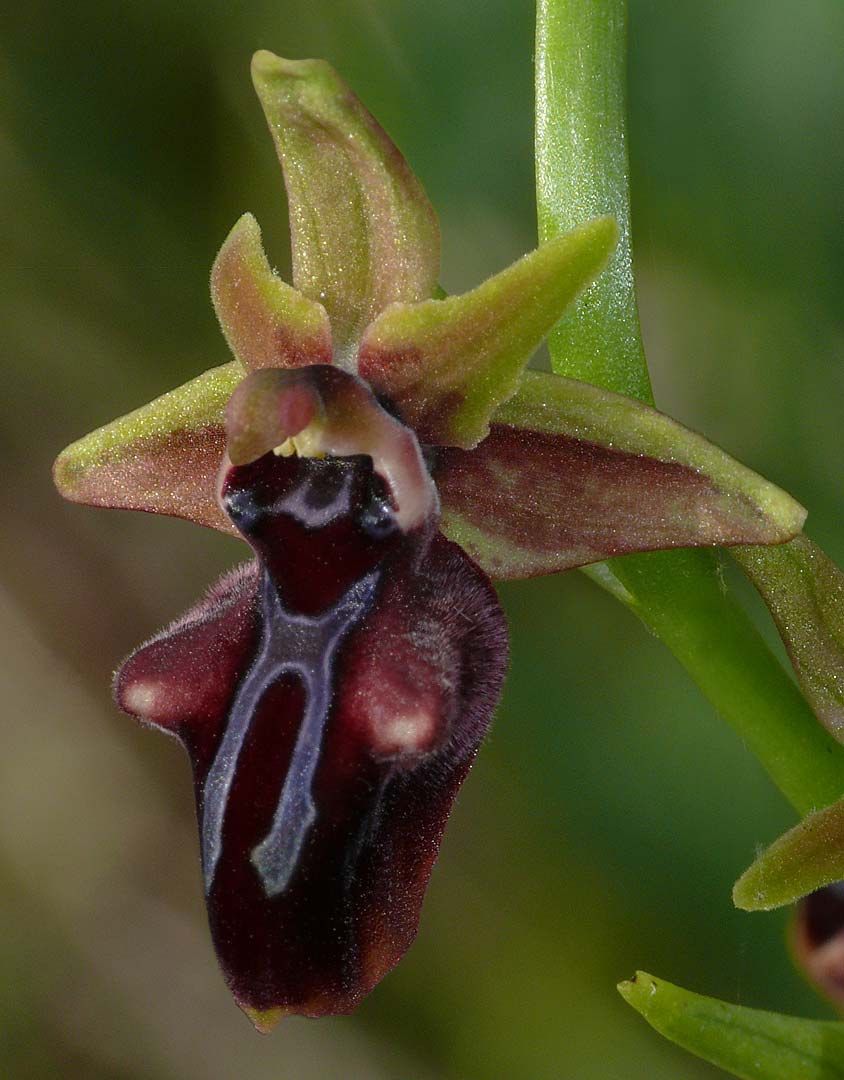
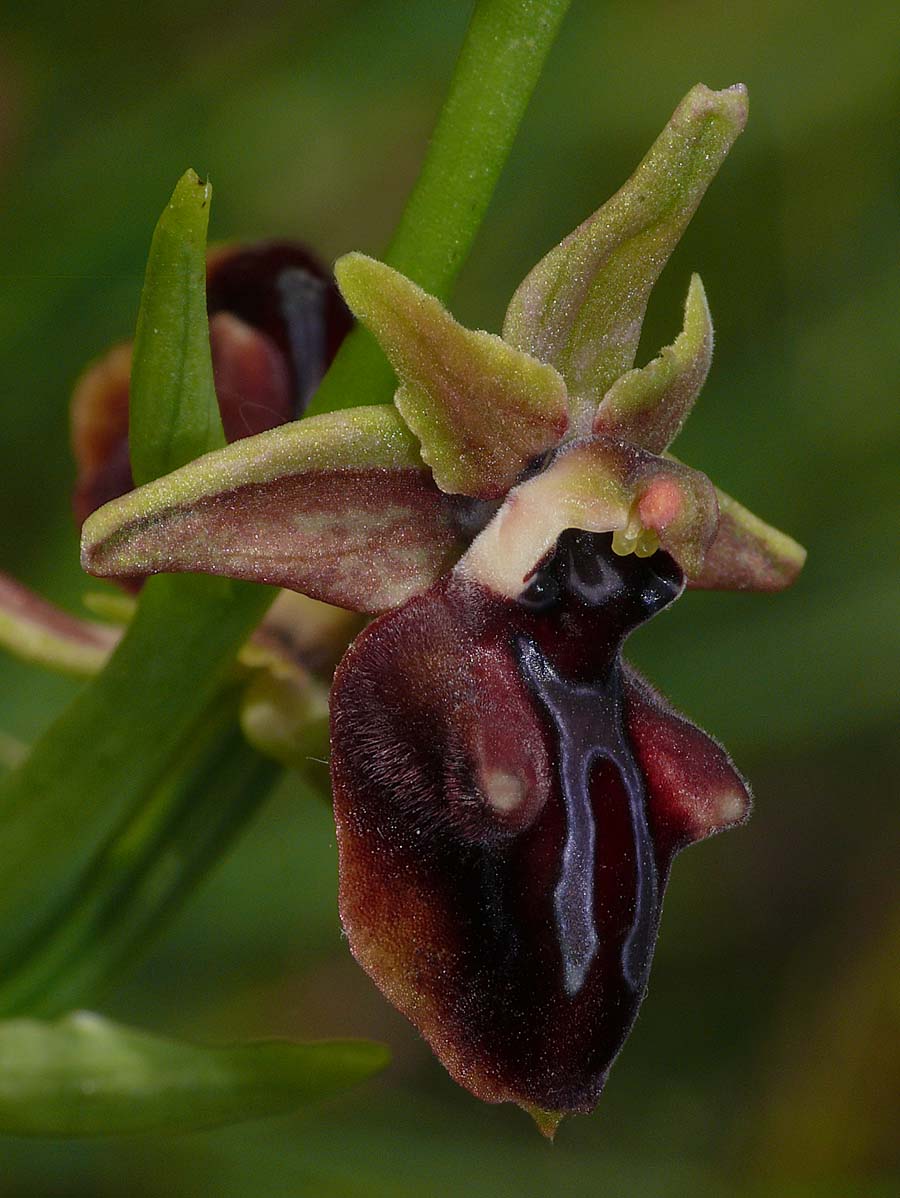
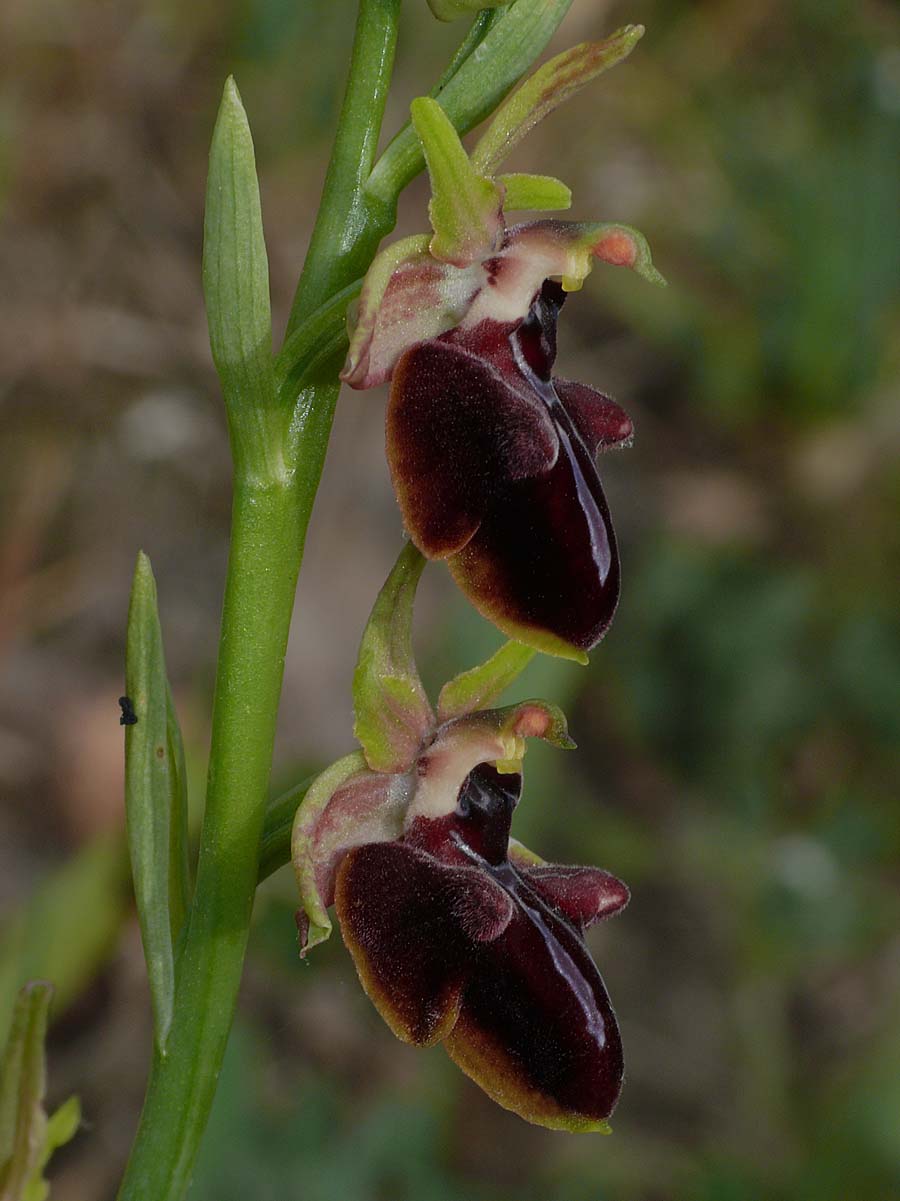
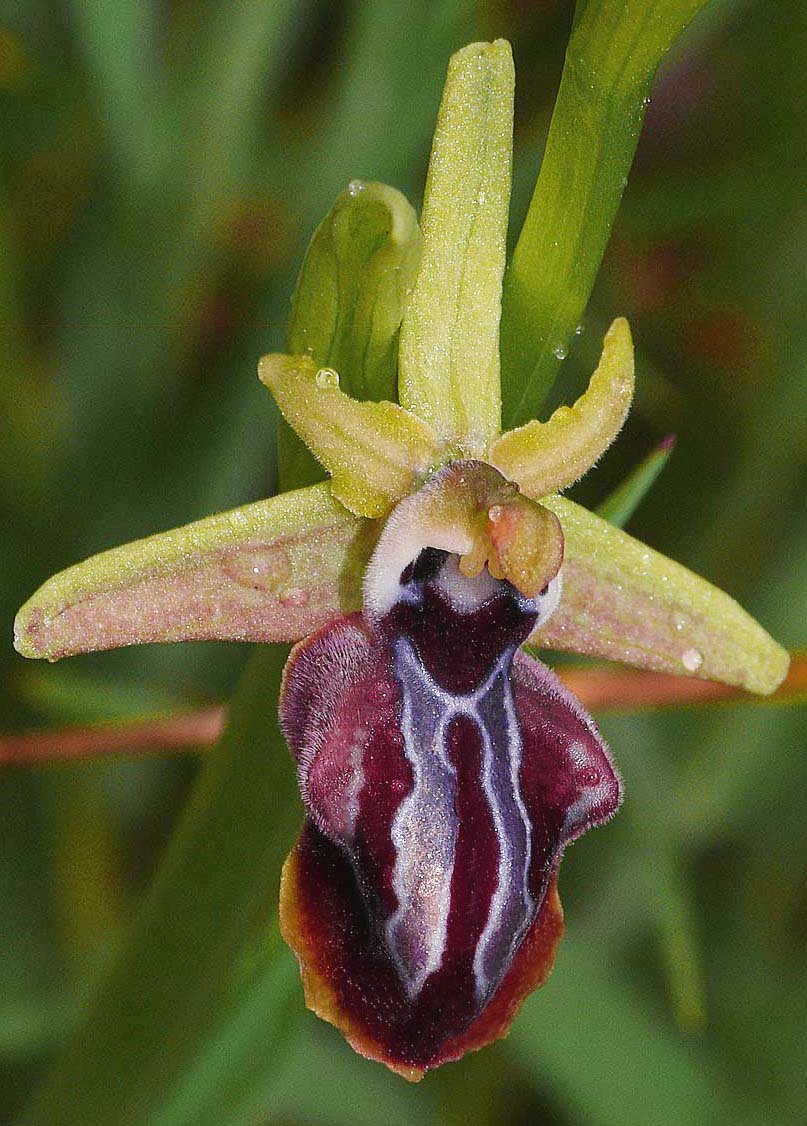
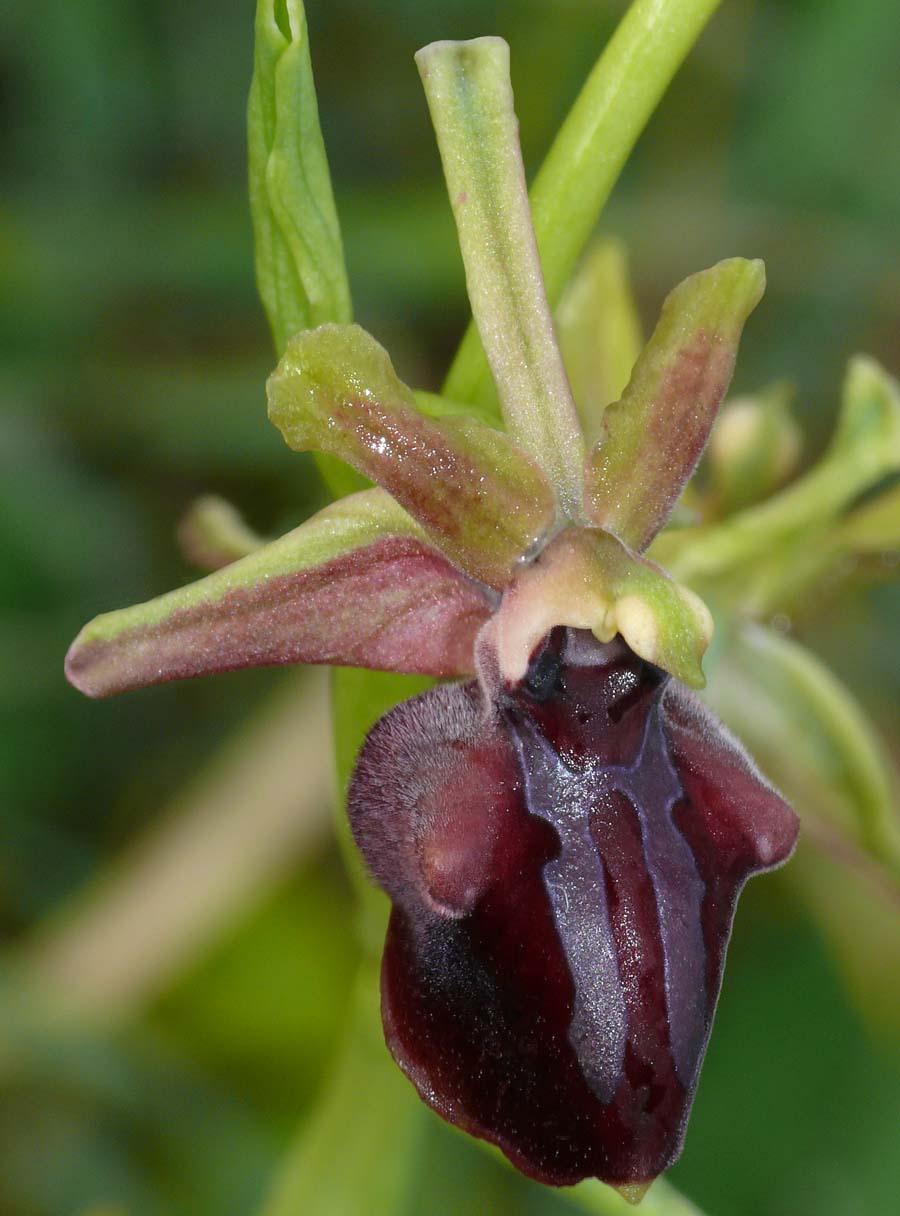
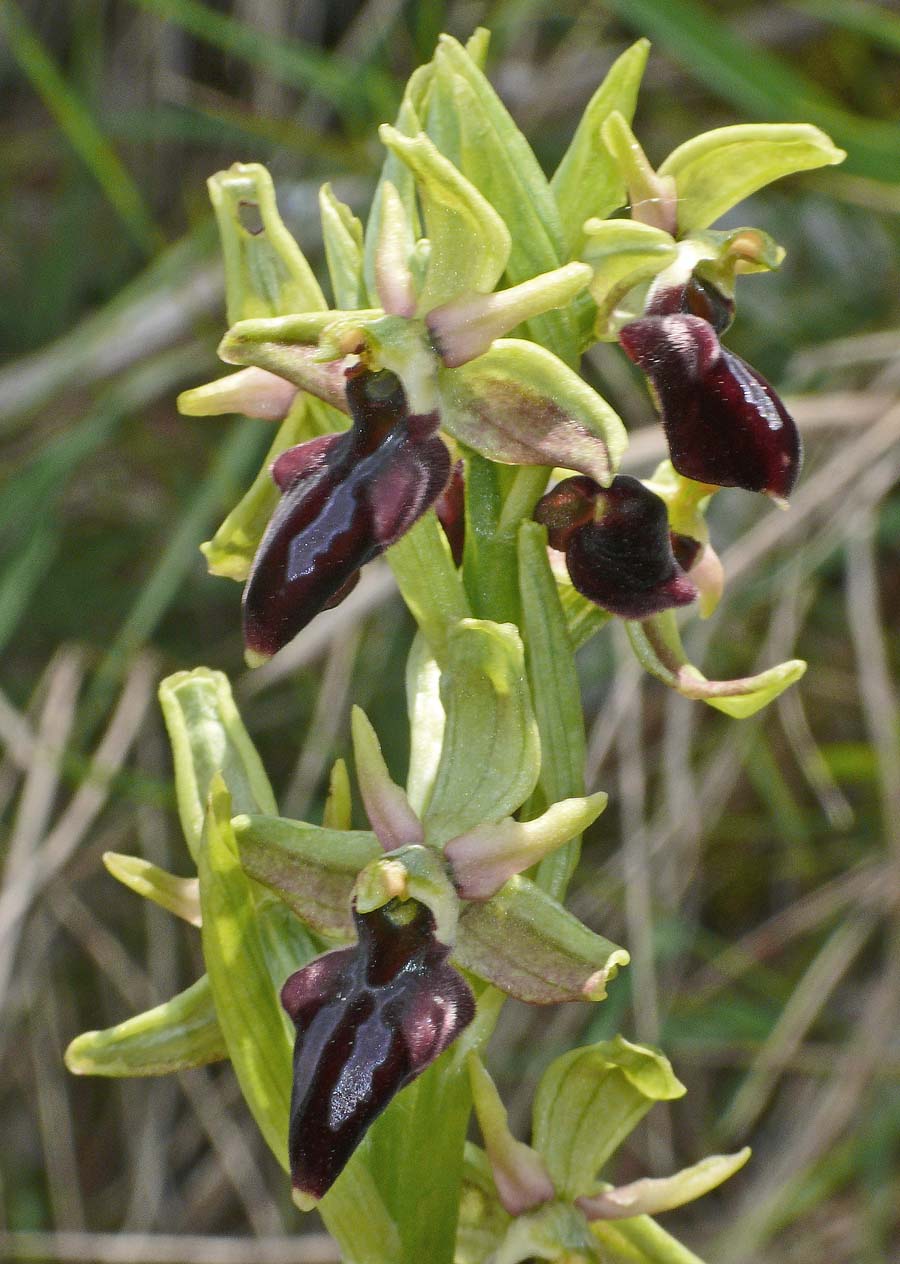
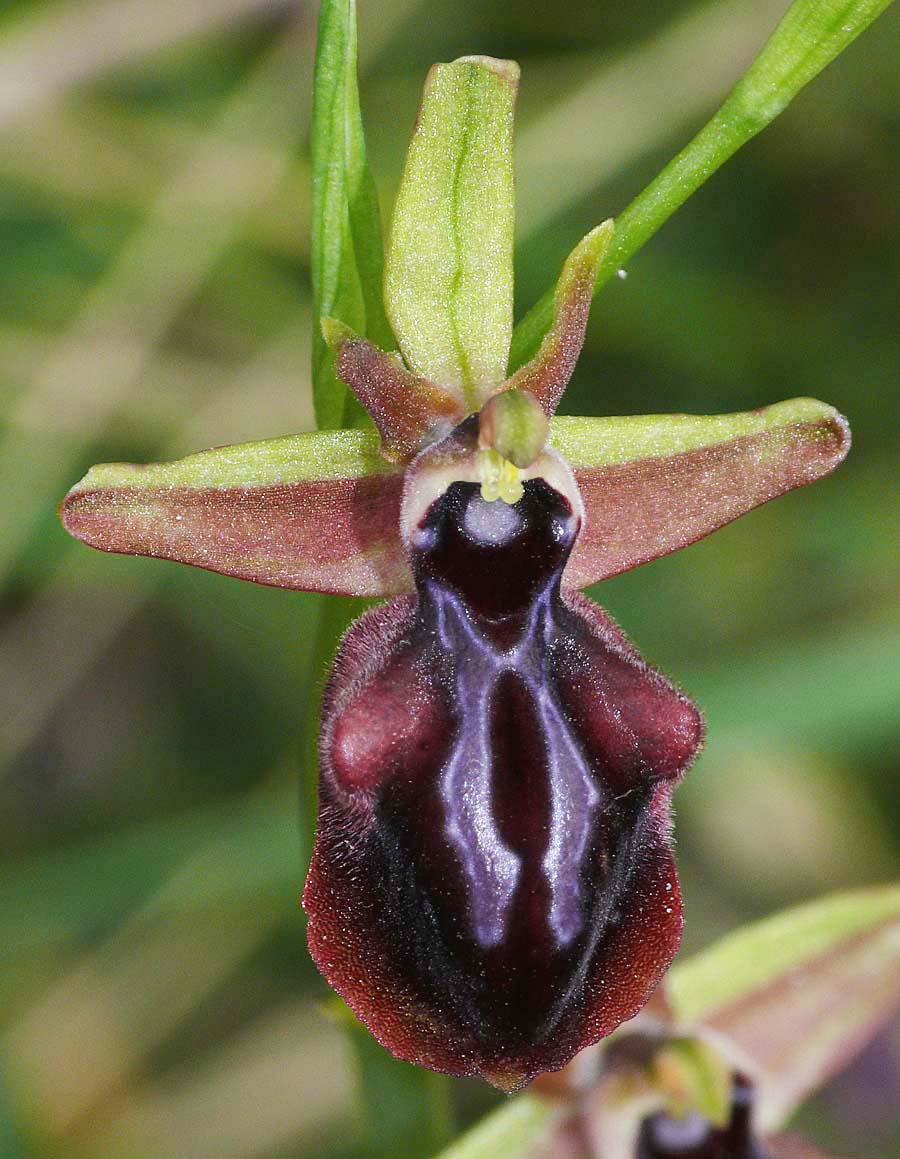
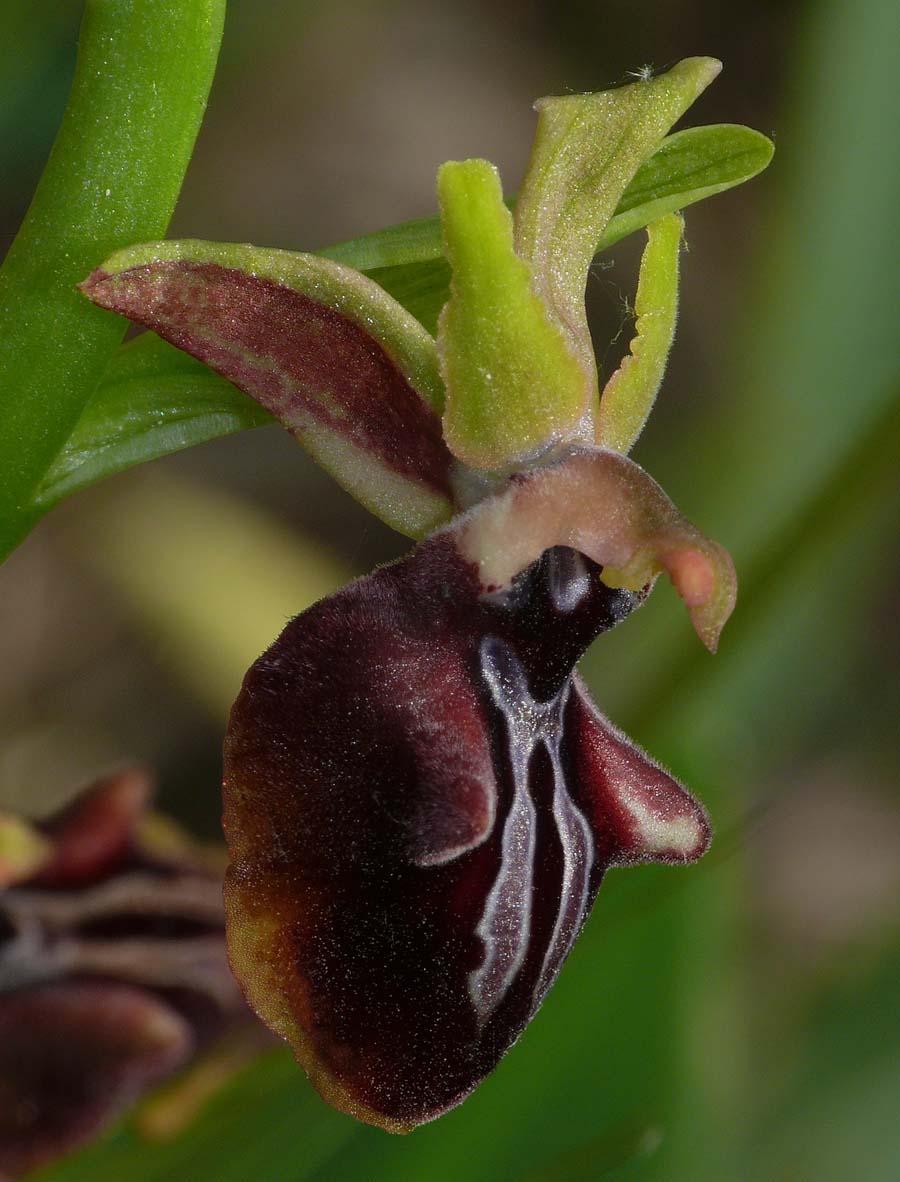
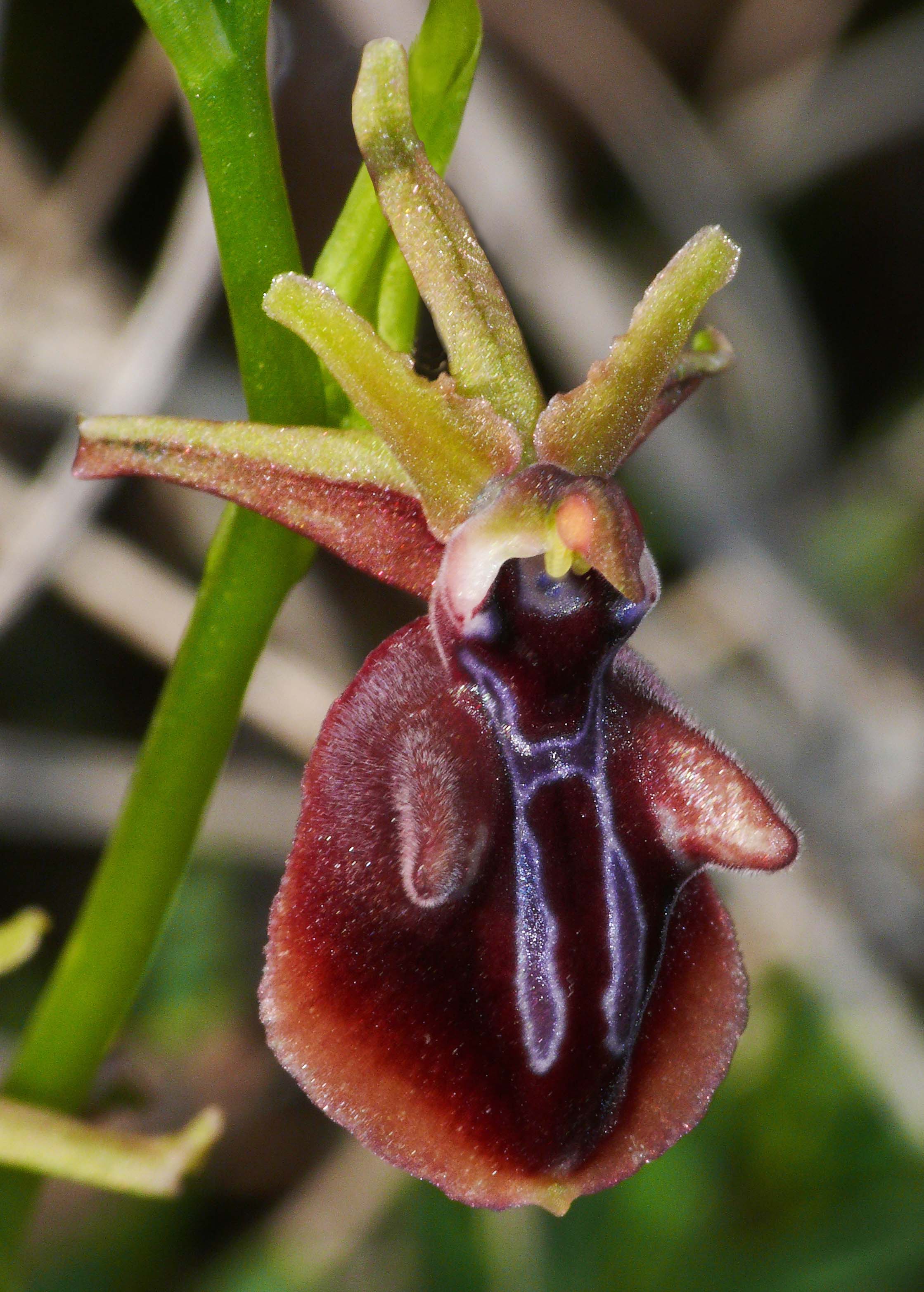
This species is very similar to O. mammosa but although sharing many morphological characteristics there are key differences. The first of these being the size of the plant, in which O. hystera significantly exceeds that of O. mammosa in all its parts. O. hystera is a robust, often tall plant which can carry up to ten large flowers in a loose inflorescence. The colouration of these flowers can be significant, with O. hystera normally being less drab and often brightly marked with a prominent yellow/orange marginal band.
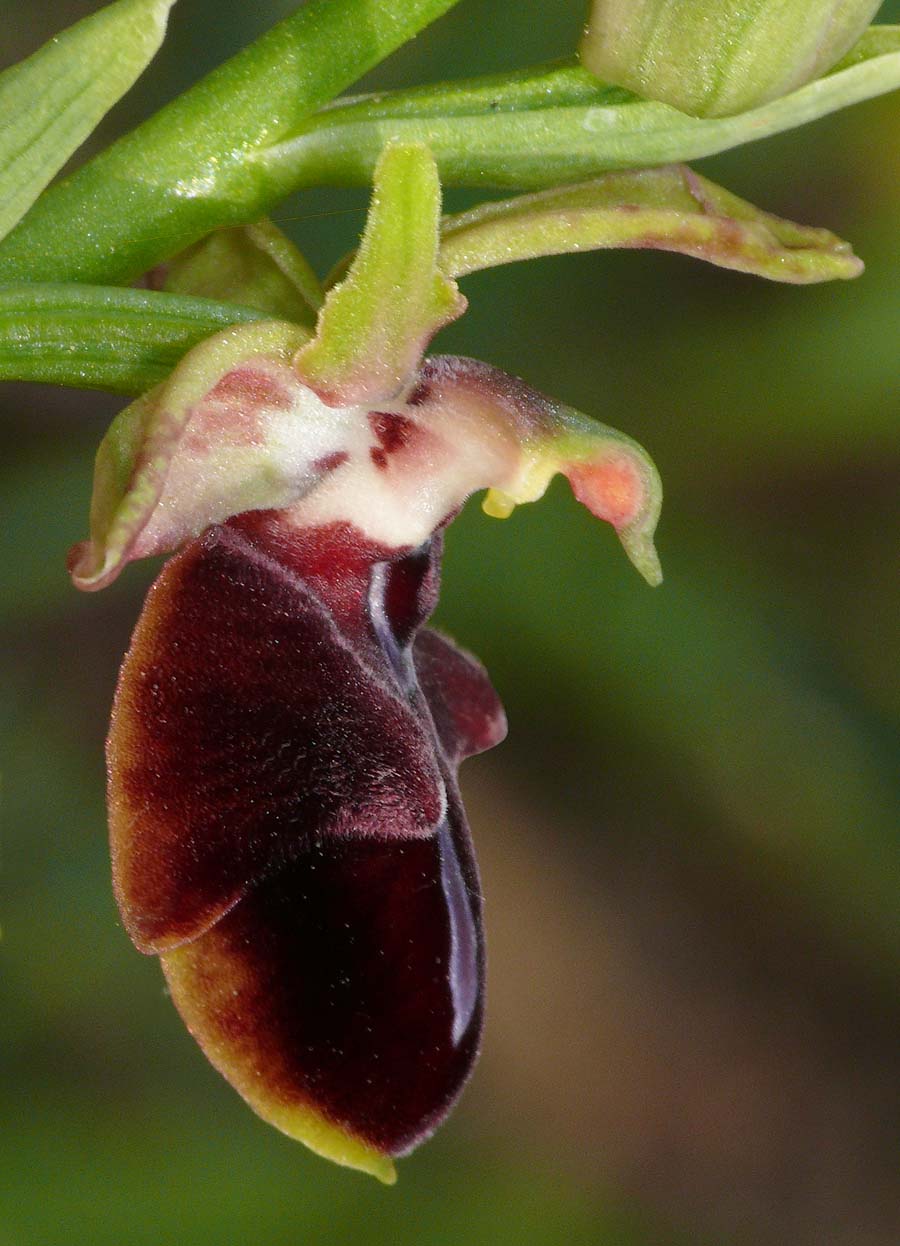
A second and important aid to identification is the size of the basal swellings, which in O. hystera are invariably substantial but often huge and completely dominating the lips appearance. These protuberences are also distinguished by their downward sloping, usually more attenuated shape. A further differentiating characteristic is the stigmatic cavity which is always dark, with a pair of bluish/white pseudo-eyes and a distinctive white and grey central spot (specular stage) between them. The O. mammosa group of Ophrys is very well represented in the northern half of Greece, where hybridization is widespread and intermediate populations common. O. leucophthalma is a species that can easily be confused with O. hystera, particularly as they are both late flowerers and share similar habitat preferences. The former may however be separated by its smalller size, all white specular stage and thicker white lining to the speculum.
The illustrations are from northern Greece, dating from the second week of May.
This species is very similar to O. mammosa but although sharing many morphological characteristics there are key differences. The first of these being the size of the plant, in which O. hystera significantly exceeds that of O. mammosa in all its parts. O. hystera is a robust, often tall plant which can carry up to ten large flowers in a loose inflorescence. The colouration of these flowers can be significant, with O. hystera normally being less drab and often brightly marked with a prominent yellow/orange marginal band.
A second and important aid to identification is the size of the basal swellings, which in O. hystera are invariably substantial but often huge and completely dominating the lips appearance. These protuberences are also distinguished by their downward sloping, usually more attenuated shape. A further differentiating characteristic is the stigmatic cavity which is always dark, with a pair of bluish/white pseudo-eyes and a distinctive white and grey central spot (specular stage) between them. The O. mammosa group of Ophrys is very well represented in the northern half of Greece, where hybridization is widespread and intermediate populations common. O. leucophthalma is a species that can easily be confused with O. hystera, particularly as they are both late flowerers and share similar habitat preferences. The former may however be separated by its smalller size, all white specular stage and thicker white lining to the speculum.
The illustrations are from northern Greece, dating from the second week of May.