O. mammosa
was first described by
Desfontaines from Samos in 1807 and its name refers to the
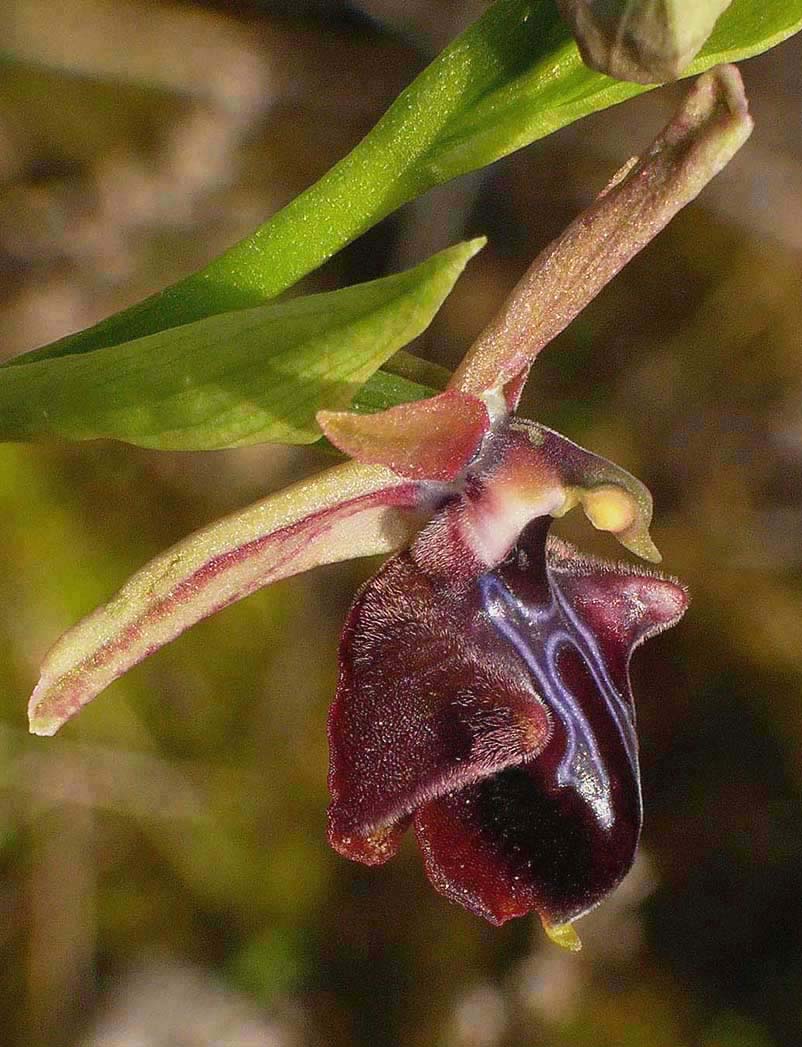
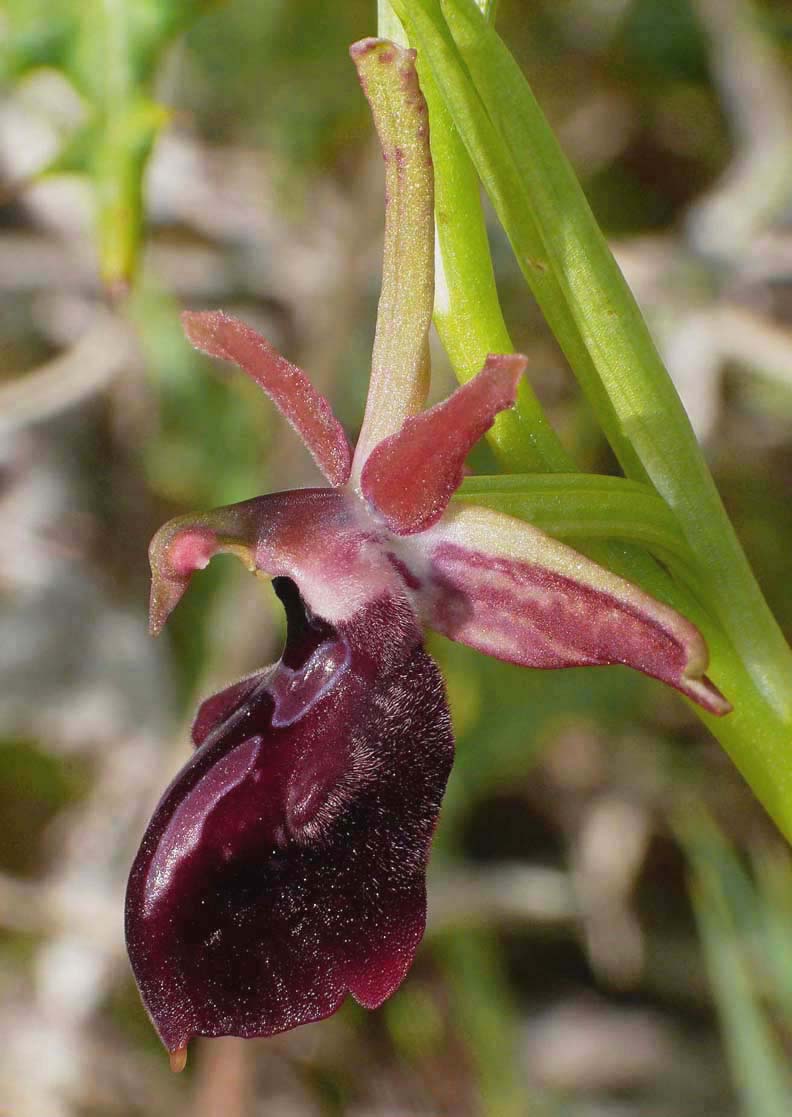
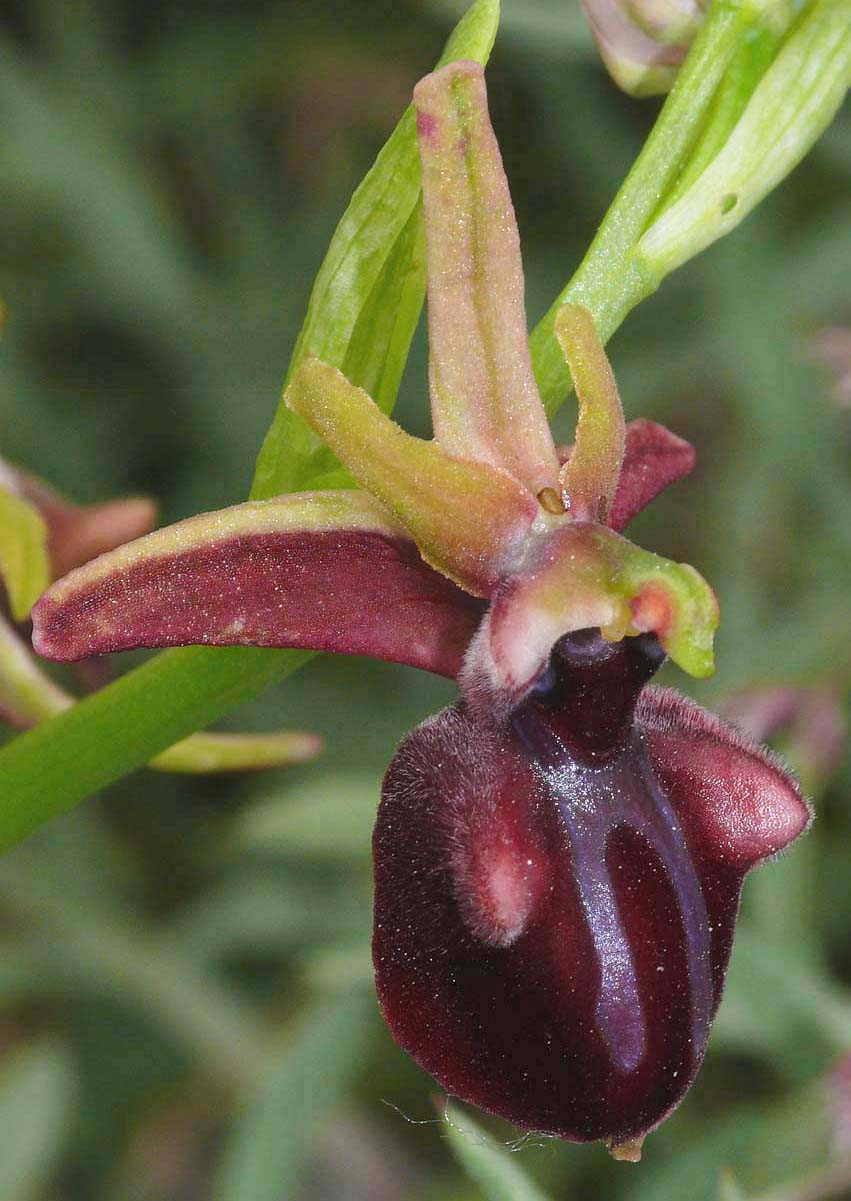
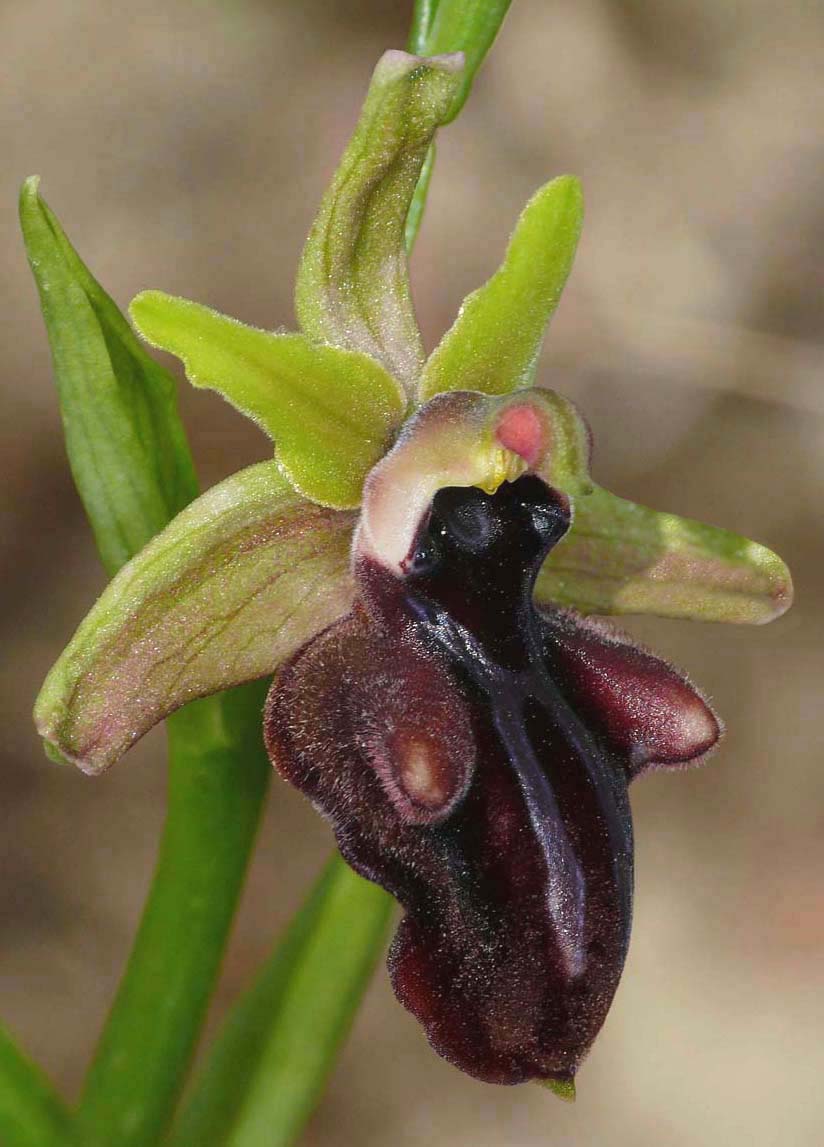
prominent basal swellings, literally meaning "full breasted". It
is one of the Eastern Mediterranean's commoner Ophrys,
occurring in an
almost unbroken distribution from the former Yugoslavia, as far as
Israel in the East. Its range is however being reduced somewhat by the
recognition of new species, some of which are not widely accepted as
valid. Members of the group share similar, easily recognizable
characteristics, notably the bicoloured
sepals with their often strongly red tinged lower hemispheres and often
pronounced basal swellings..
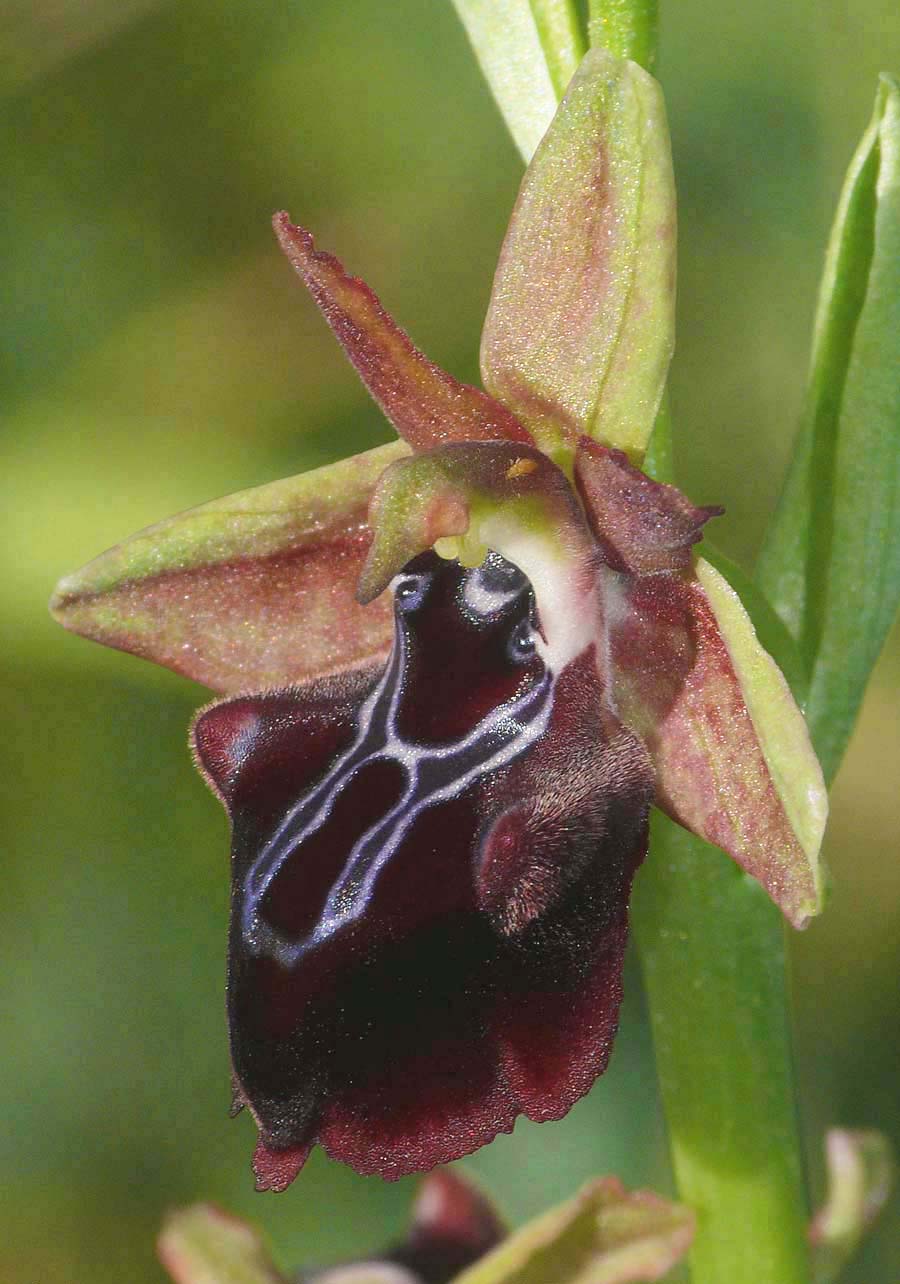
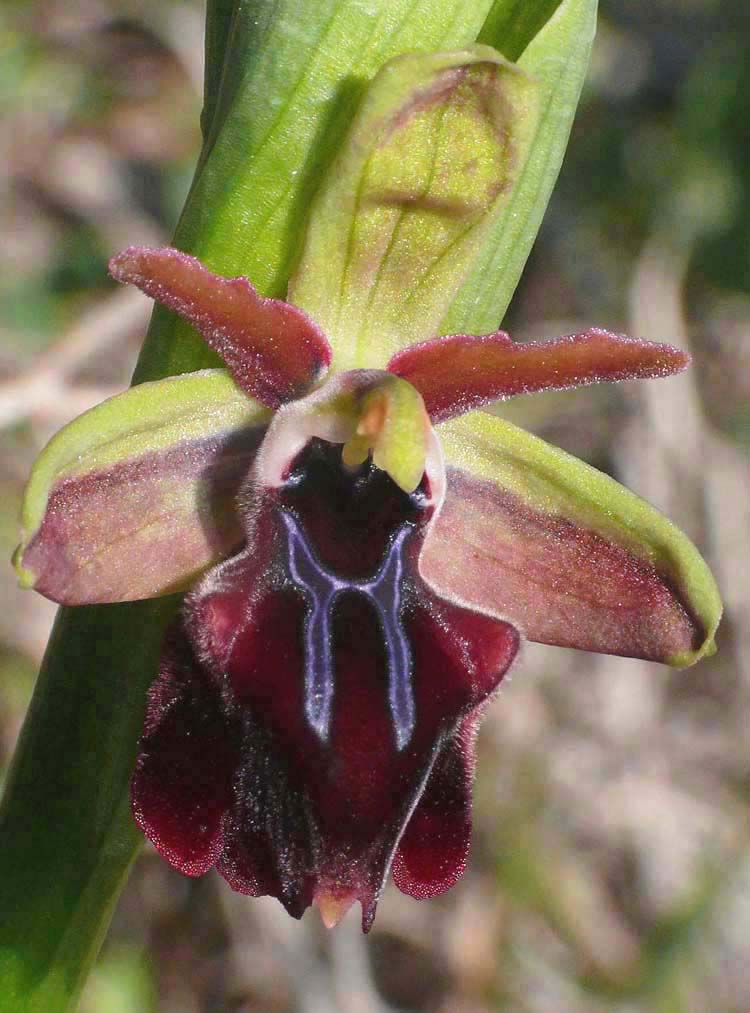
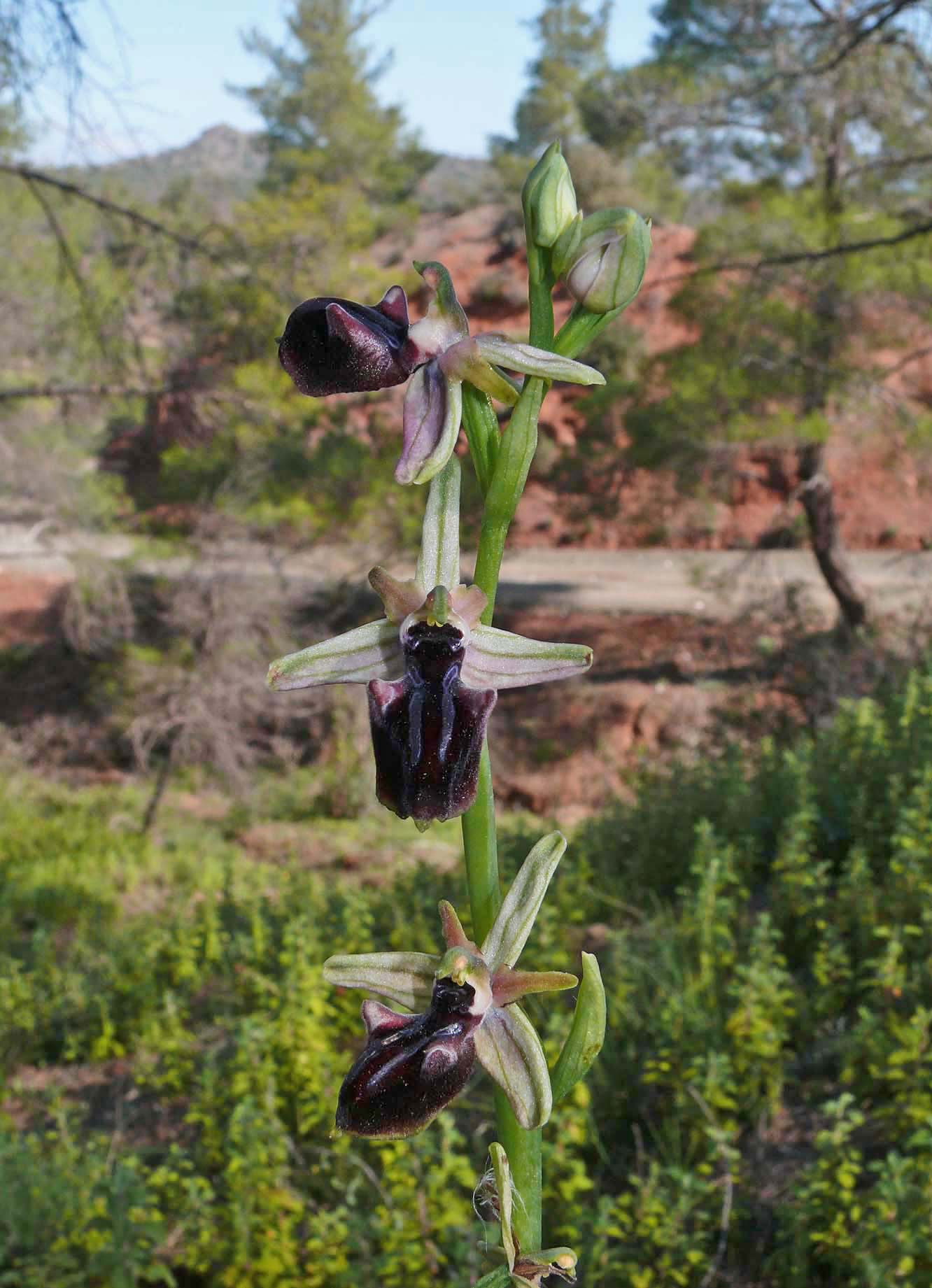
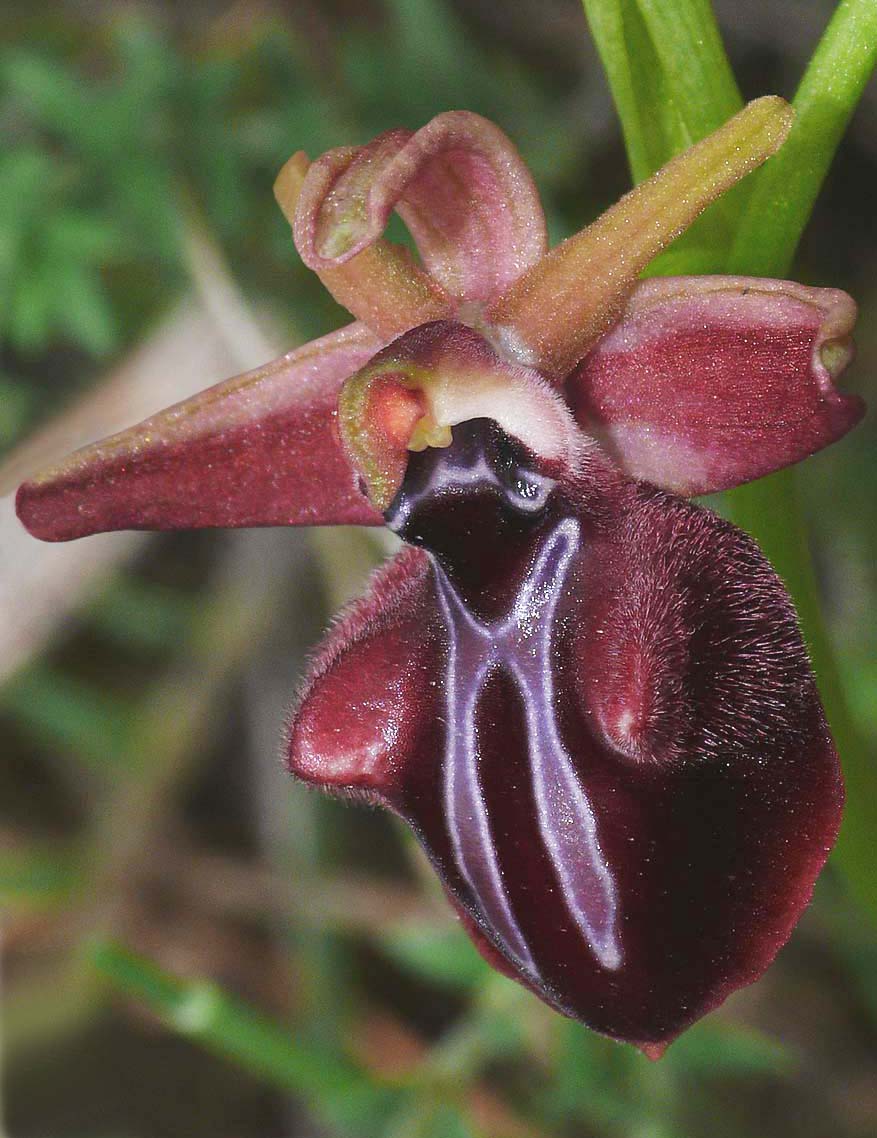
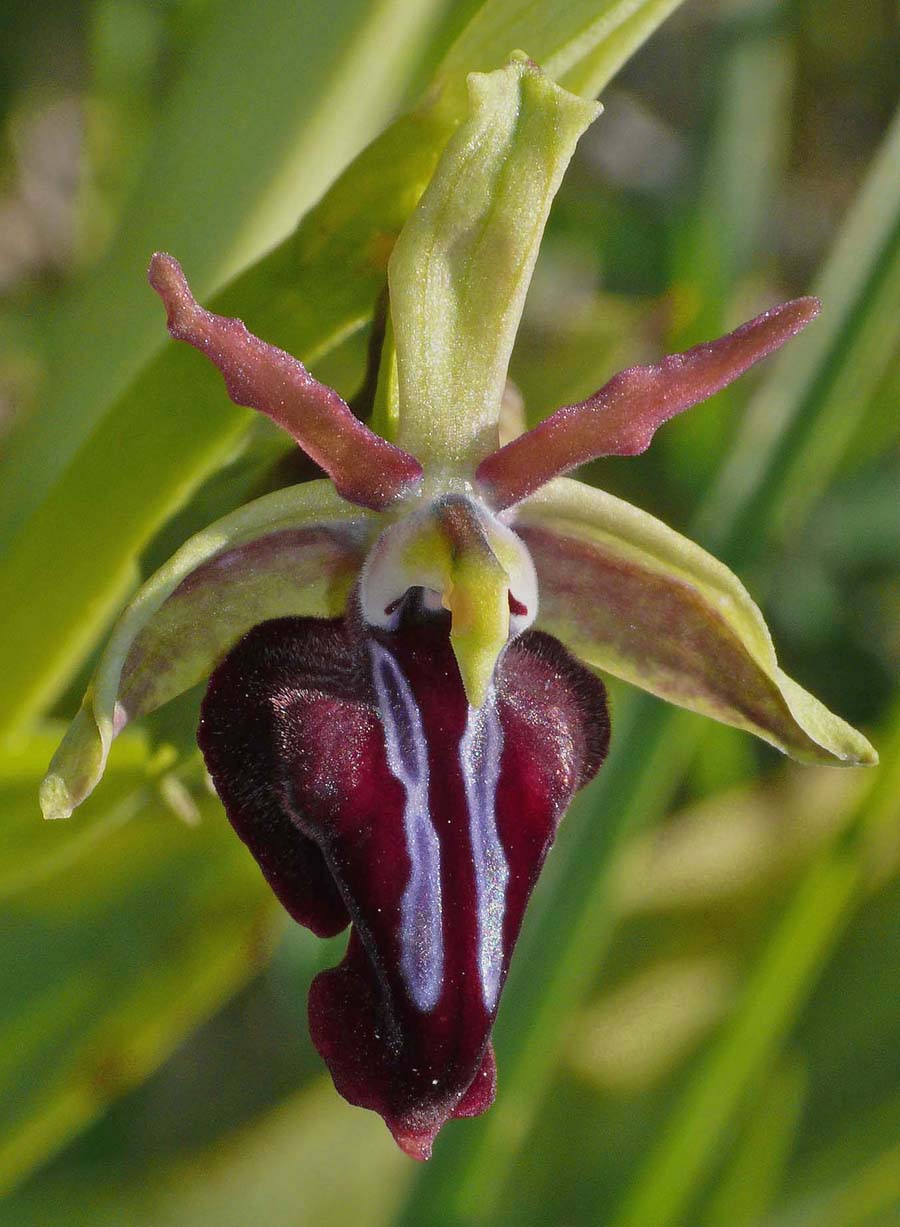
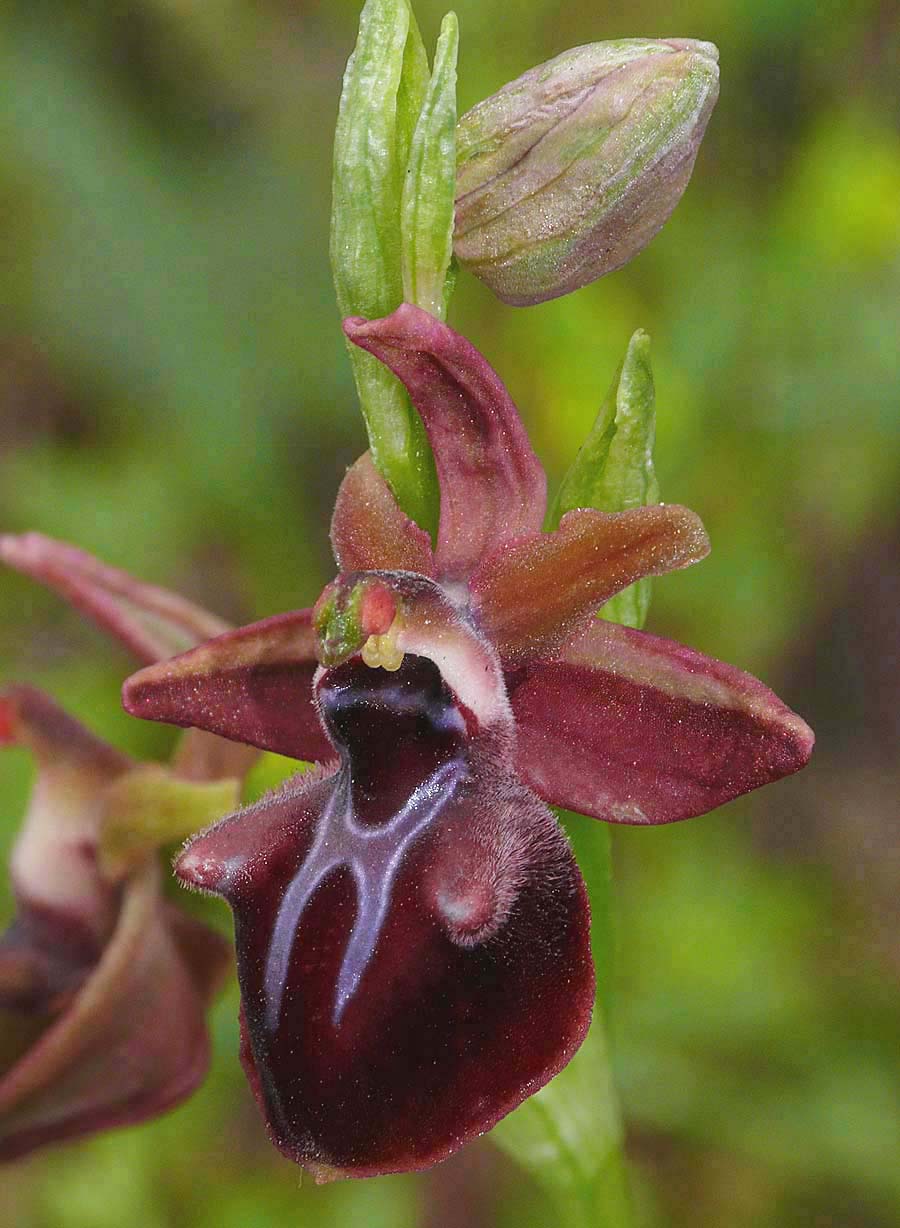
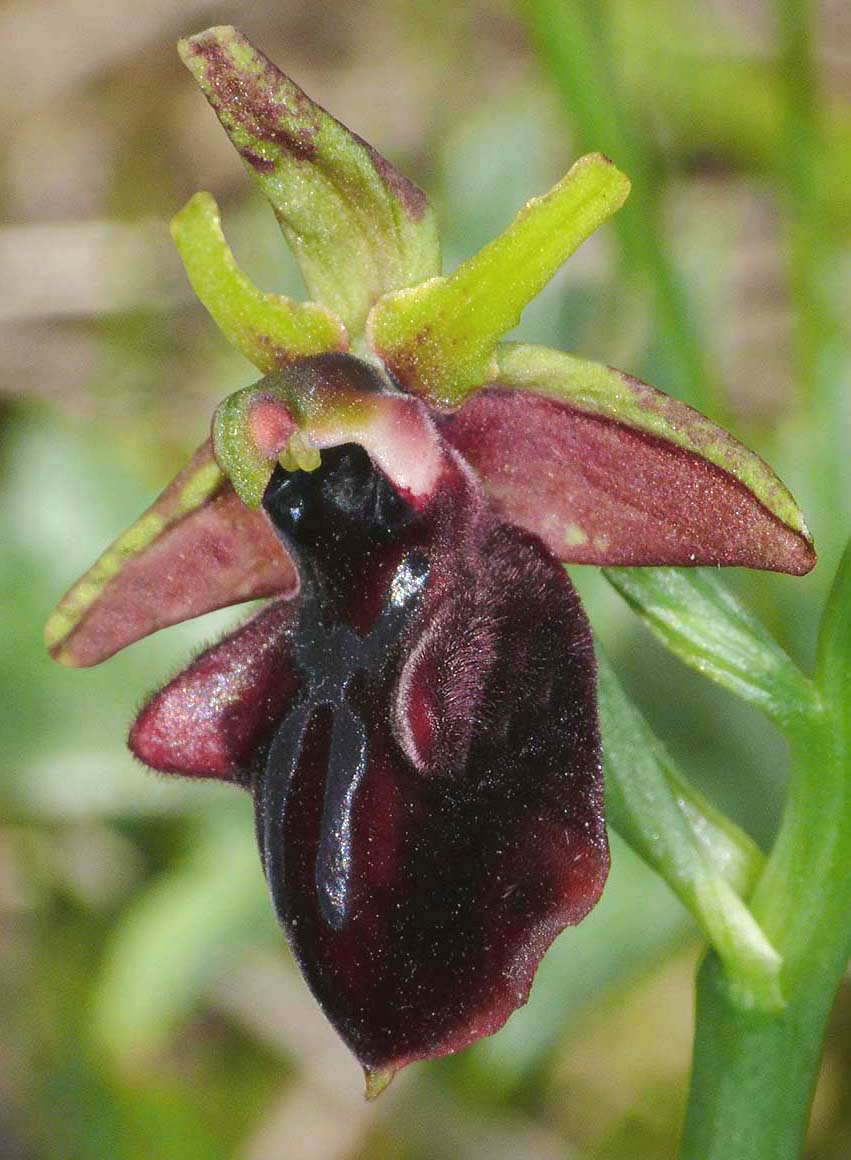
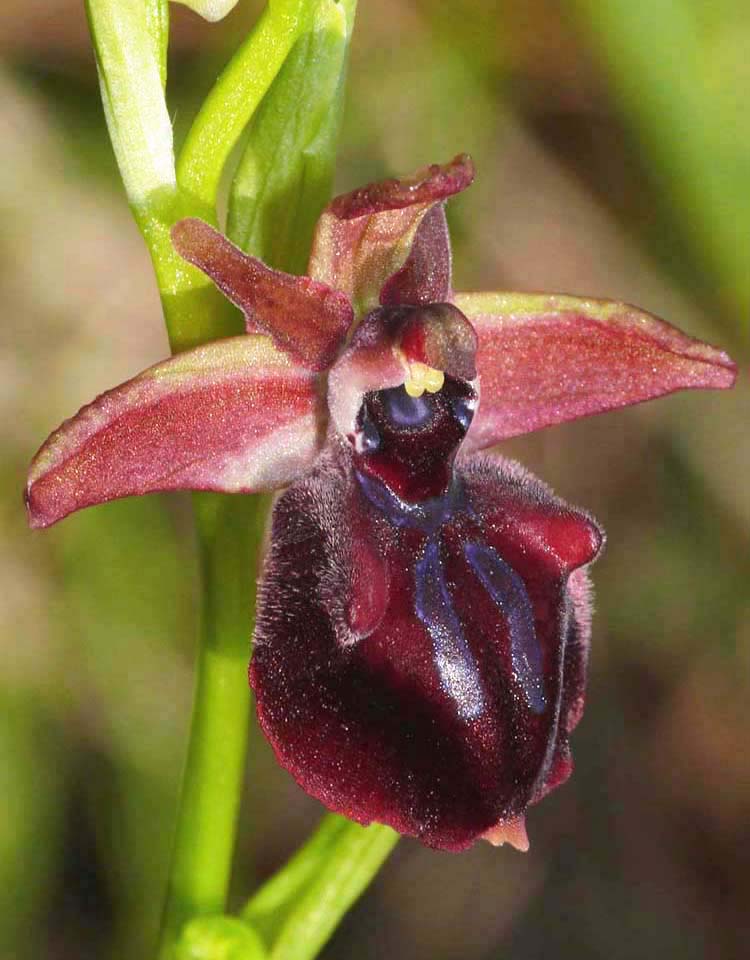
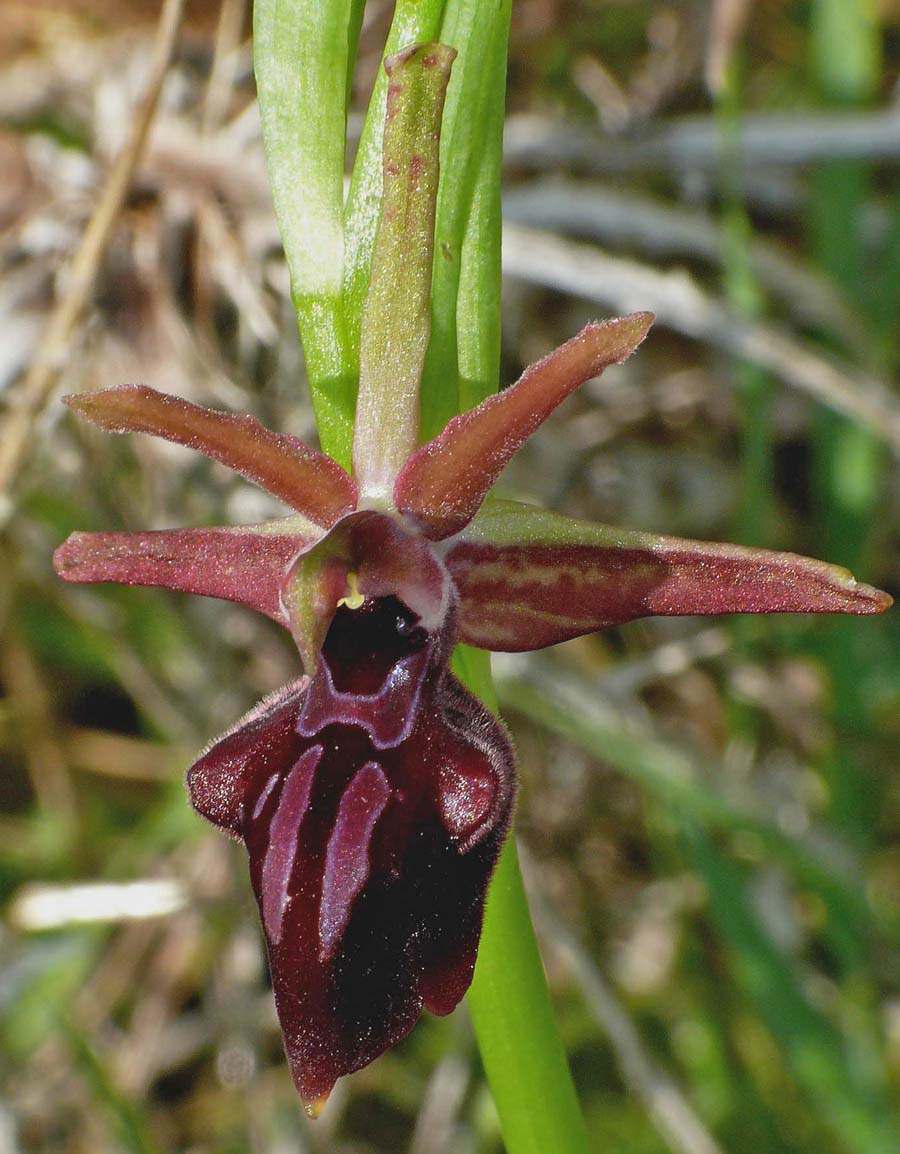
The O. mammosa group is a large and growing one, containing several very similar species whose ranges often overlap and which can be easily confused. In both northern Greece and Cyprus, a good number of "lookalike" species co-exist and frequently hybridize, forming intermediates which make the already difficult task of species separation even more arduous. O. mammosa can be found in several types of habitat from full sun to dappled shade although it seems to favour a sheltered position, whether in the lea of a wall or rock, or more usually growing amongst light scrub or in open woodland. As can be seen from the photos it can be extremely variable.
This is a robust and handsome orchid which may be as tall as 70cm, containing as many as 15 flowers in a spike. It has a long flowering period and although in most of its range it commences in April, Cyprus populations can appear as early as the end of February. The pictures are from Cyprus, Rhodes and northern Greece, dating from the first week of April in the Aegean and early March in Cyprus.
The O. mammosa group is a large and growing one, containing several very similar species whose ranges often overlap and which can be easily confused. In both northern Greece and Cyprus, a good number of "lookalike" species co-exist and frequently hybridize, forming intermediates which make the already difficult task of species separation even more arduous. O. mammosa can be found in several types of habitat from full sun to dappled shade although it seems to favour a sheltered position, whether in the lea of a wall or rock, or more usually growing amongst light scrub or in open woodland. As can be seen from the photos it can be extremely variable.
This is a robust and handsome orchid which may be as tall as 70cm, containing as many as 15 flowers in a spike. It has a long flowering period and although in most of its range it commences in April, Cyprus populations can appear as early as the end of February. The pictures are from Cyprus, Rhodes and northern Greece, dating from the first week of April in the Aegean and early March in Cyprus.
.