O. eretriae
was first described from the Greek island of Euboea by Hirth and Paulus
in 2020 and is a member of the large and ever growing O. mammosa group
of Ophrys. Its name refers to the ancient theatre of Eretria where the species was initially identified.
The O. mammosa group of Greece and of northern Greece in particular, are famously difficult to separate and few of the members exhibit truly unique morphological characteristics that can be regarded as diagnostic. This dilemma, coupled with the species relatively new discovery means that its range is not yet fully established. It is known with certainty from Evia (Euoboea island) and thought to be uncommon but widespread through most of mainland Greece. As far as is currently known, it has not been reported from any of the island groups.
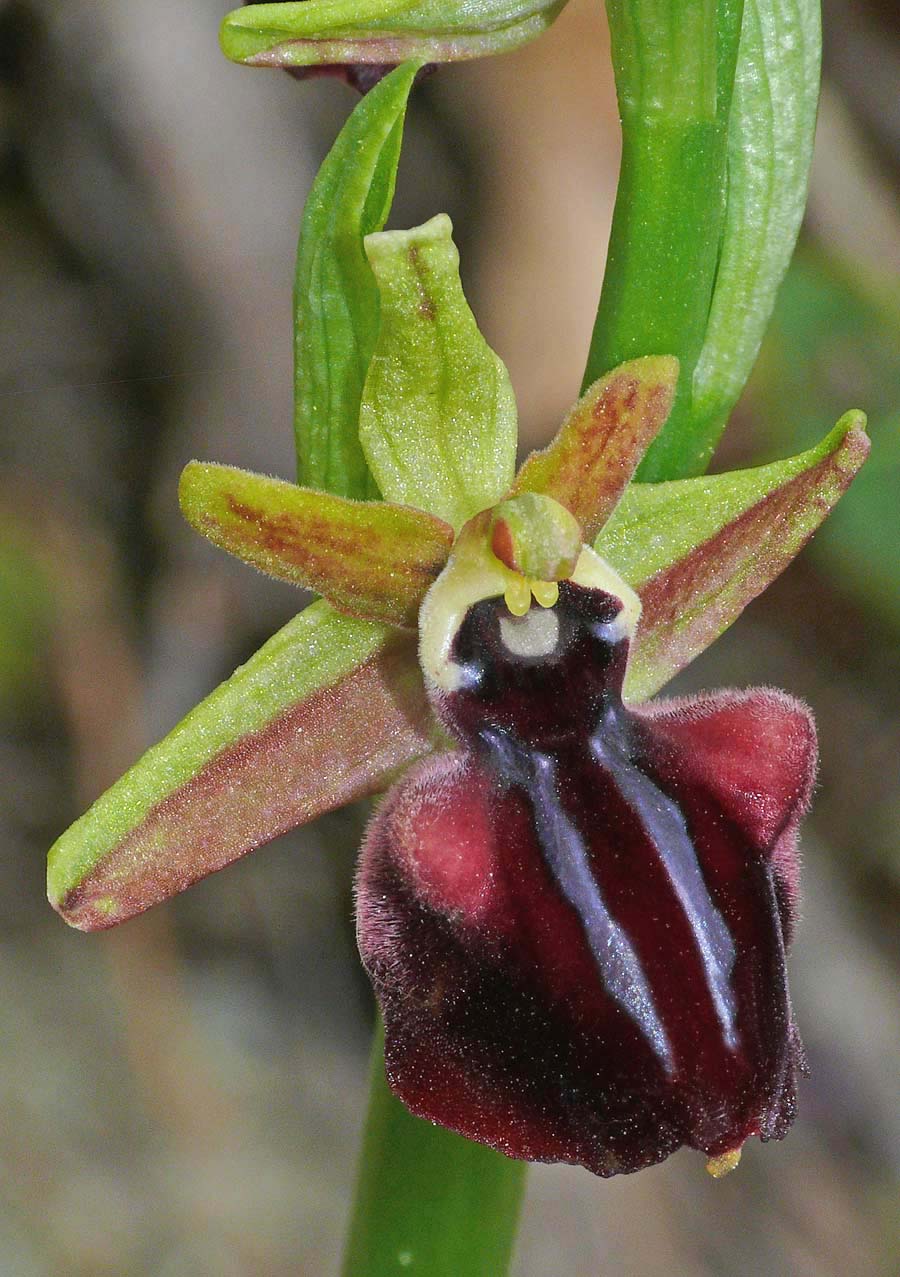
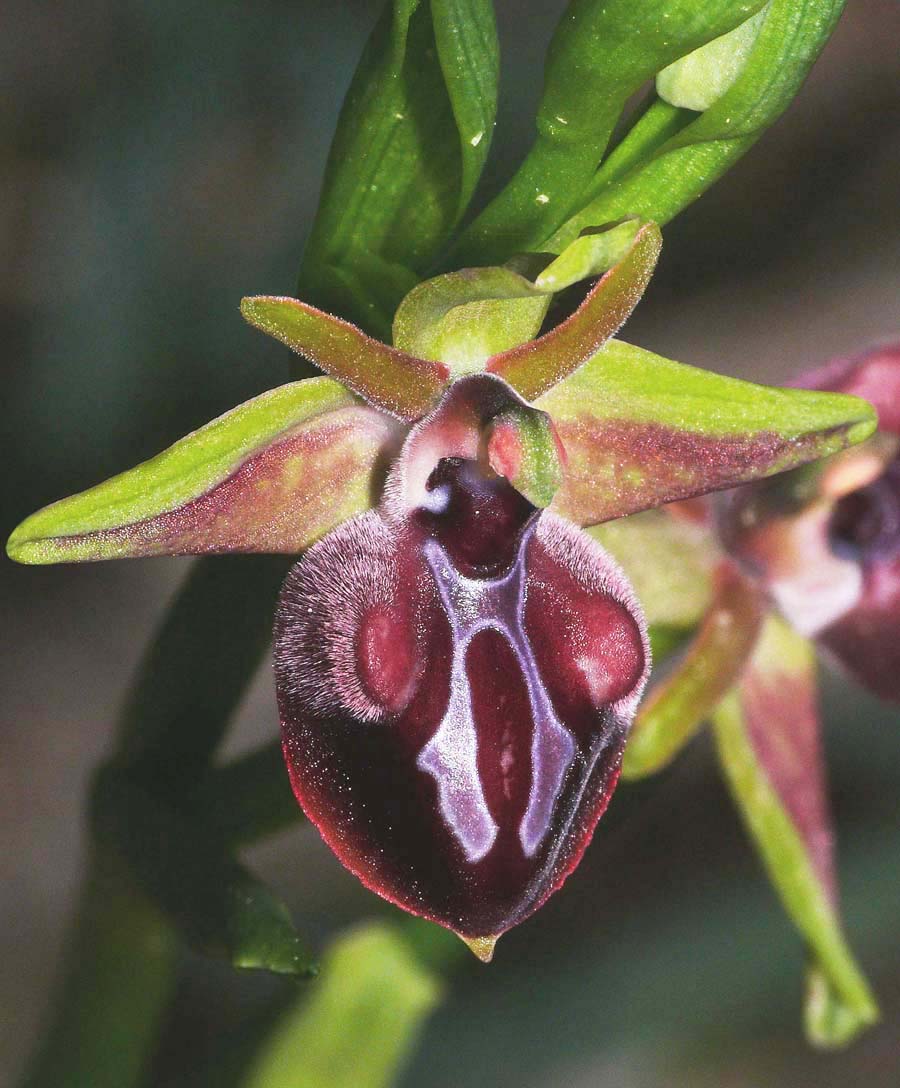
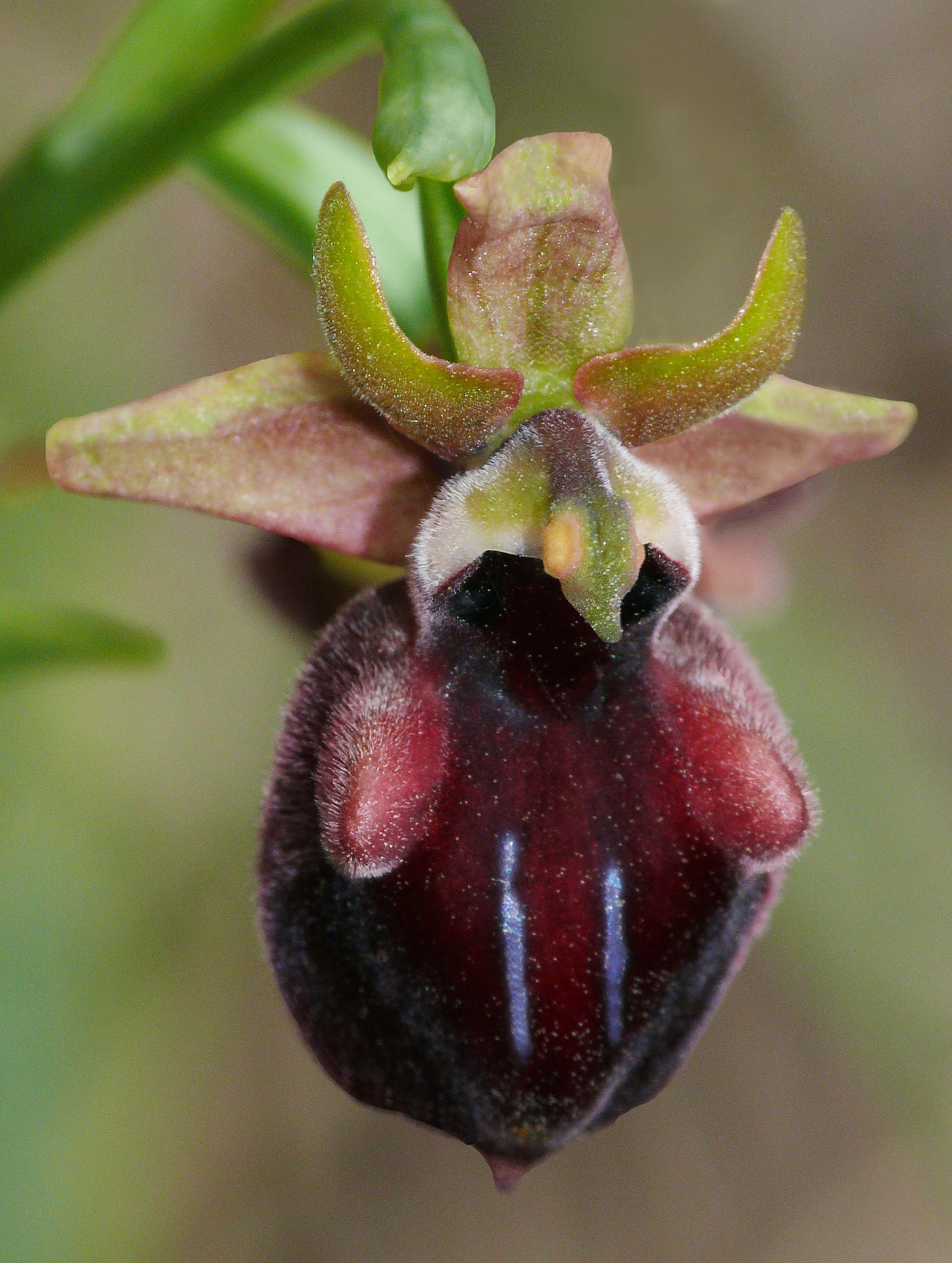
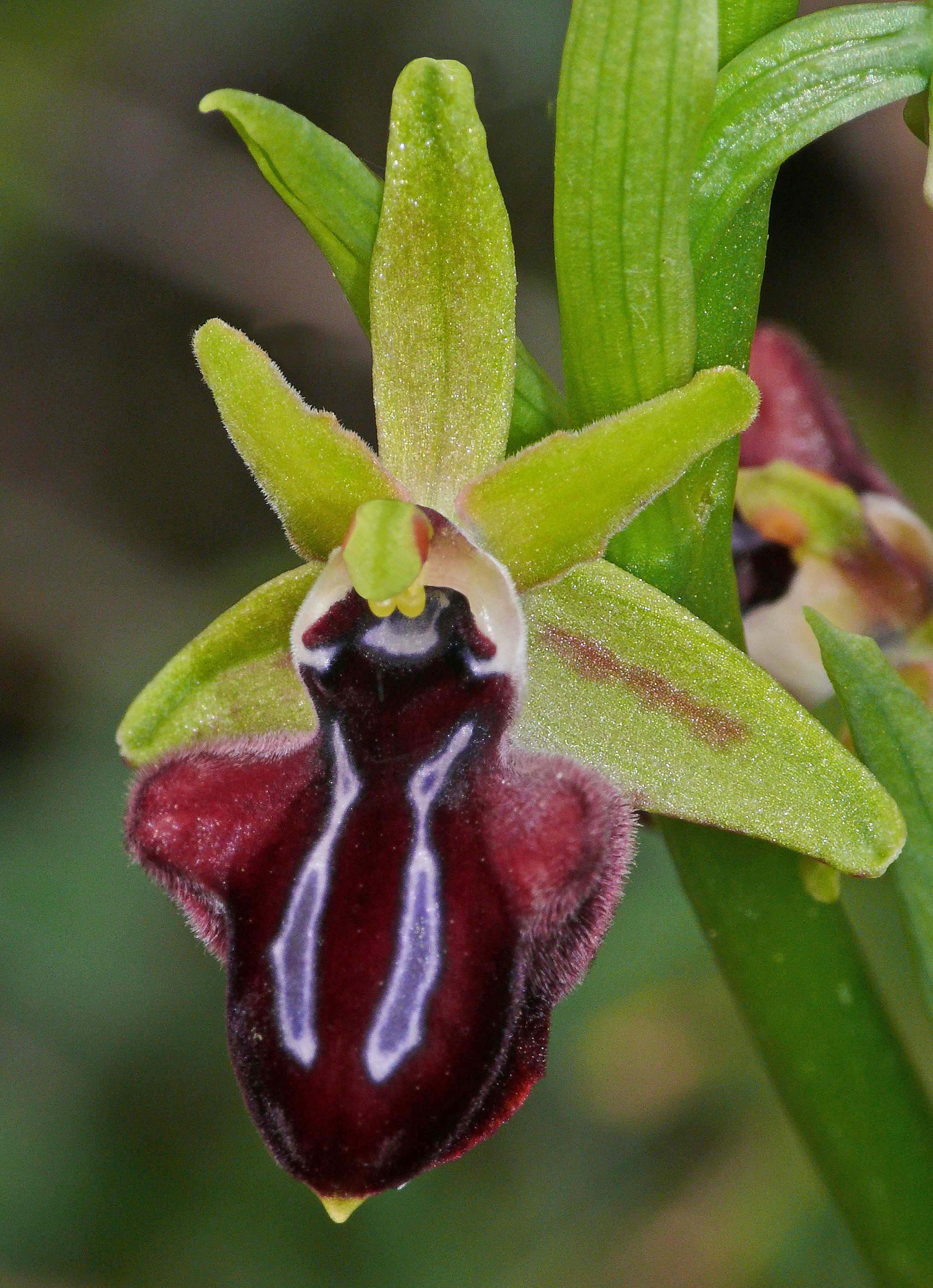
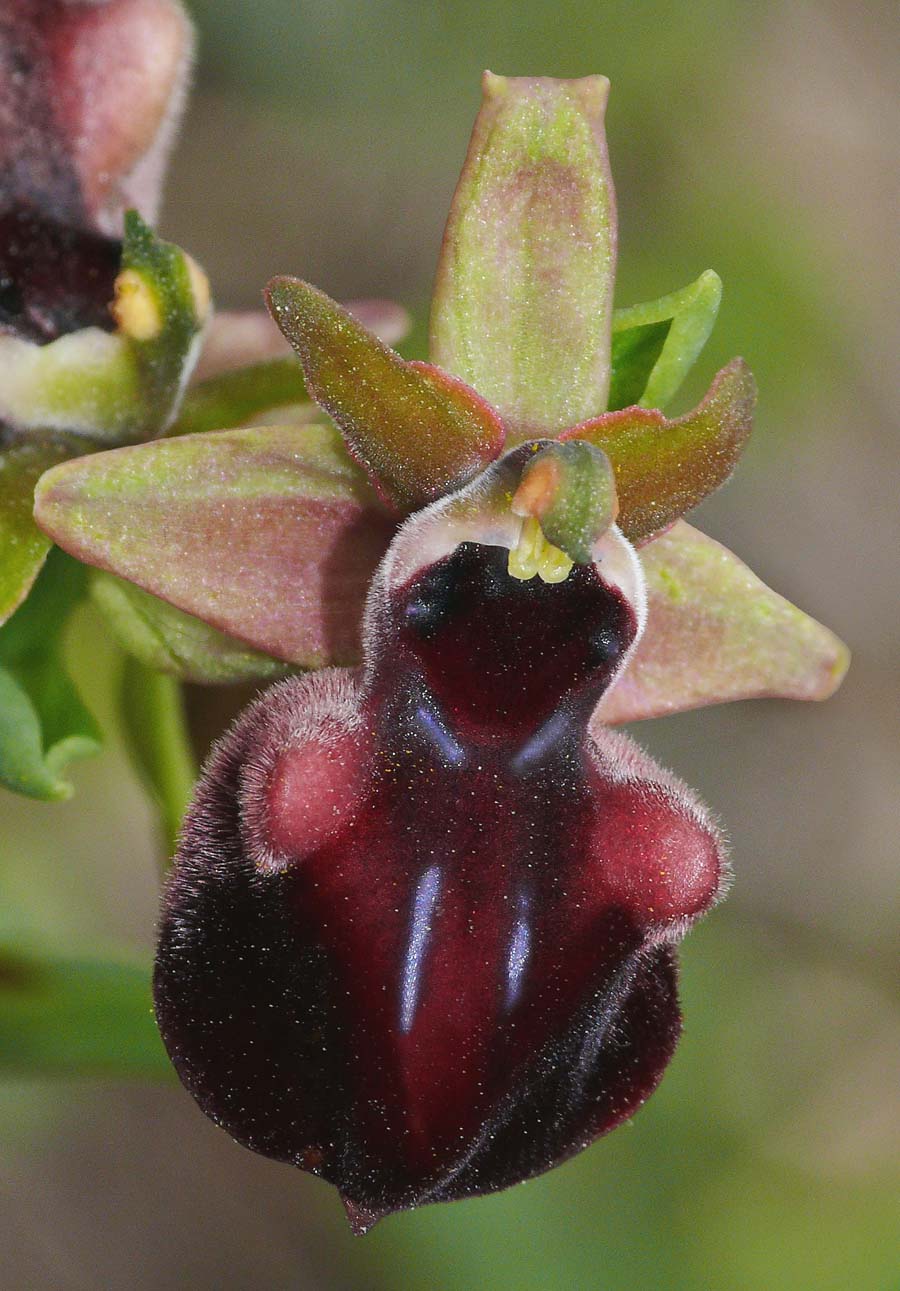
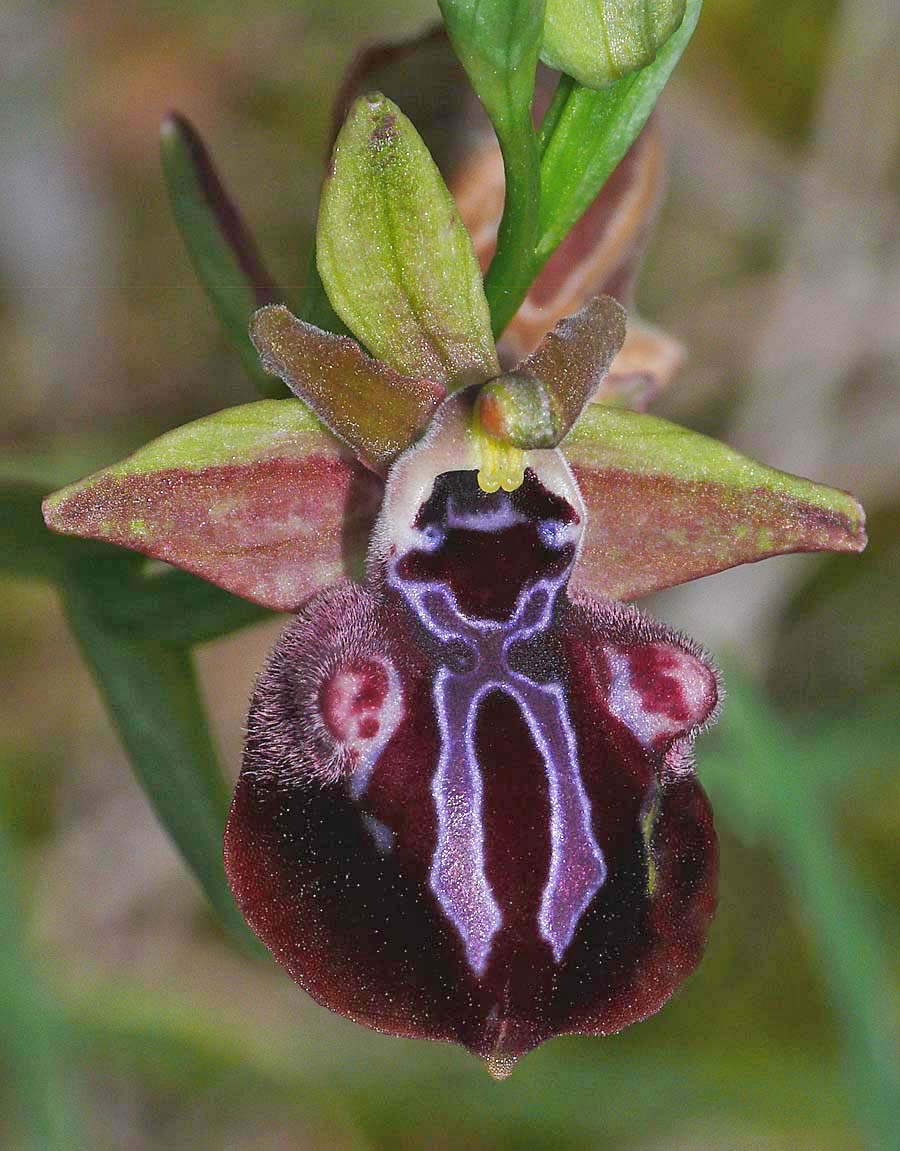
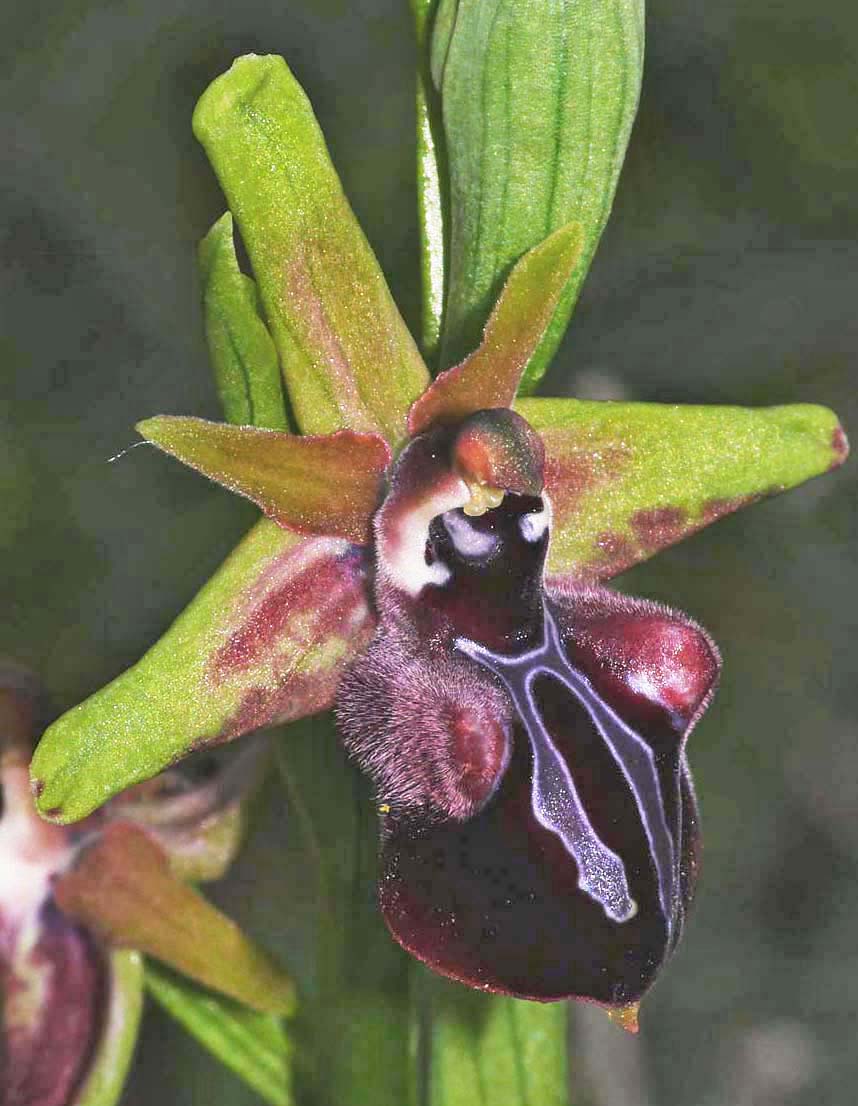
O. eretriae is highly variable and capable of achieving a respectable impersonation of several other O. mammosa group Ophrys and not least the nominate species itself. There are however some features which can be regarded as (albeit unreliable) indicators of identity. The flower is smaller than O. mammosa and the lip generally triangular rather than rounded. Protuberences are well developed and usually rounded at the tip unlike in O, mammosa, which tend to be more accuminate. These swellings also differ in colouration, being a vivid carmine red which contrasts sharply with the usually darker lip.
The extremely close similarity of O. eretriae to related taxons raises understandable doubts as to its validity as a full species but this question is convincingly answered by the identification of its unique pollinator (Andrena fuscosa).
The O. mammosa group of Greece and of northern Greece in particular, are famously difficult to separate and few of the members exhibit truly unique morphological characteristics that can be regarded as diagnostic. This dilemma, coupled with the species relatively new discovery means that its range is not yet fully established. It is known with certainty from Evia (Euoboea island) and thought to be uncommon but widespread through most of mainland Greece. As far as is currently known, it has not been reported from any of the island groups.
O. eretriae is highly variable and capable of achieving a respectable impersonation of several other O. mammosa group Ophrys and not least the nominate species itself. There are however some features which can be regarded as (albeit unreliable) indicators of identity. The flower is smaller than O. mammosa and the lip generally triangular rather than rounded. Protuberences are well developed and usually rounded at the tip unlike in O, mammosa, which tend to be more accuminate. These swellings also differ in colouration, being a vivid carmine red which contrasts sharply with the usually darker lip.
The extremely close similarity of O. eretriae to related taxons raises understandable doubts as to its validity as a full species but this question is convincingly answered by the identification of its unique pollinator (Andrena fuscosa).