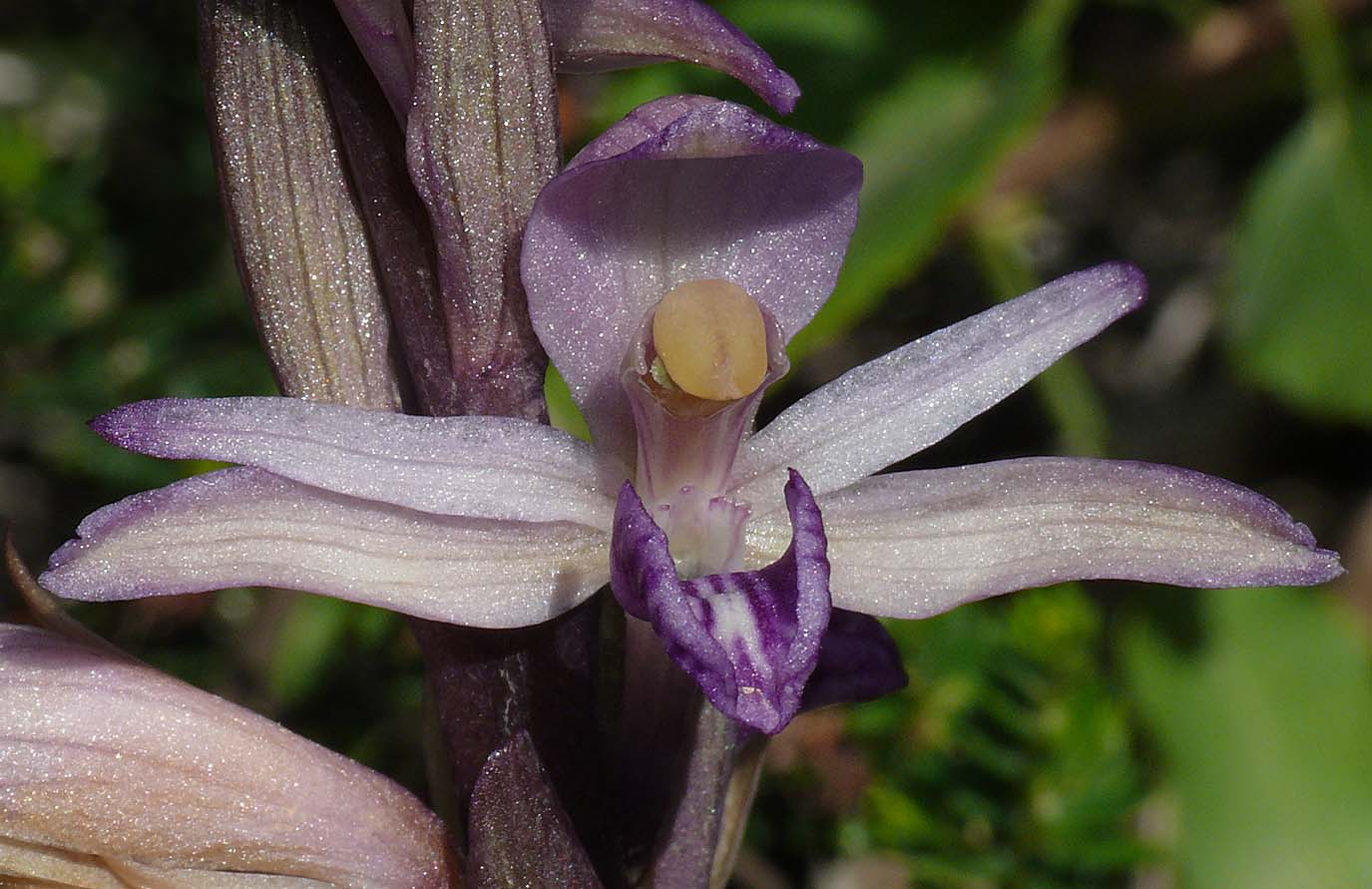
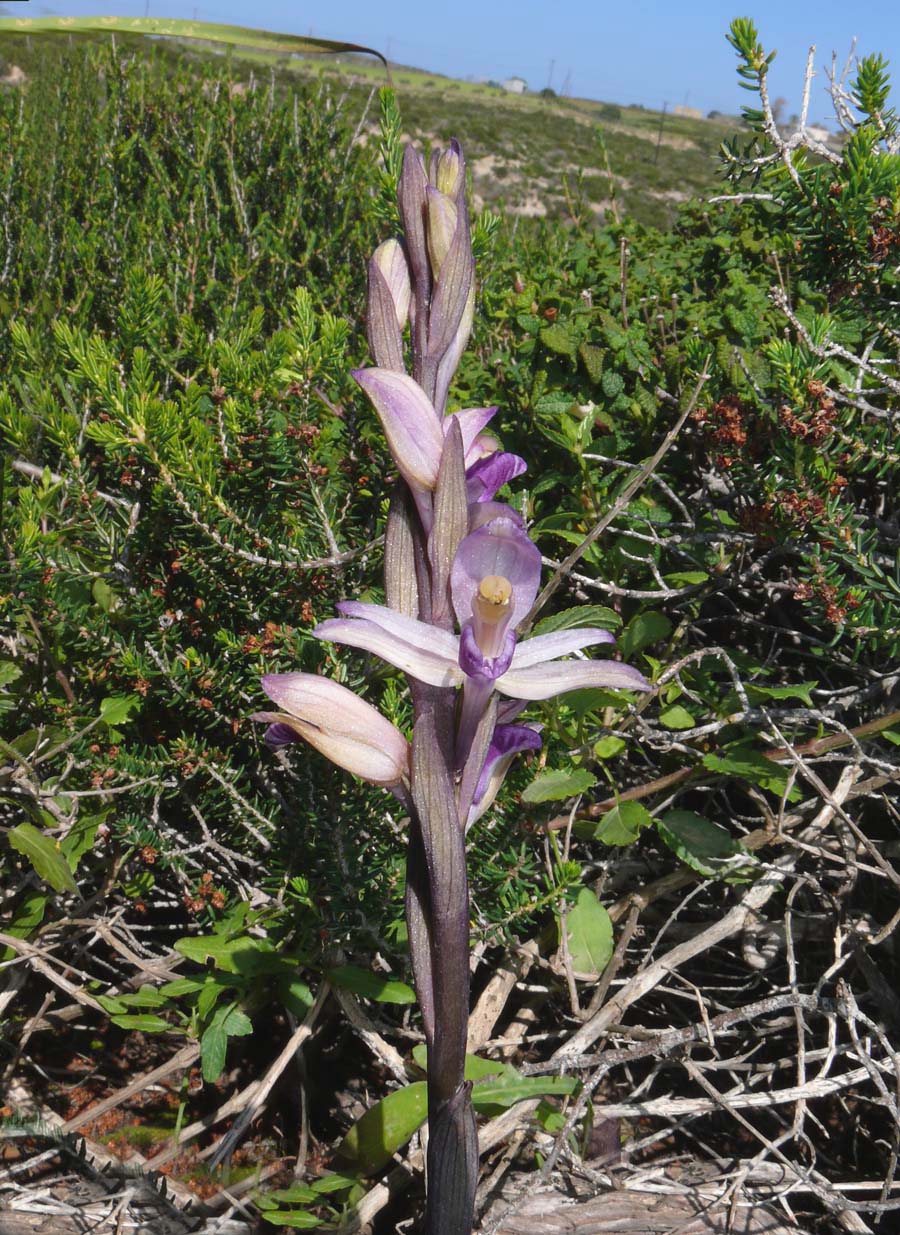
L. abortivum was first described by Swartz from Fontainebleu (France) in 1753 and its name refers to the the small size of the leaves and the manner in which they sheath the stem. Abortivum literally means aborted leaves.
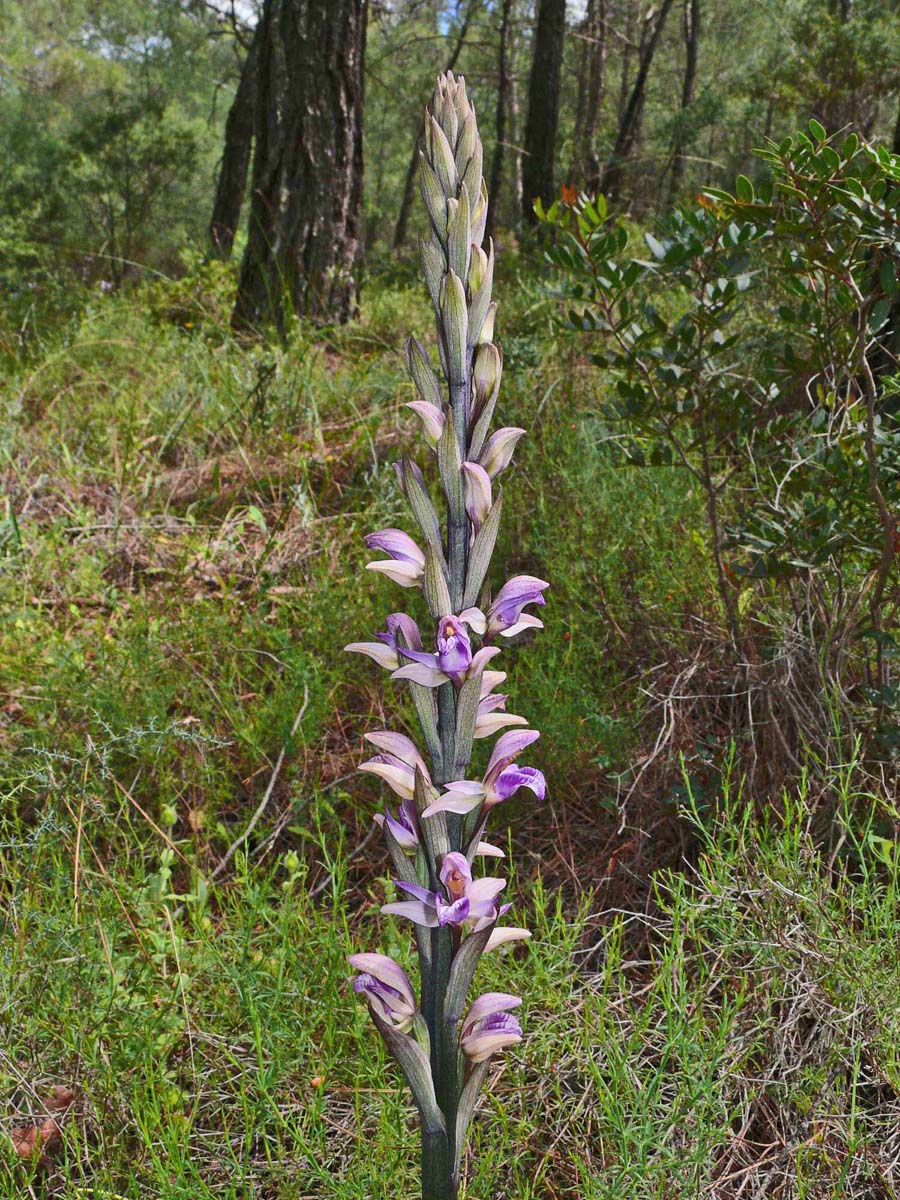
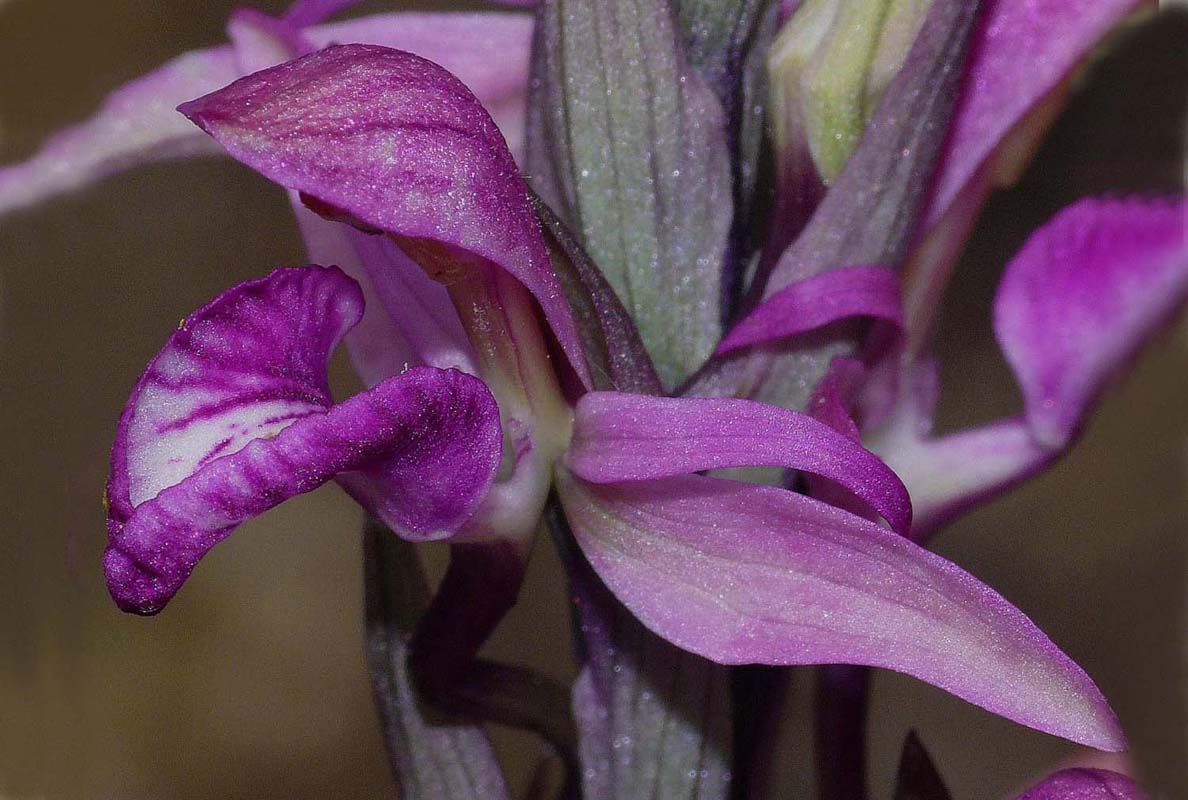
This is a curious orchid that still requires study in order to determine its precise biology. Although widely regarded as a wholly saprophytic plant, there are indications that it may (at least in part) be parasitic. Two factors in particular serve to confuse the issue and these are firstly that the stem has been shown to contain measurable levels of chlorophyll and secondly that the plant depends throughout its existence on mycorrhizal fungus. L. abortivum needs little description as it is highly distinctive and impossible to confuse with any other type of orchid.
This is a widespread species with a huge distribution from Belgium in the north, North Africa in the south and at least as far as Russia in the east. It does not occur in Britain and reaches the height of it's abundance in the southern Mediterranean where it is predominantly found on calcareous soils and usually associated with pine forest. This close association with living pine trees is another link with possible parasitism but as already mentioned, the physiology is not yet fully understood.
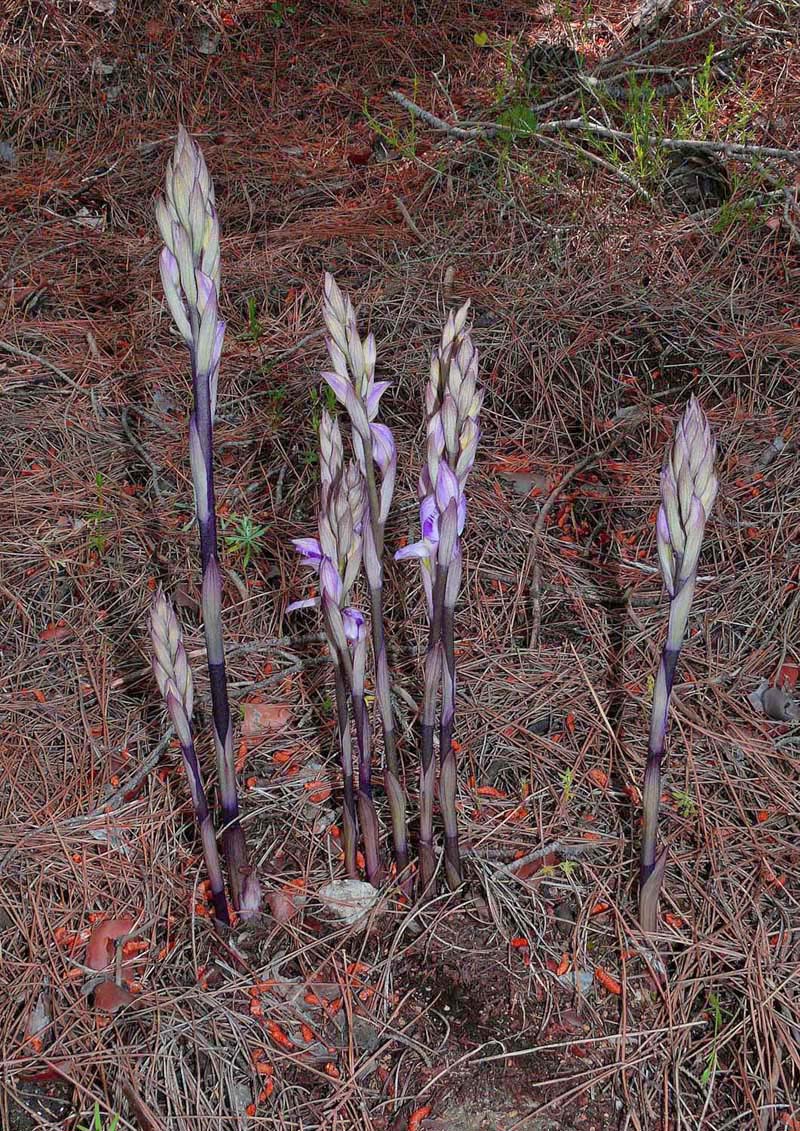
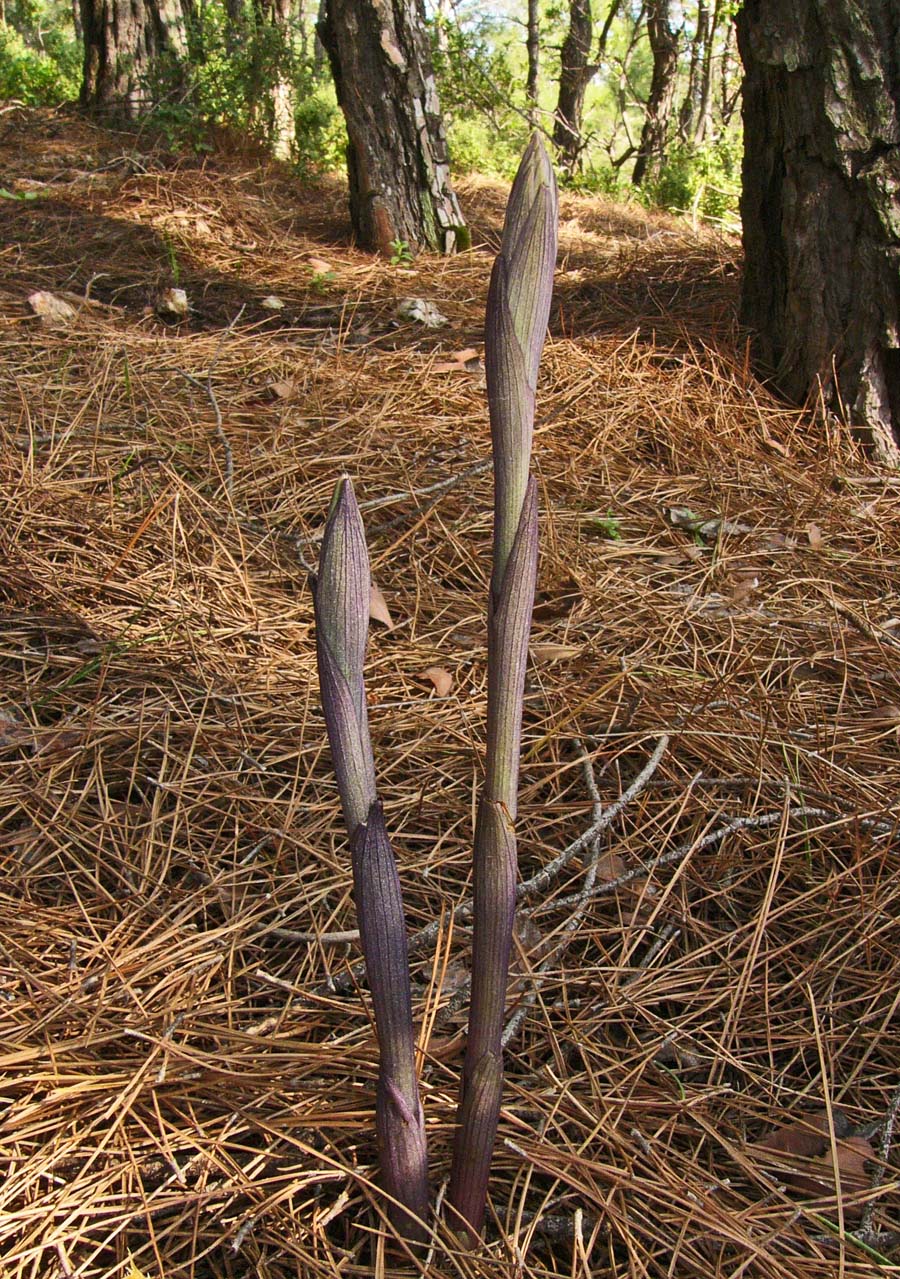
The species does have a few formally described variants but rather as with Anacamptis pyramidalis, these are largely colour forms and of no particular evolutionary significance. The photos come from Croatia, Rhodes and Chios, dating from the first week of April in the Aegean and the first week of May in Croatia..
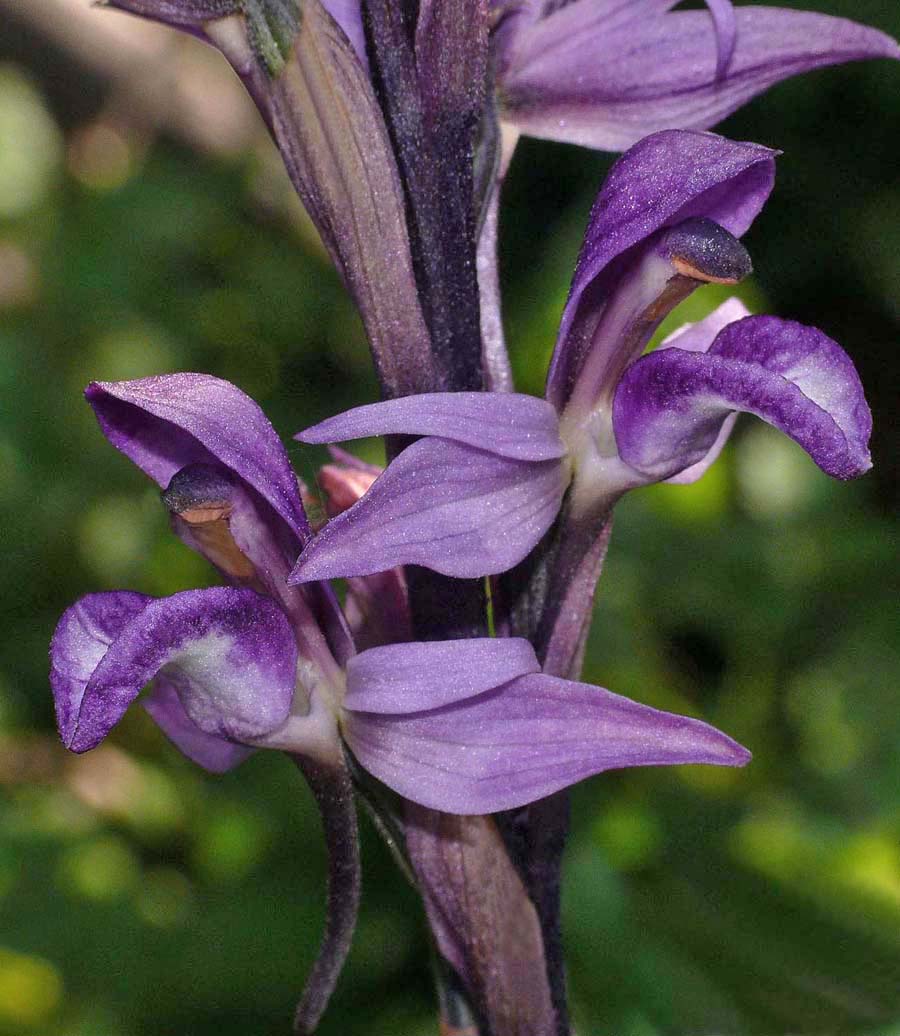
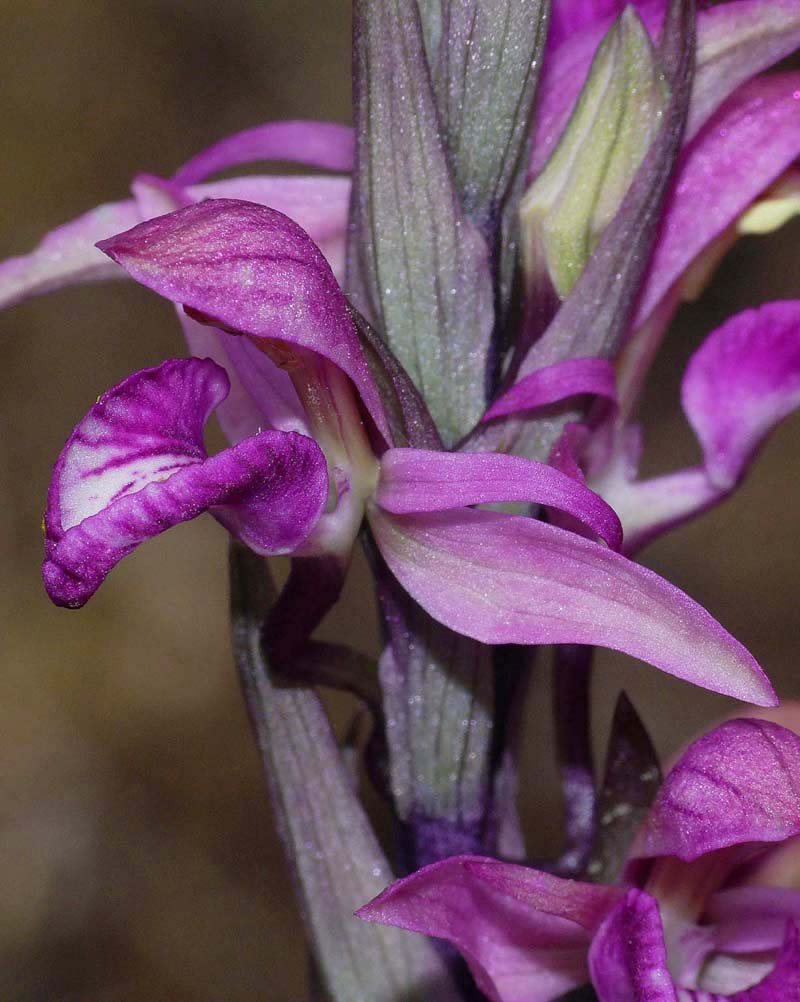
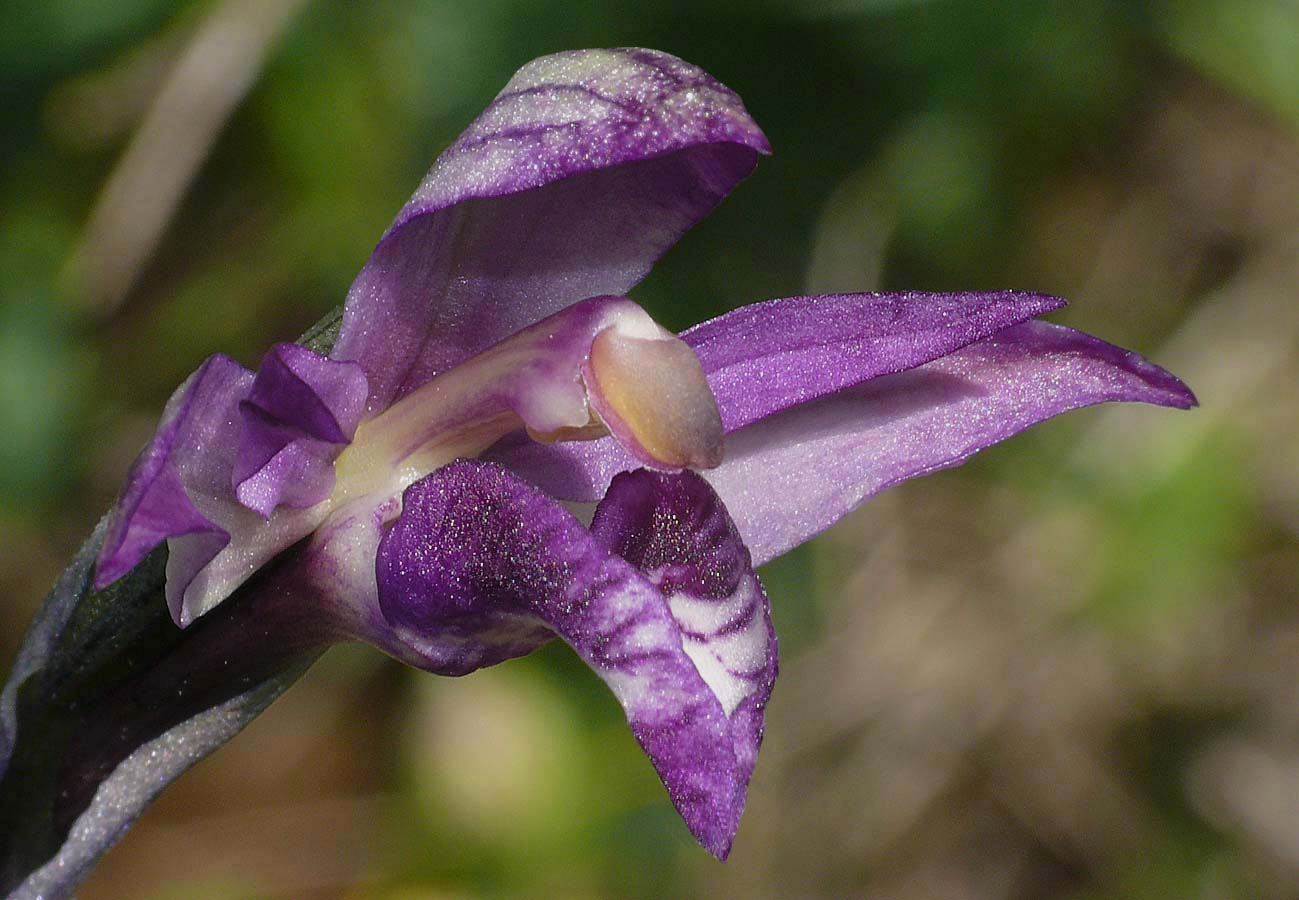
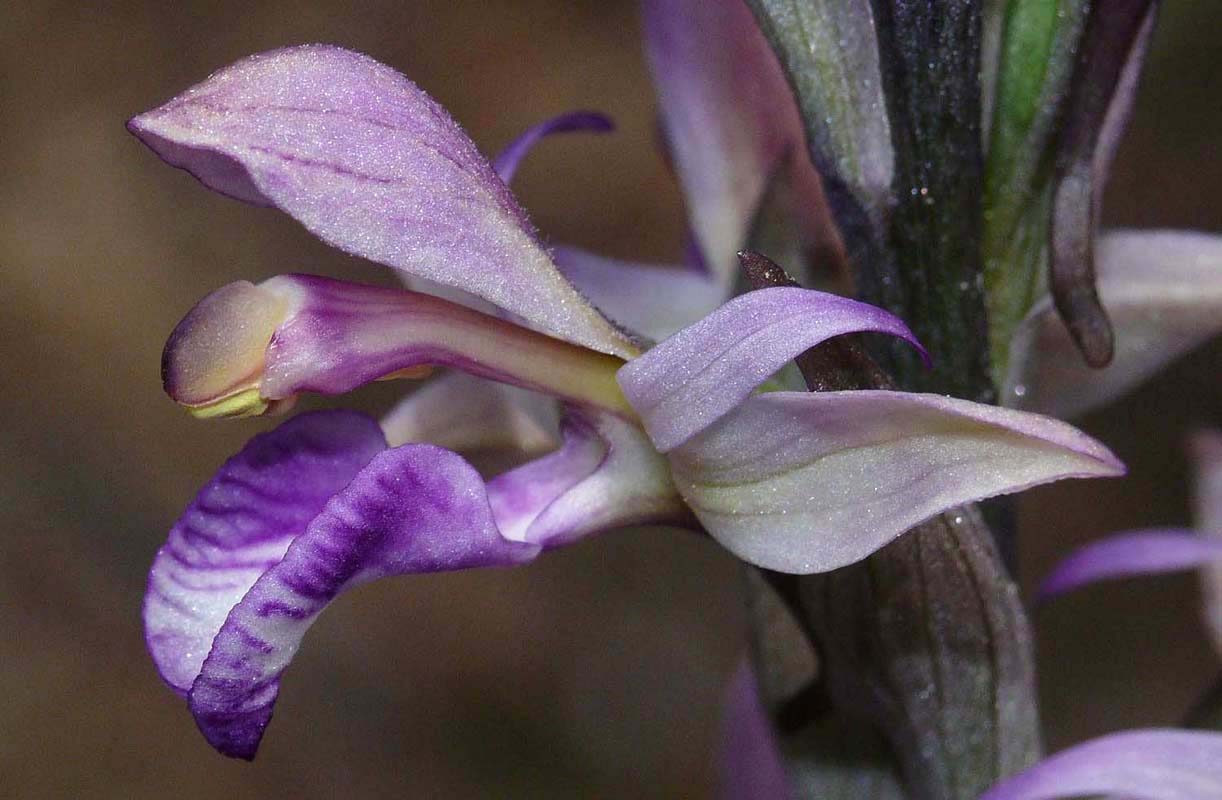
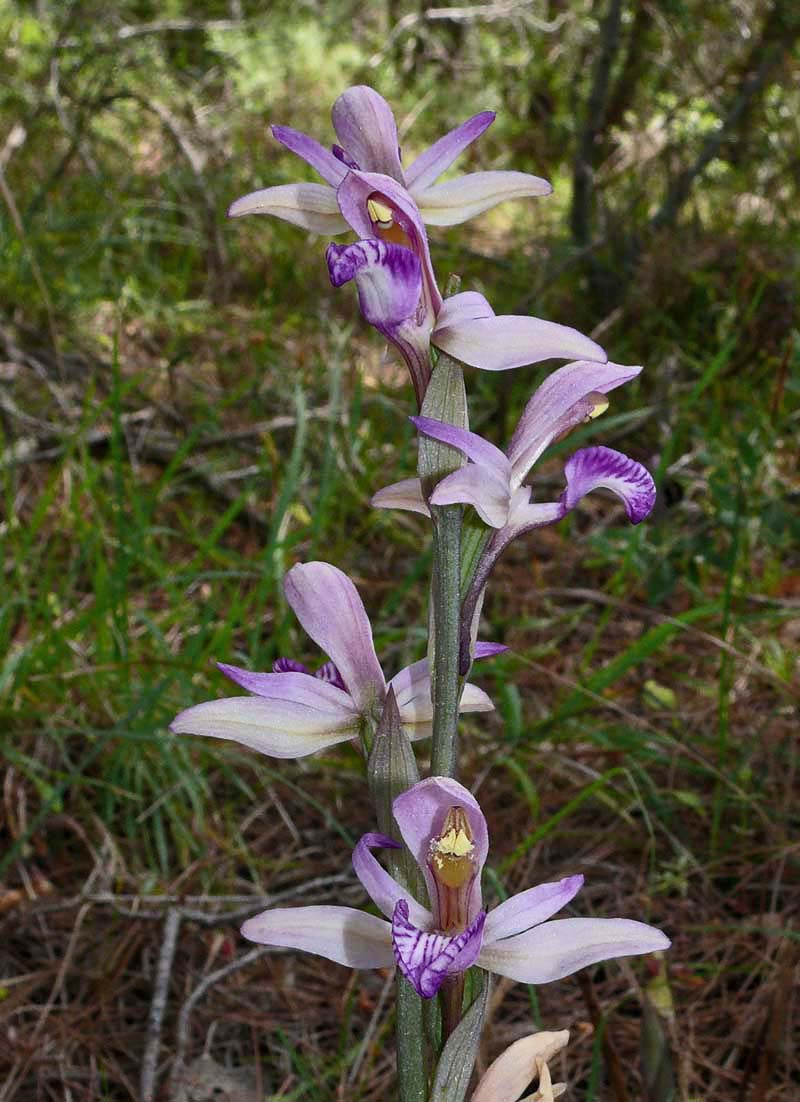
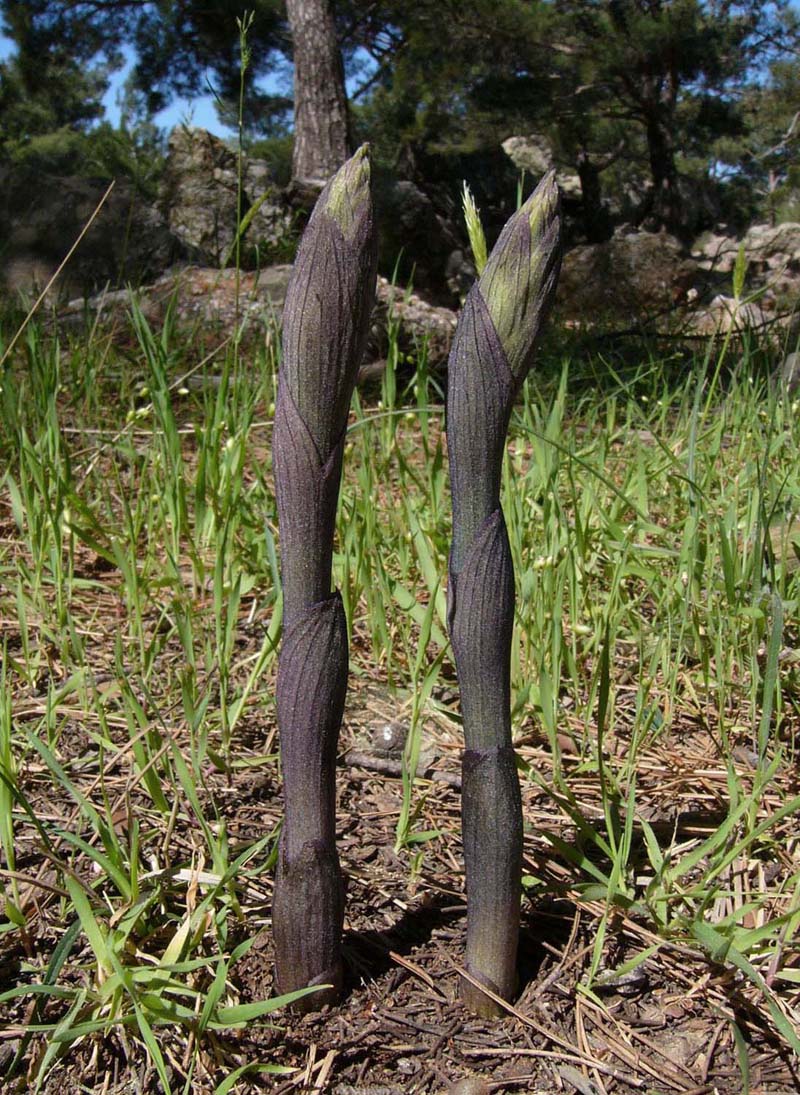
The following photographs depict plants from the Aegean island of Kos which although not as yet recognized as a distinct variety, do show differences to the nominate species. The plants are small, perhaps half the size of L. abortivum itself and grow in open, often arid phrygana in full sun, a situation largely avoided elsewhere in its range. These plants are almost certainly adaptations to habitat loss on an island whose natural environment has been severely depleted by tourist development and overgrazing. As with other of the species variants, these plants may be of little evolutionary significance, they are however a distinct geotype.