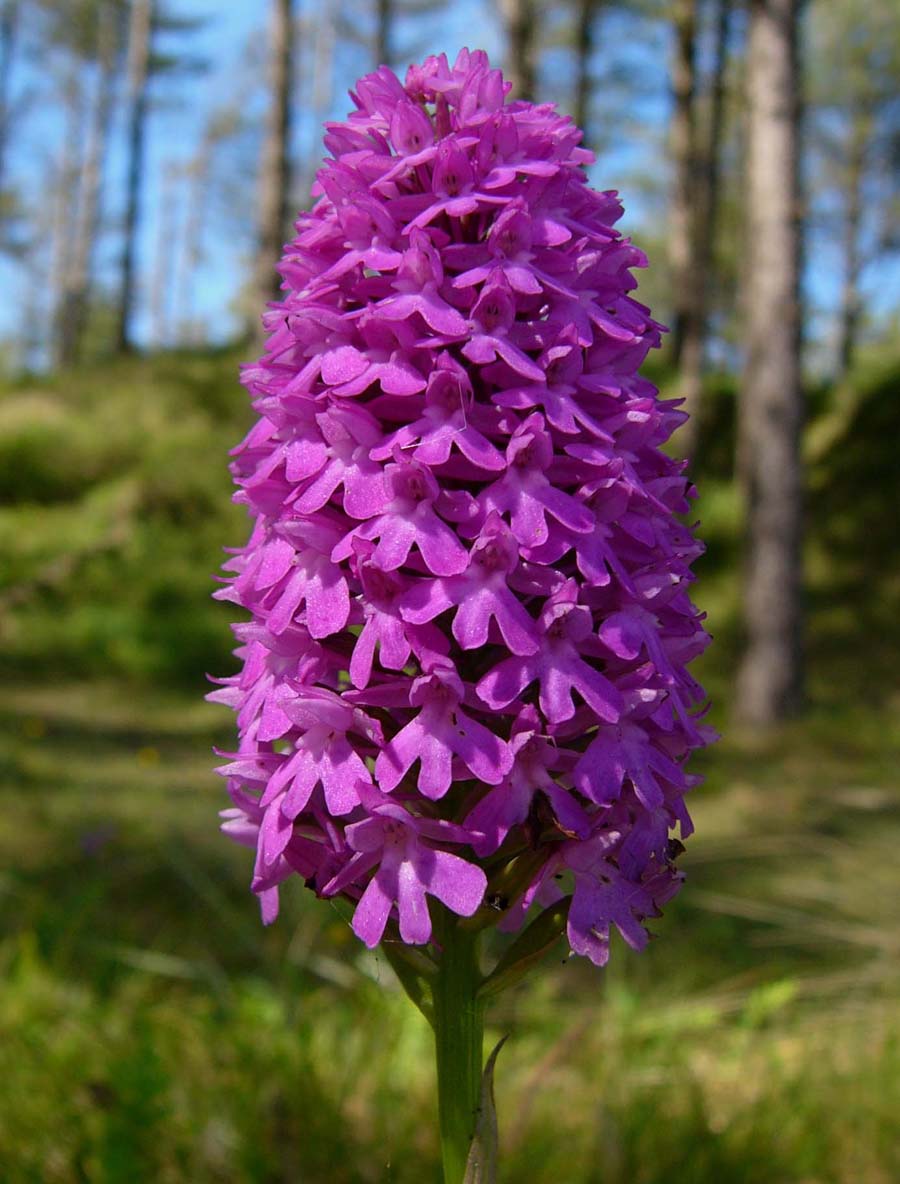
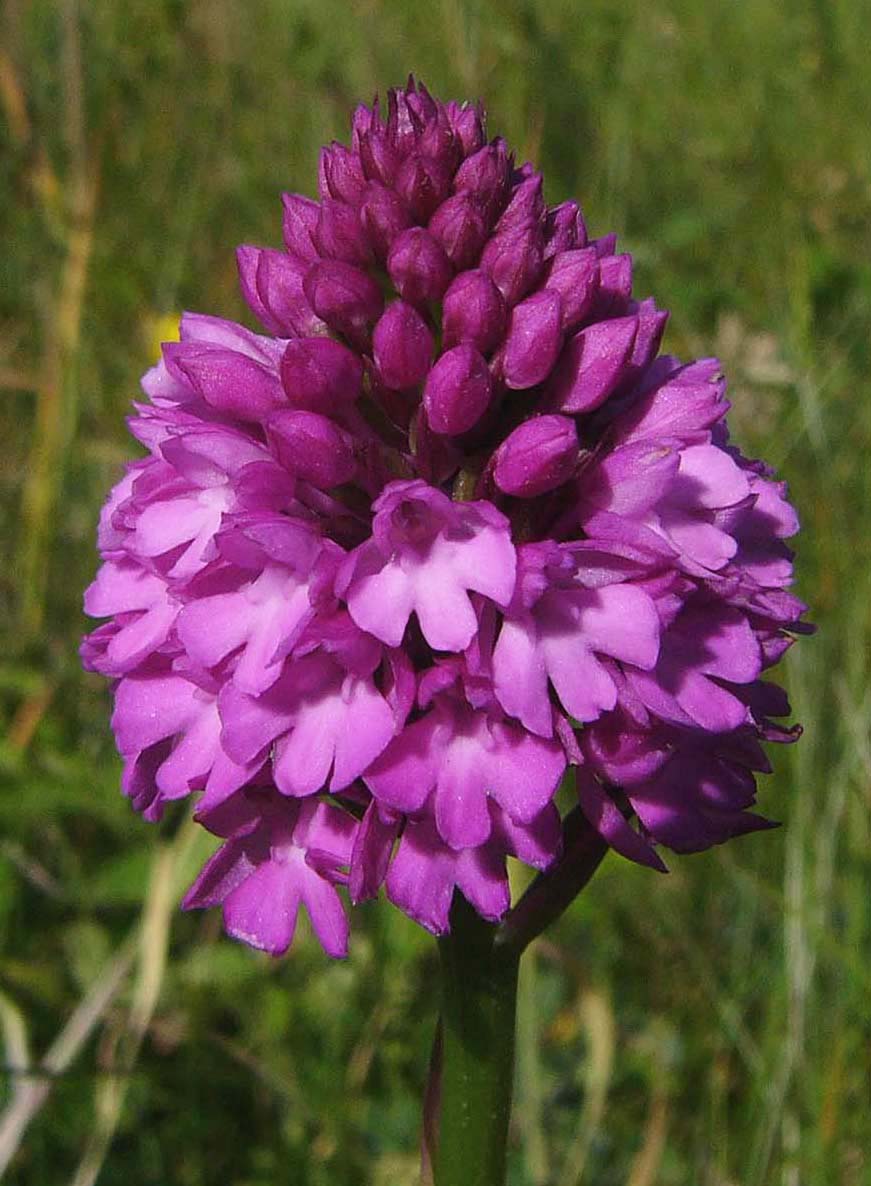
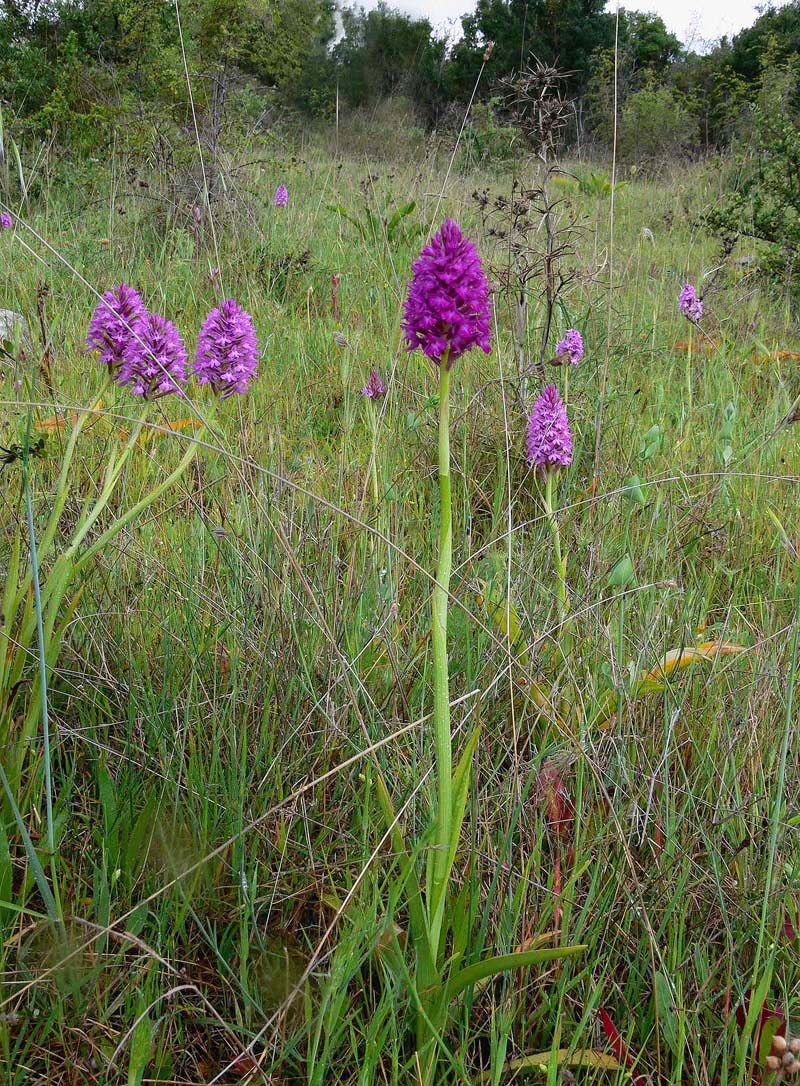
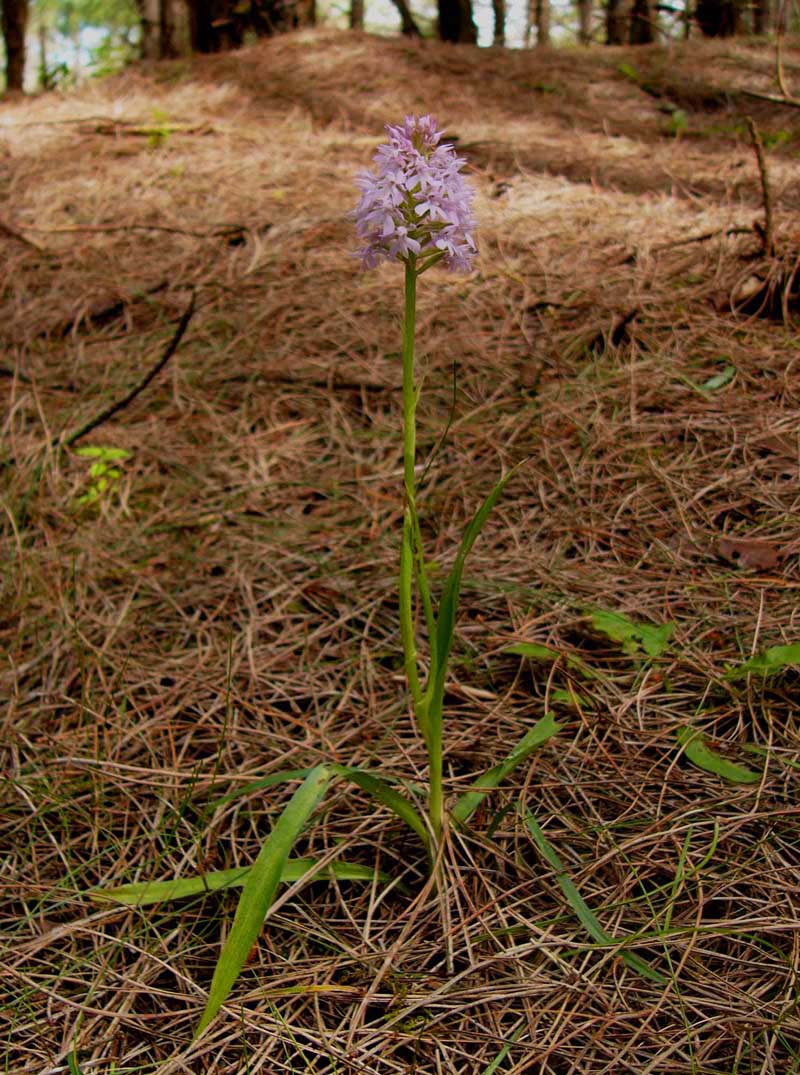
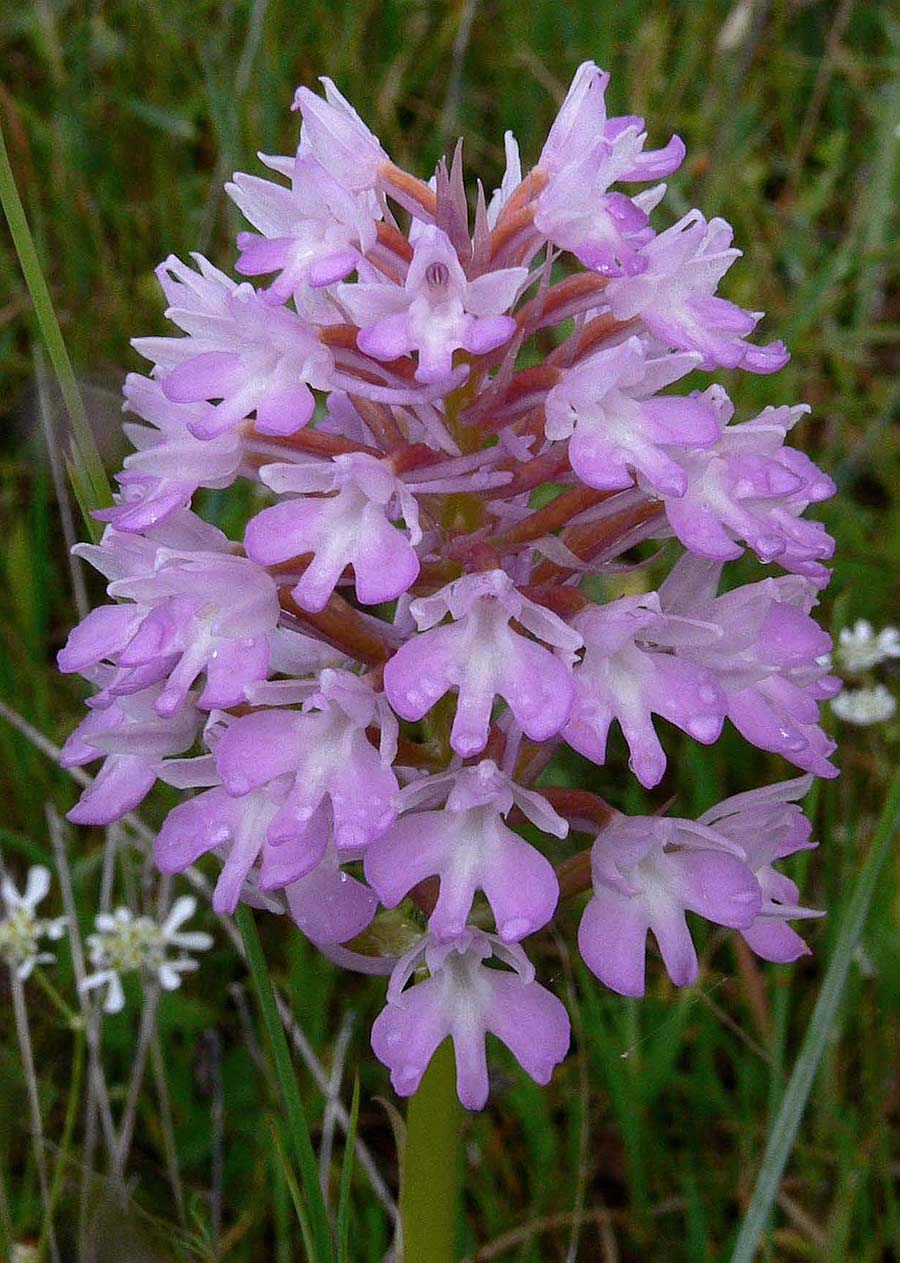
A. pyramidalis
was first described by L.C.M Richard from Oxford (England)
in 1753 and its name alludes to the pyramidal
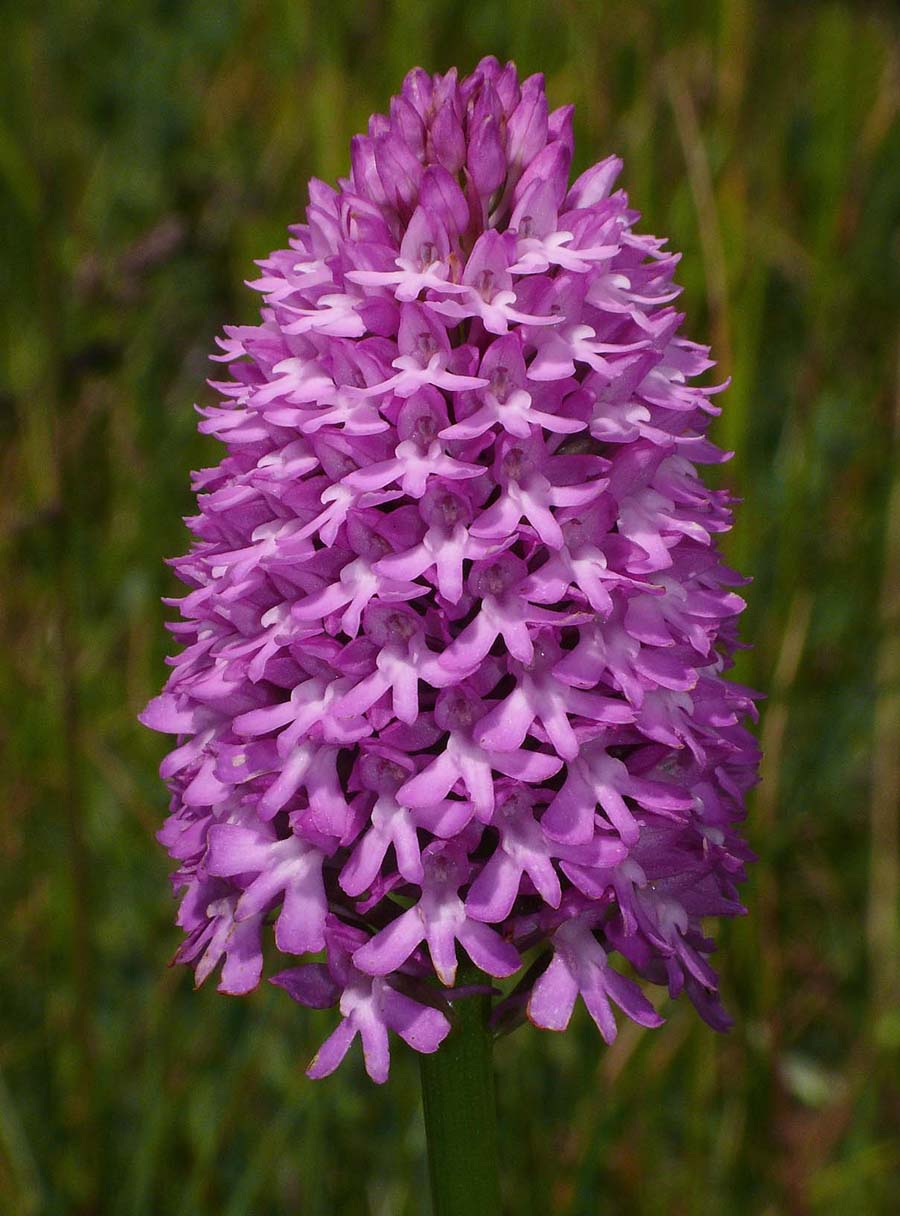
shape of the inflorescence. It is widely known by its unsurprising common name, the Pyramidal orchid.
This species is pollinated by a variety of moths and butterflies and the mechanism by which the pollinia attach to the proboscis of insects was first described by no less an authority than Charles Darwin in his paper, The Fertilisation of Orchids. This is a widespread orchid, present throughout most of northern and central Europe apart from northern Scandinavia. Accurately defining its distribution boundaries and its overlap with other similar taxons in southern and eastern Europe is difficult to say the least and due to these uncertainties will not be attempted here.
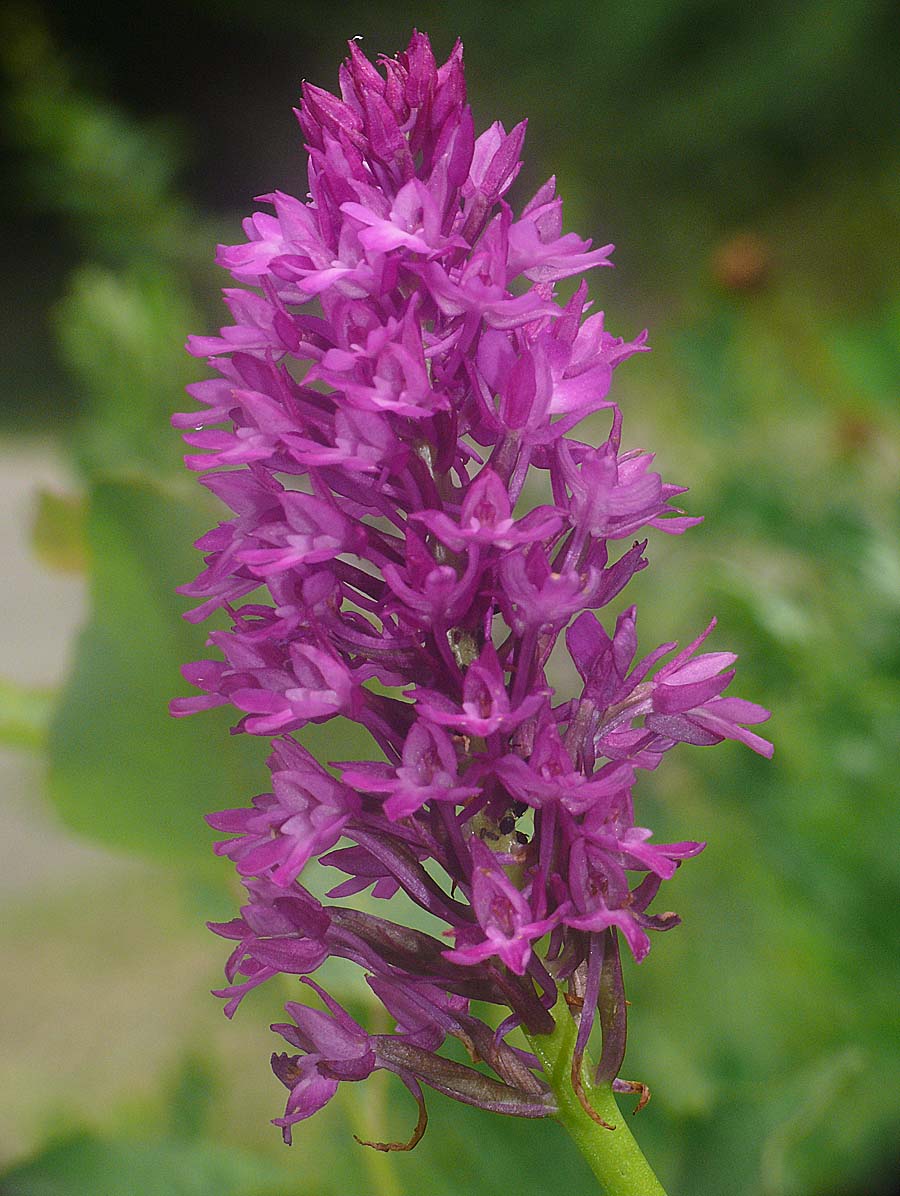
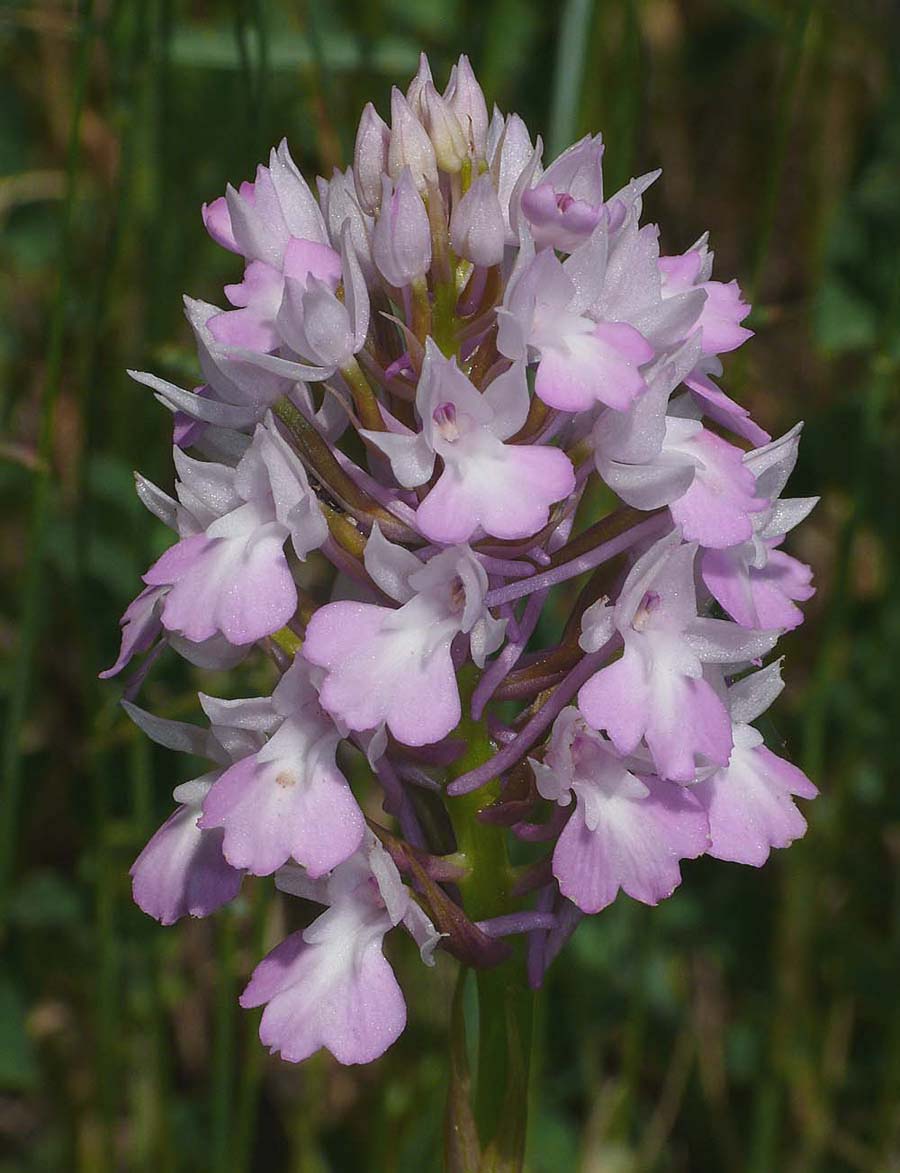
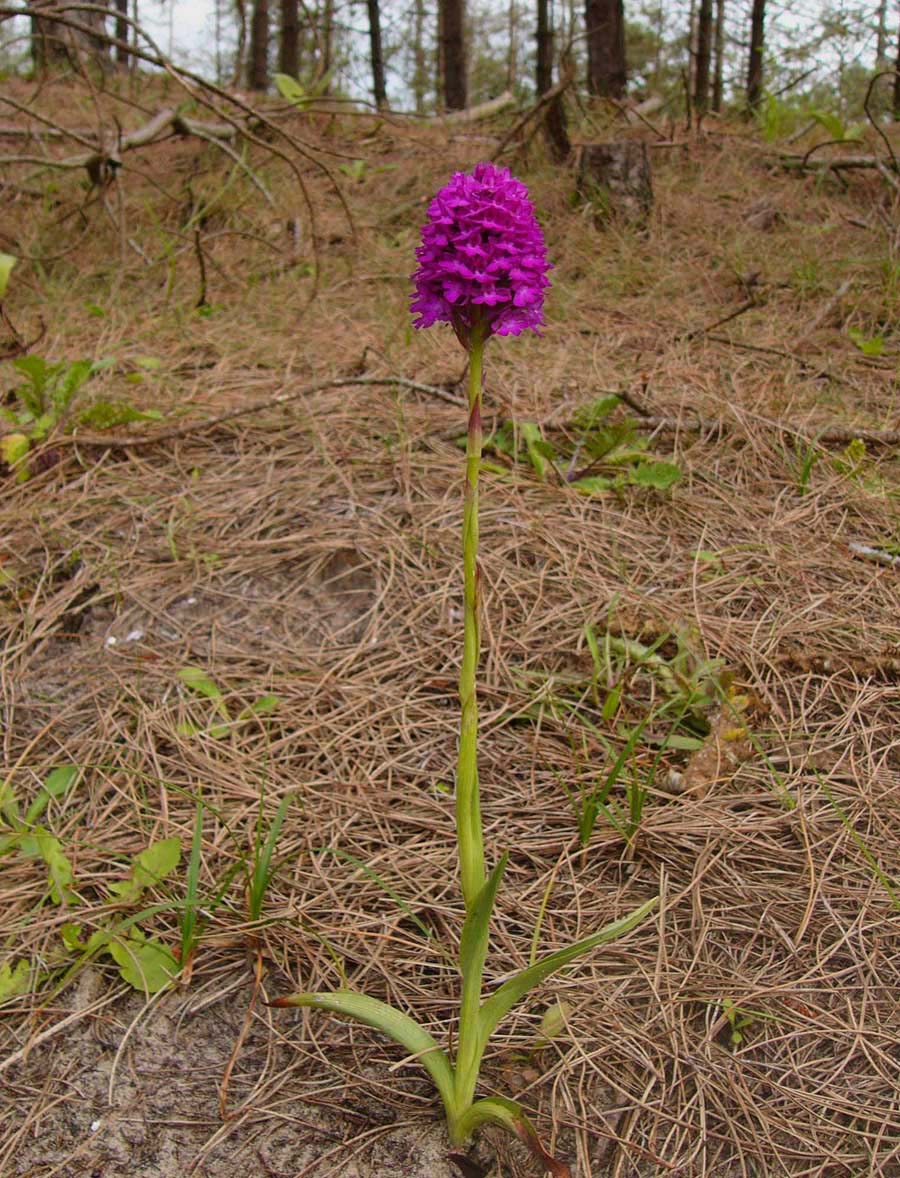
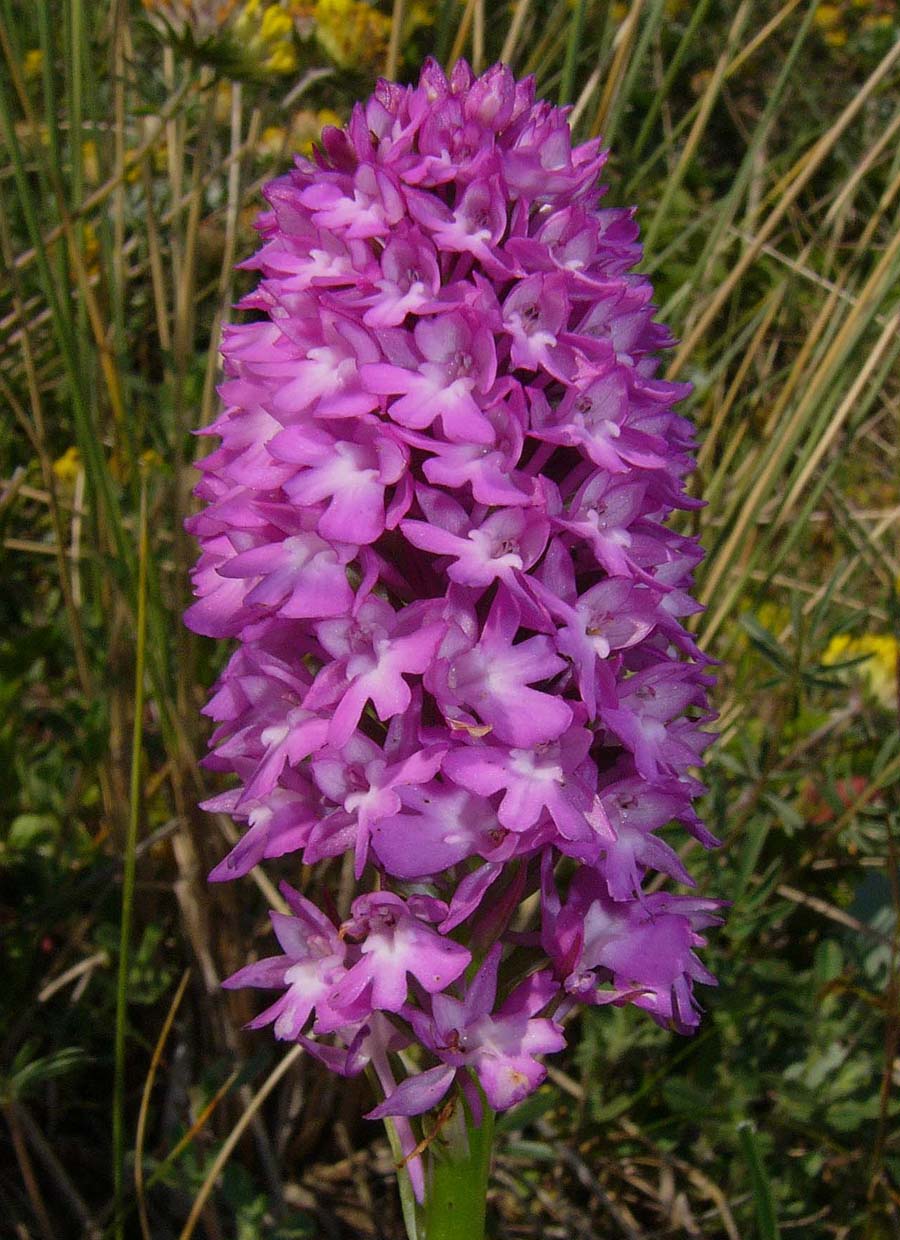
It is exclusively a plant of calcareous soils but otherwise tolerates a broad range of habitat from dry to damp conditions, in full sun to relatively deep shade. It flowers from late March in Mediterranean regions to early July in colder areas. Although A. pyramidalis is generally an easily recognized species due to its appearance and structure, it can vary considerably in terms of colouration, flower shape and inflorescence density. Hybridization is not unknown but is not common and will rarely influence identification. Several variants have been recognized and new species described, all of which are easily identified as part of the grouping.
Picture 4 depicts an unusual specimen from the Allevard region of southern France and picture 5 depicts an atypical plant from the Lecce Province of southern Italy.
This species is pollinated by a variety of moths and butterflies and the mechanism by which the pollinia attach to the proboscis of insects was first described by no less an authority than Charles Darwin in his paper, The Fertilisation of Orchids. This is a widespread orchid, present throughout most of northern and central Europe apart from northern Scandinavia. Accurately defining its distribution boundaries and its overlap with other similar taxons in southern and eastern Europe is difficult to say the least and due to these uncertainties will not be attempted here.
It is exclusively a plant of calcareous soils but otherwise tolerates a broad range of habitat from dry to damp conditions, in full sun to relatively deep shade. It flowers from late March in Mediterranean regions to early July in colder areas. Although A. pyramidalis is generally an easily recognized species due to its appearance and structure, it can vary considerably in terms of colouration, flower shape and inflorescence density. Hybridization is not unknown but is not common and will rarely influence identification. Several variants have been recognized and new species described, all of which are easily identified as part of the grouping.
Picture 4 depicts an unusual specimen from the Allevard region of southern France and picture 5 depicts an atypical plant from the Lecce Province of southern Italy.