O. tarquinia
was first described by Delforge from Livorno, Tuscany in
2000 and is a member of the O. exaltata group of Ophrys. Its name refers to the Tarquins, Etruscan Kings of Rome
between 759 and 503 BC (the first of these being
Romulus).
This Ophrys is an Italian endemic with a very limited range centred on Tuscany and at its most frequent away from the coast in the Firenze region. It is however relatively common as far south as Grosetto and it's in this area that its range overlaps with several other related species. The combination of innate natural variation, a proliferation of newly described species and years of species introgression which have created indeterminate intermediate populations have all conspired to complicate accurate identification. There are four other commonly encountered species with which O. tarquinia may be found in flower concurrently, O. argentaria, O. classica O. maritima and O. minipassionalis.
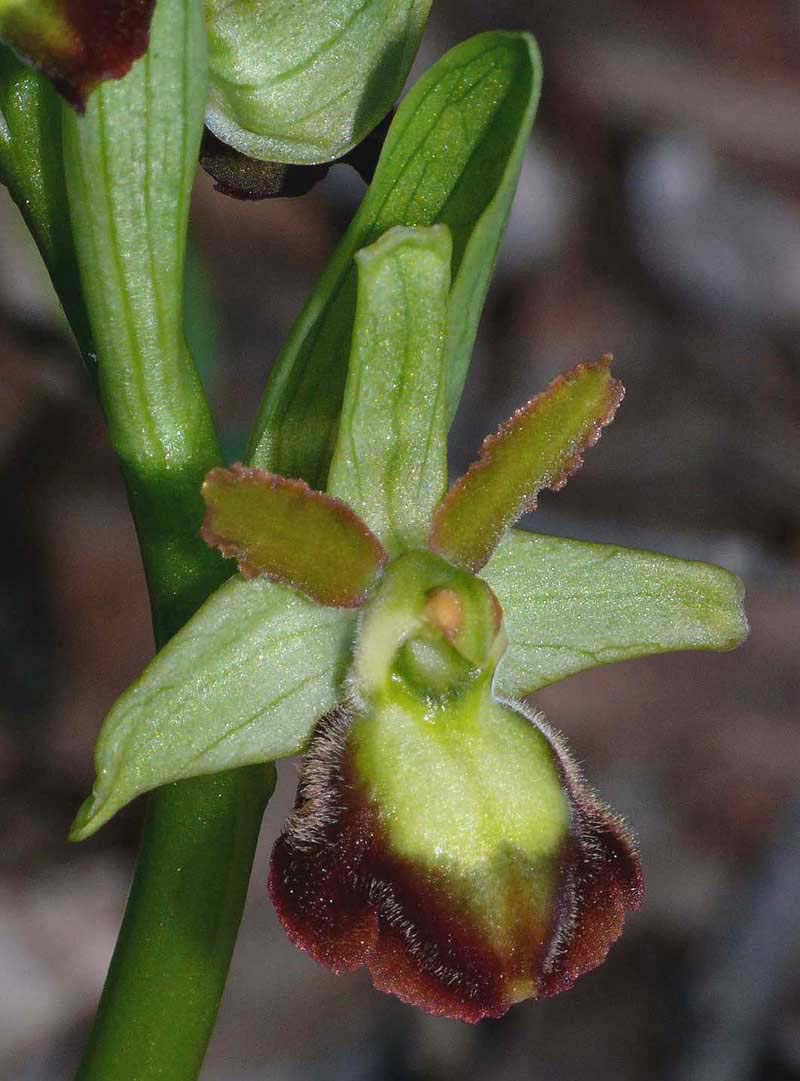
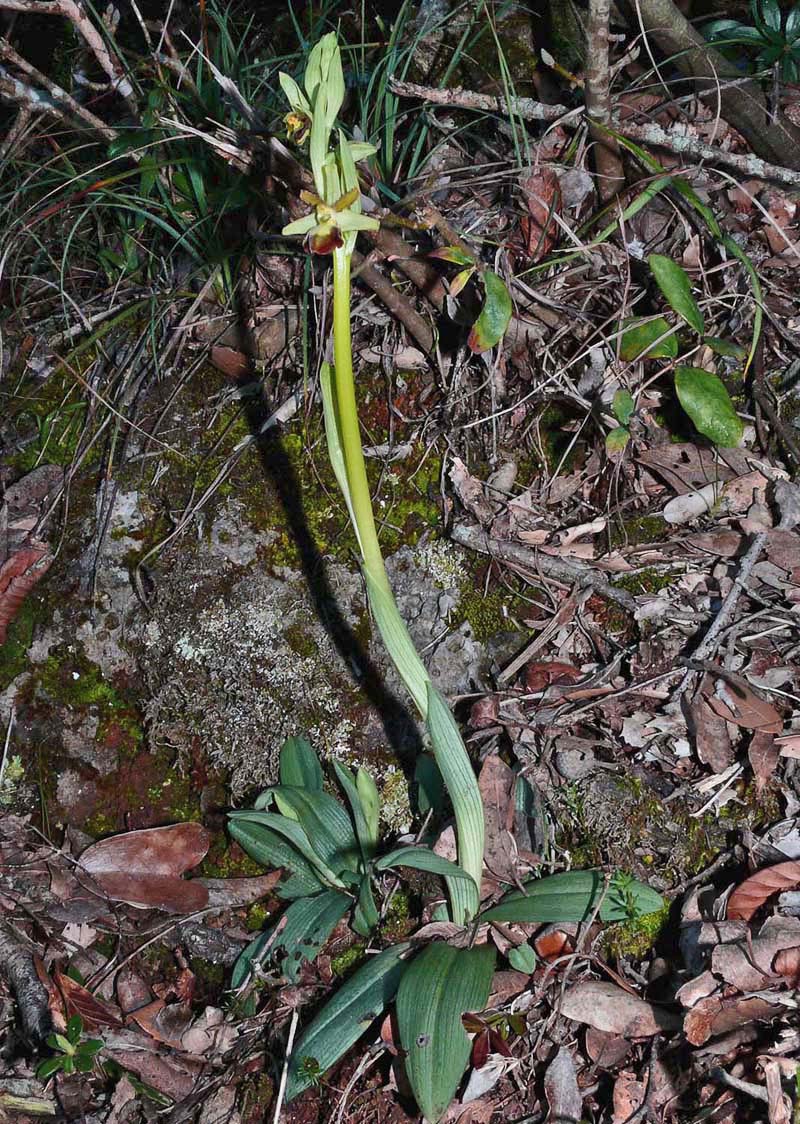
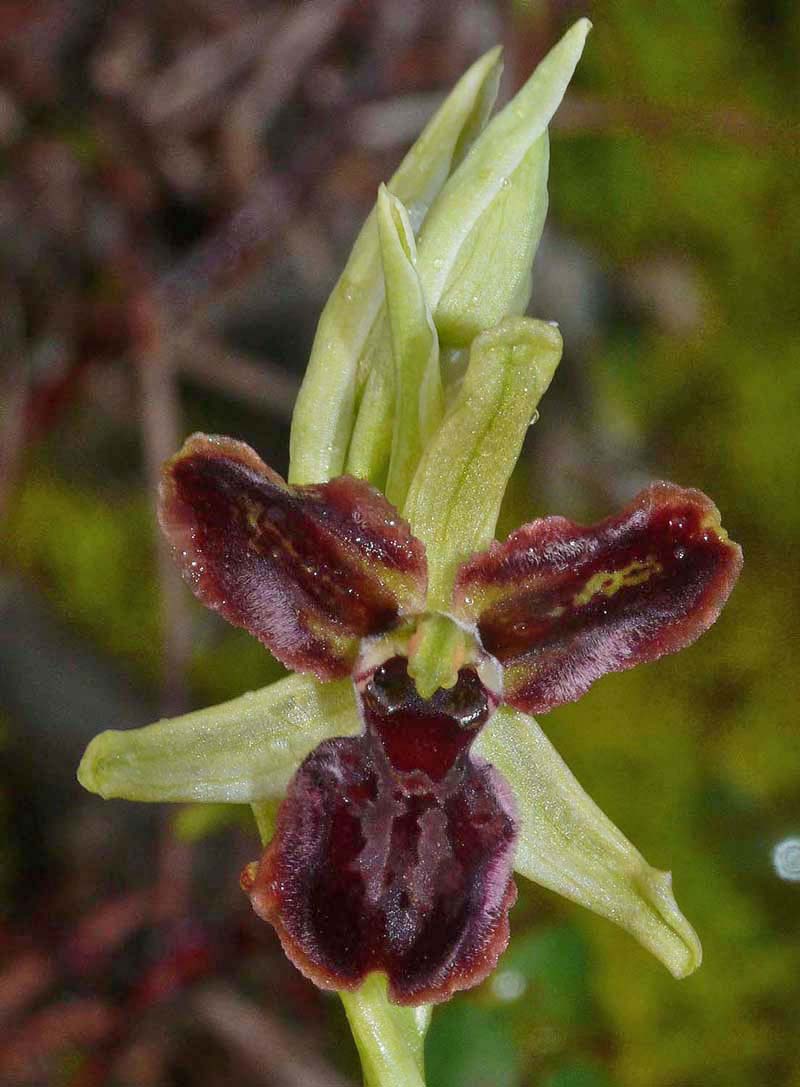
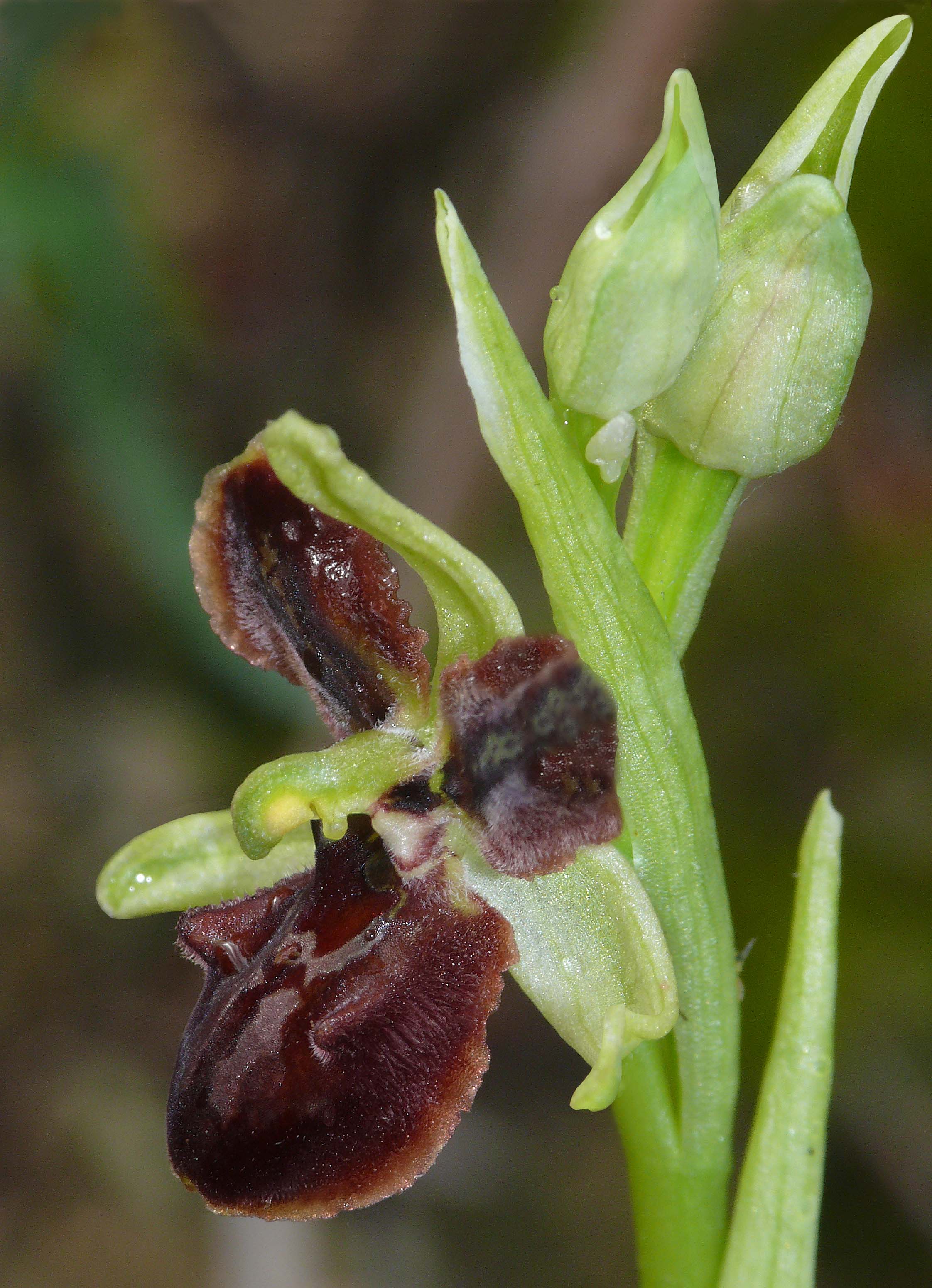
O. tarquinia is a sturdy orchid with large flowers appearing in mid March and which are generally more striking than those of its cousins. The speculum varies from an uncomplicated H to an occasionally embellished but basically prosaic pattern. Basal swellings are normally small or absent with a lip that can be entire or three lobed and margins that are more or less recurved, normally with wavy edges. The basal rosette is distinctly bluish grey and the stem tall, thick-set and capable of growing to an impressive height of nearly 60cms.
The pictures all come from sites in southern Tuscany between Sienna and Grosetto, dating from the end of March and throughout April.
This Ophrys is an Italian endemic with a very limited range centred on Tuscany and at its most frequent away from the coast in the Firenze region. It is however relatively common as far south as Grosetto and it's in this area that its range overlaps with several other related species. The combination of innate natural variation, a proliferation of newly described species and years of species introgression which have created indeterminate intermediate populations have all conspired to complicate accurate identification. There are four other commonly encountered species with which O. tarquinia may be found in flower concurrently, O. argentaria, O. classica O. maritima and O. minipassionalis.
O. tarquinia is a sturdy orchid with large flowers appearing in mid March and which are generally more striking than those of its cousins. The speculum varies from an uncomplicated H to an occasionally embellished but basically prosaic pattern. Basal swellings are normally small or absent with a lip that can be entire or three lobed and margins that are more or less recurved, normally with wavy edges. The basal rosette is distinctly bluish grey and the stem tall, thick-set and capable of growing to an impressive height of nearly 60cms.
The pictures all come from sites in southern Tuscany between Sienna and Grosetto, dating from the end of March and throughout April.
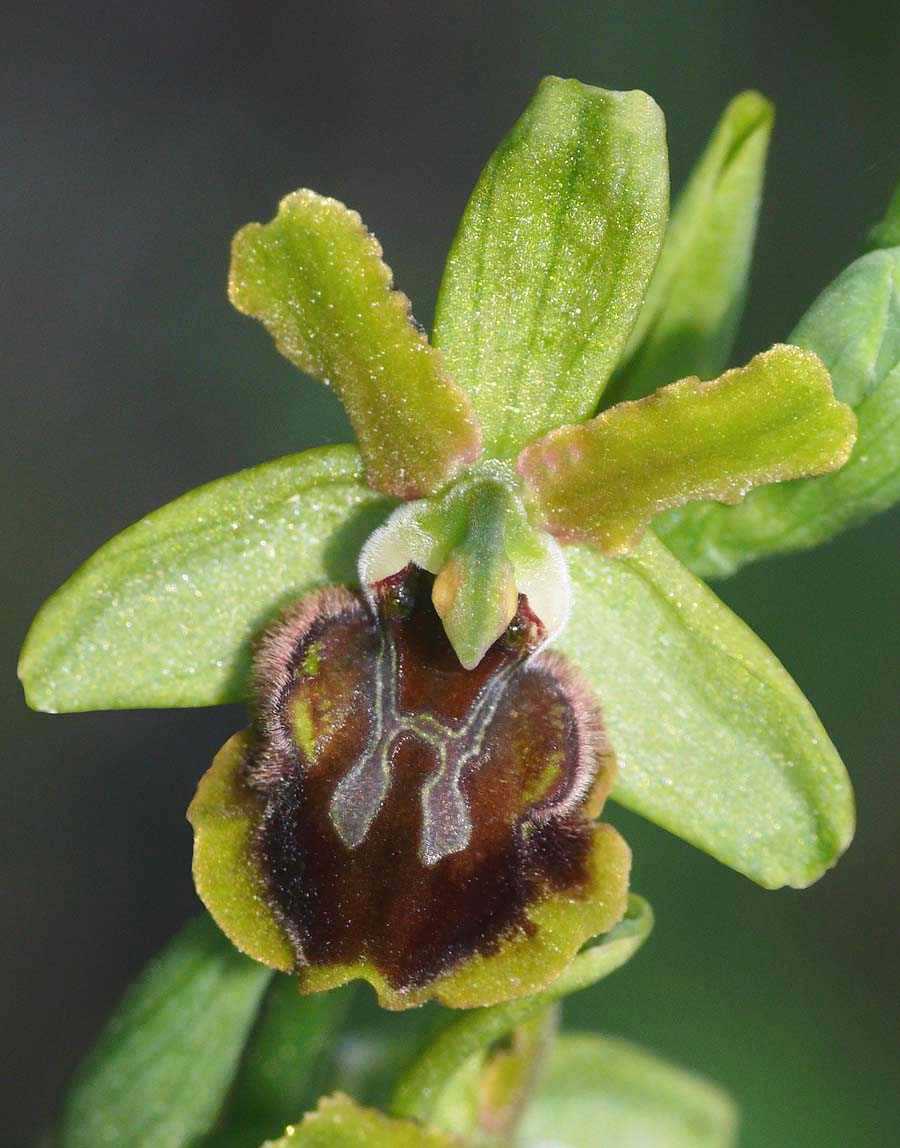
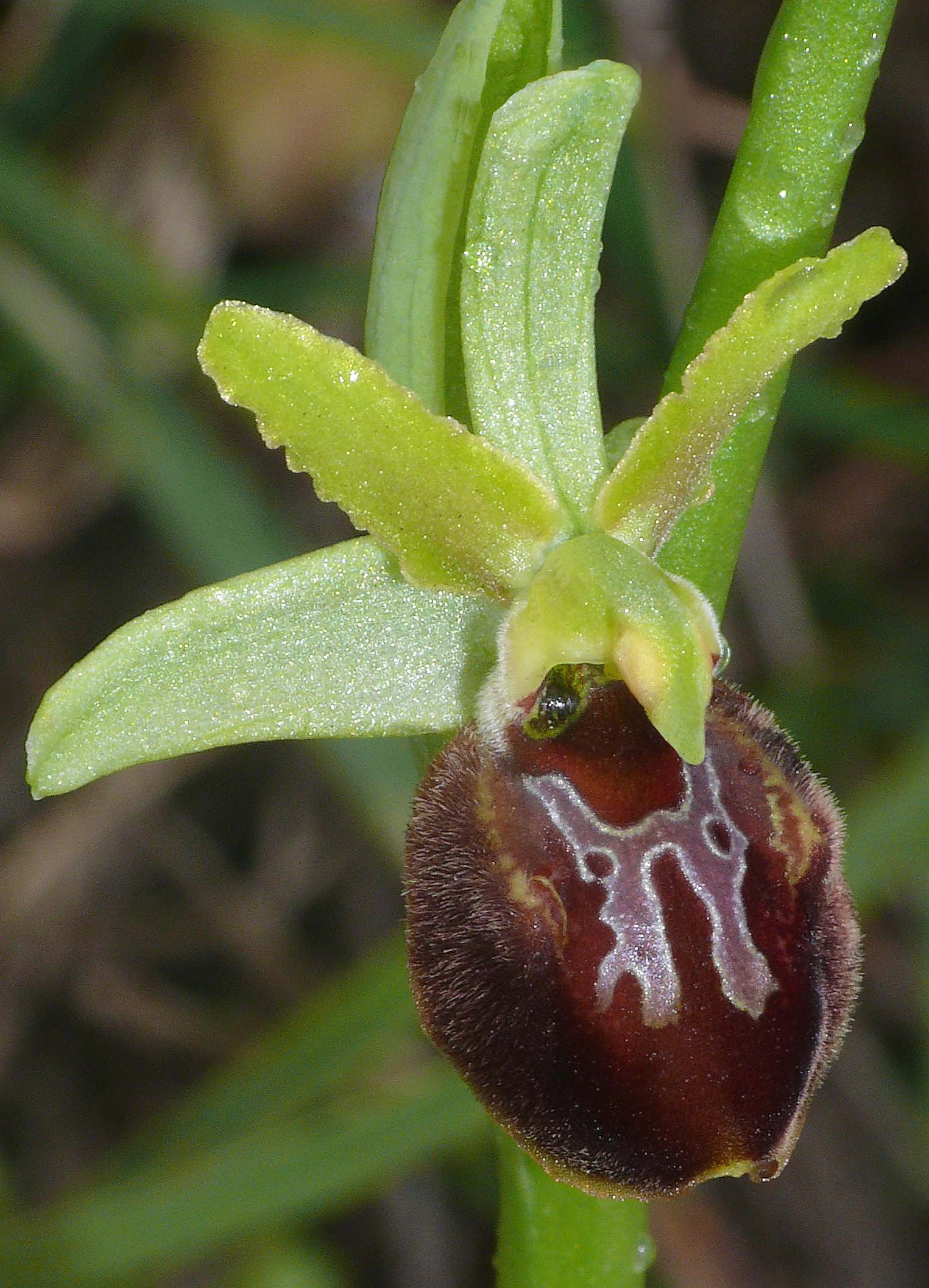
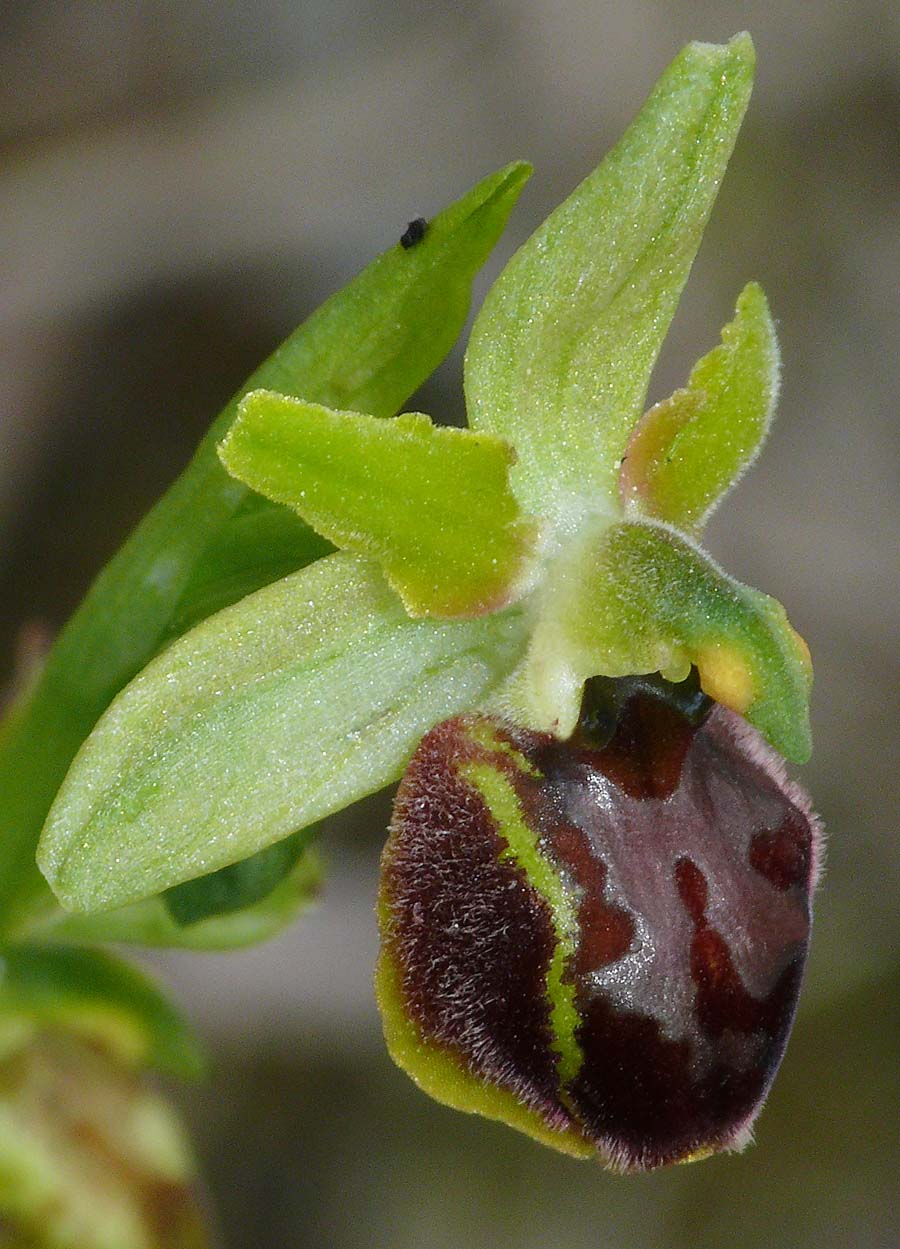
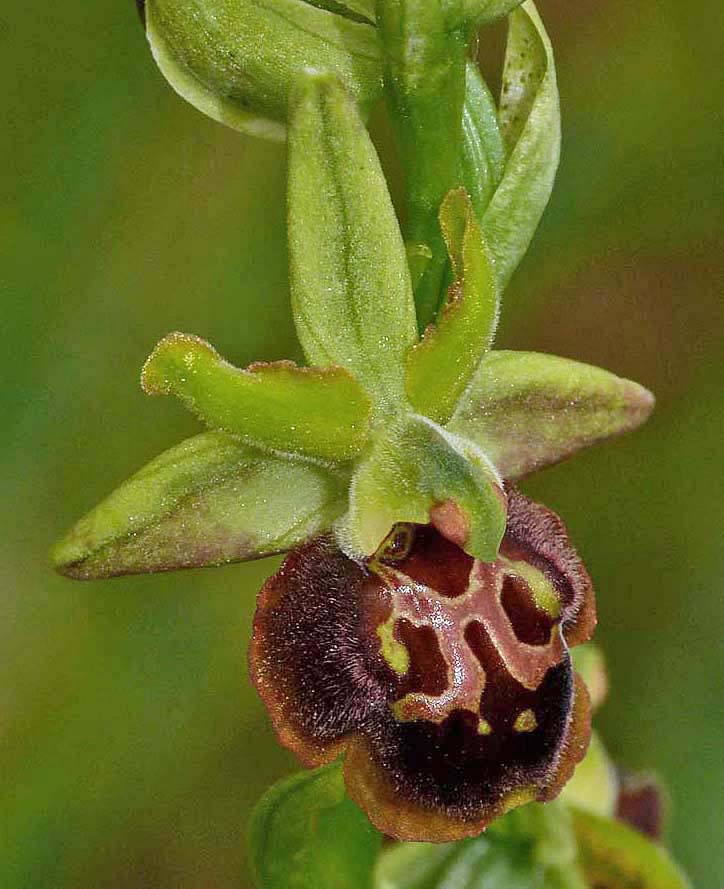
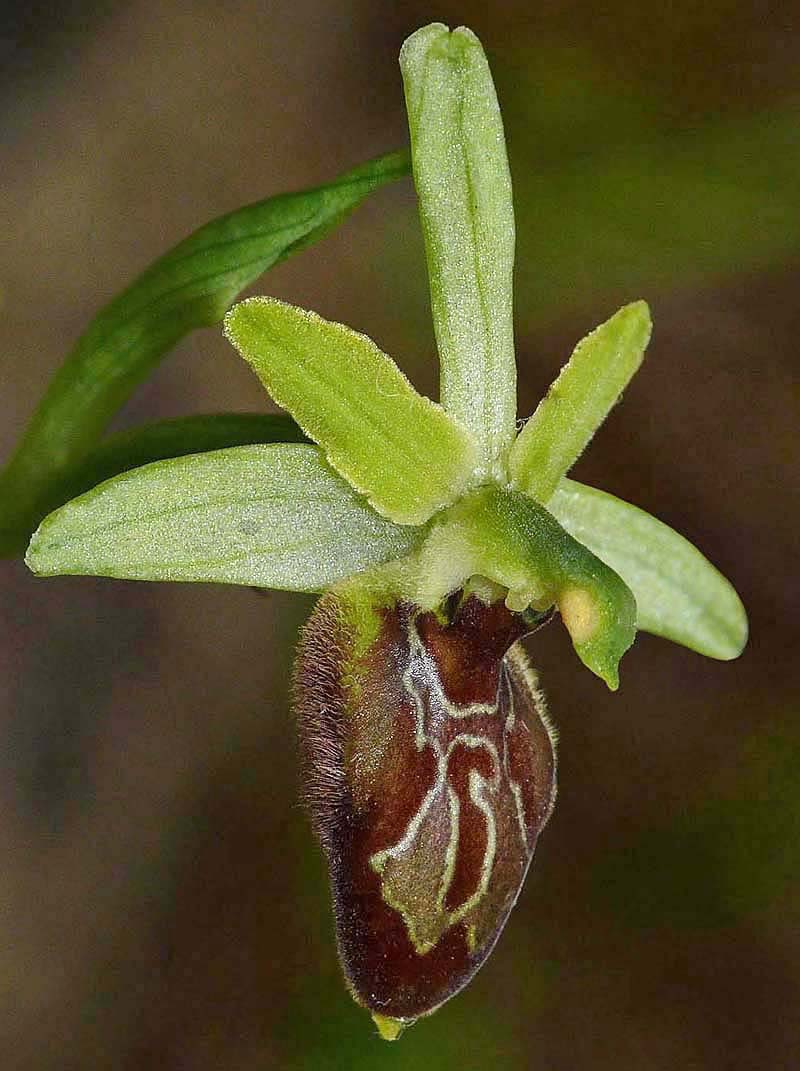
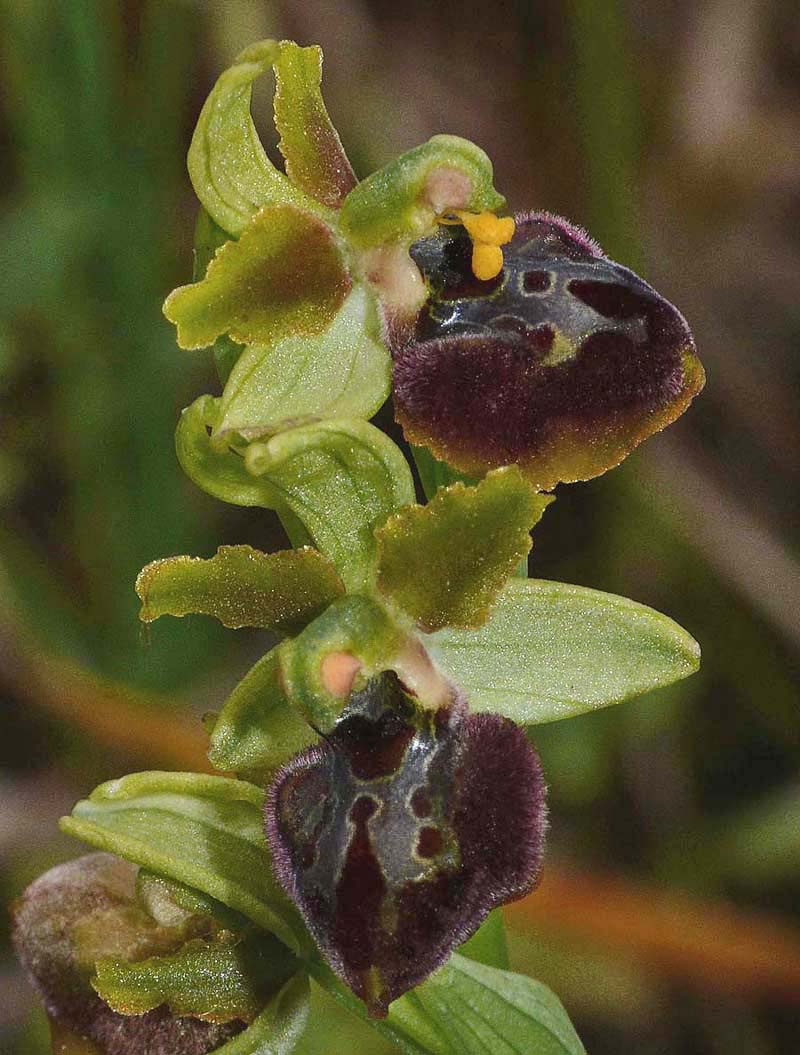
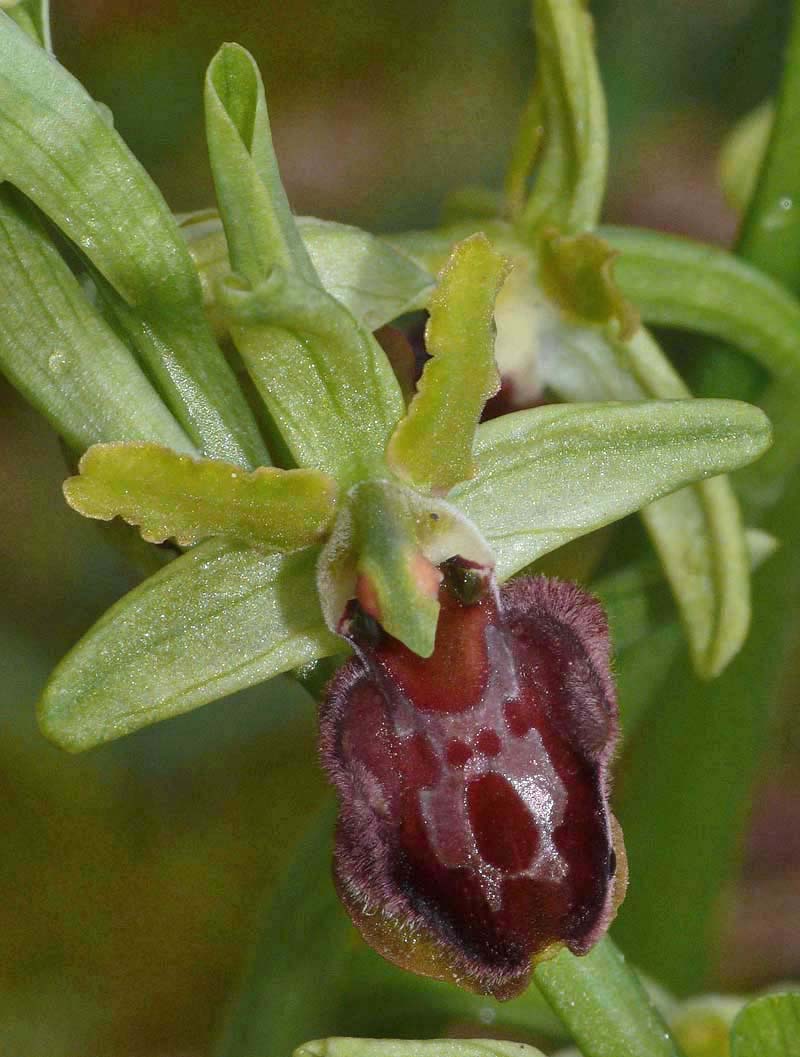
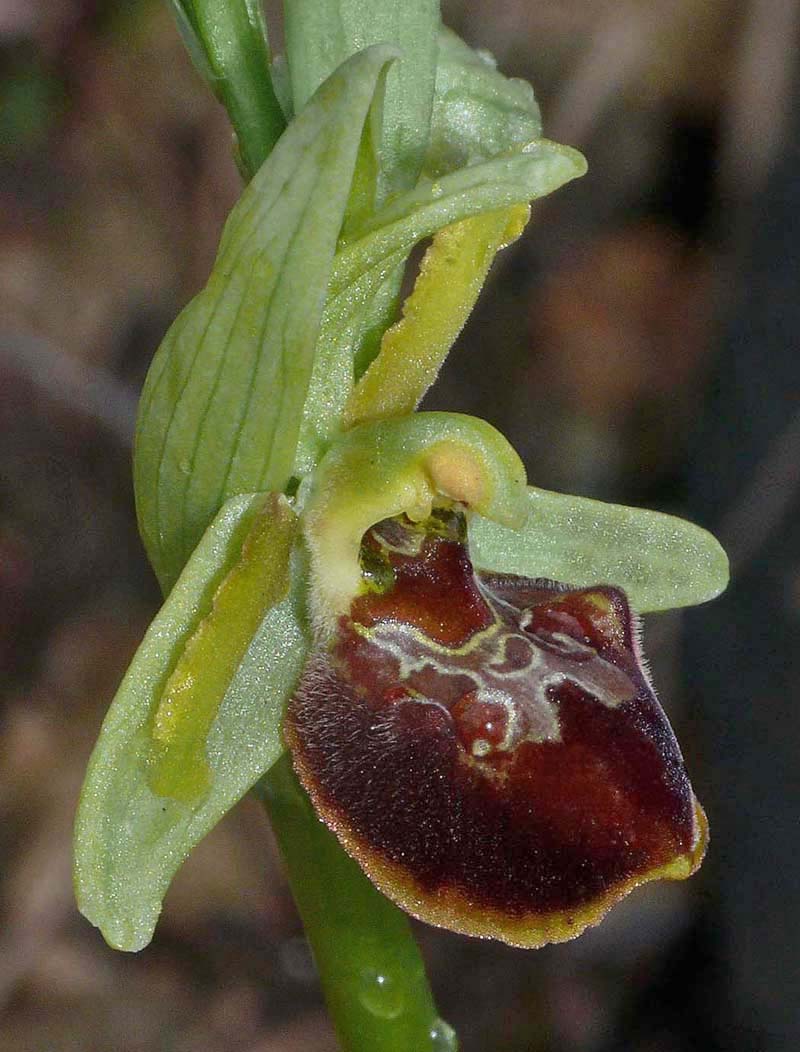

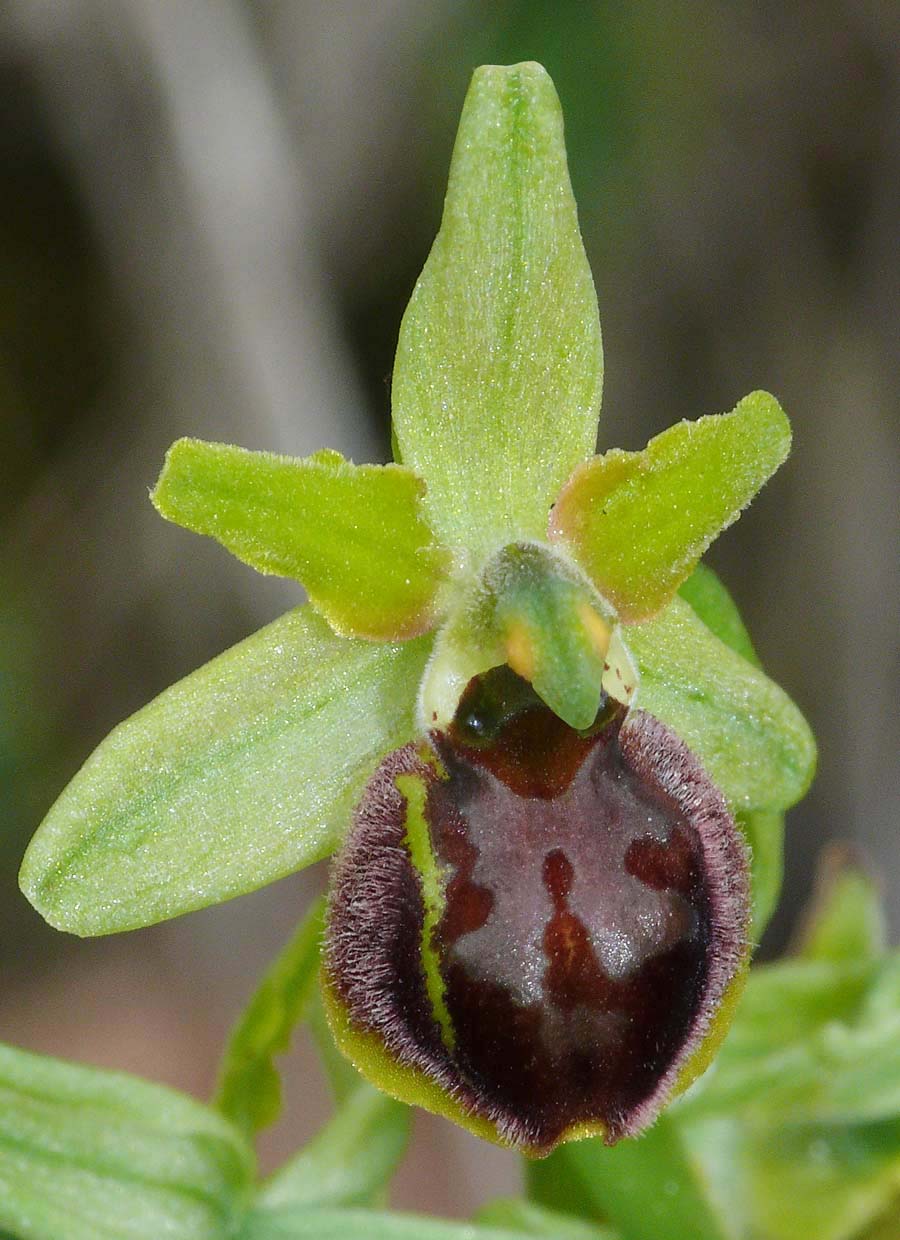
The following photographs depict abnormal examples of O. tarquinia. The first three pictures are from Monte Argentaria and are partially hypochromatic specimens.
Amongst the features that indicate the identity of this plant is the
blue-grey basal rosette, the thick stem, overall height, large flowers and lack of basal swellings.
The final three pictures are from the Sienna region of Tuscany and depict examples of O. tarquinia with greatly enlarged and heavily patterned petals. This phenomena is not particularly rare but creates a remarkable picture.
The final three pictures are from the Sienna region of Tuscany and depict examples of O. tarquinia with greatly enlarged and heavily patterned petals. This phenomena is not particularly rare but creates a remarkable picture.