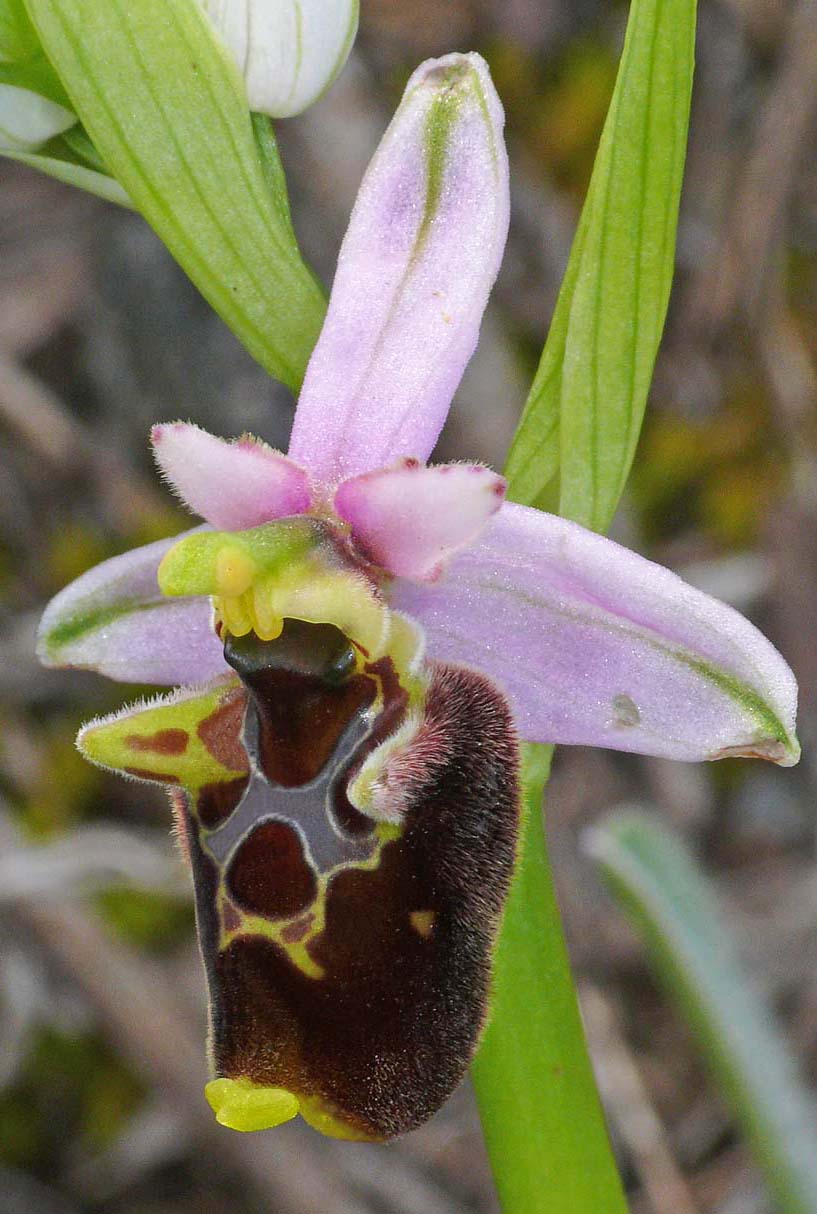
O. serotina was first collected by Rolli in 1863 but a series of procedural mistakes led to it not being formally recognized untill 2000 when it was validated by Paulus. Its name comes from the Latin "serotinus", a reference to the late flowering period of the species.
It is a member of the O. tetraloniae group which takes its name from the Tetralonia genus of bees that are its most significant pollinators. Several of the species are to be found in the Mediterranean regions from southern France through to central peninsula Italy and hybridization is not uncommon. It also seems highly probable that this group has a polyphyletic origin encompassing genetic input from several other groups and this would certainly account for the high degree of morphological variability.
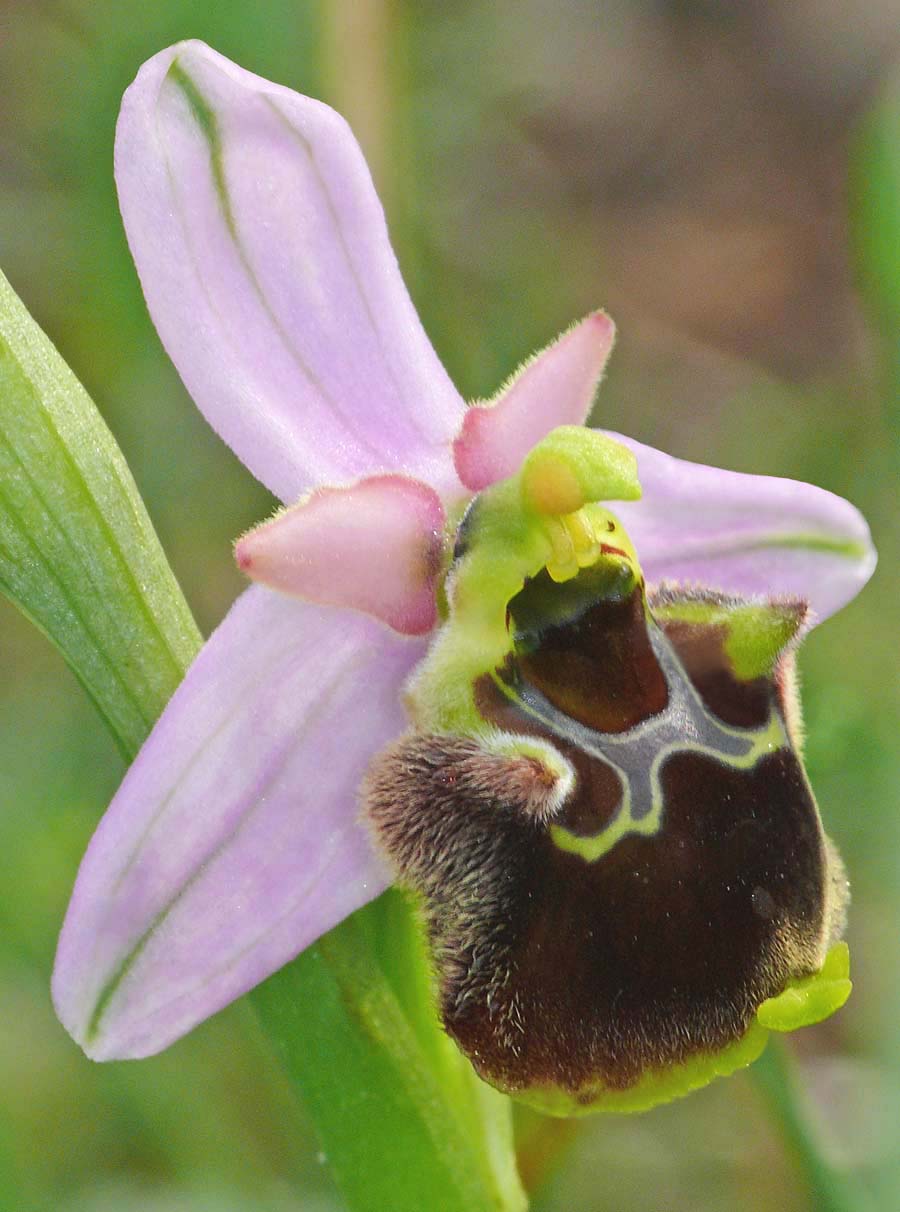
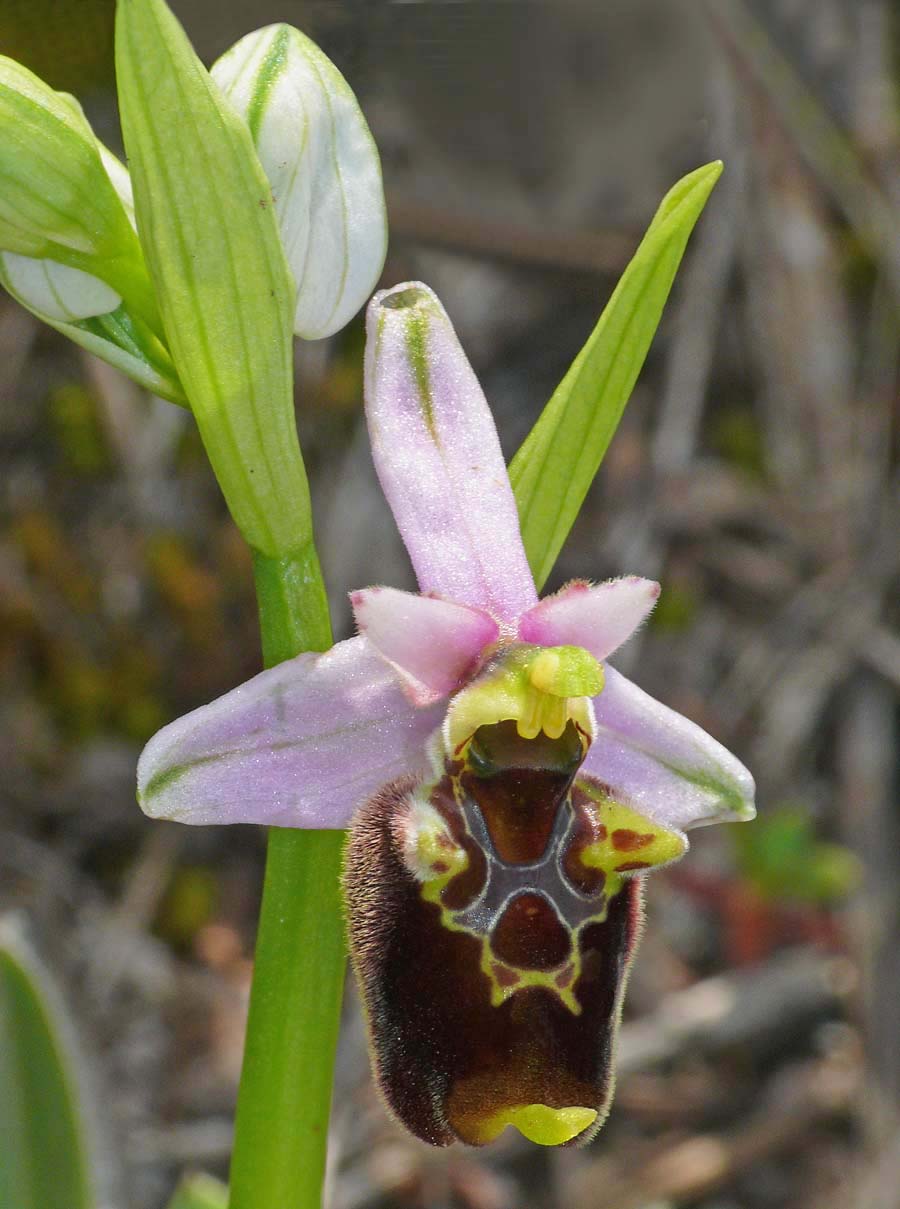
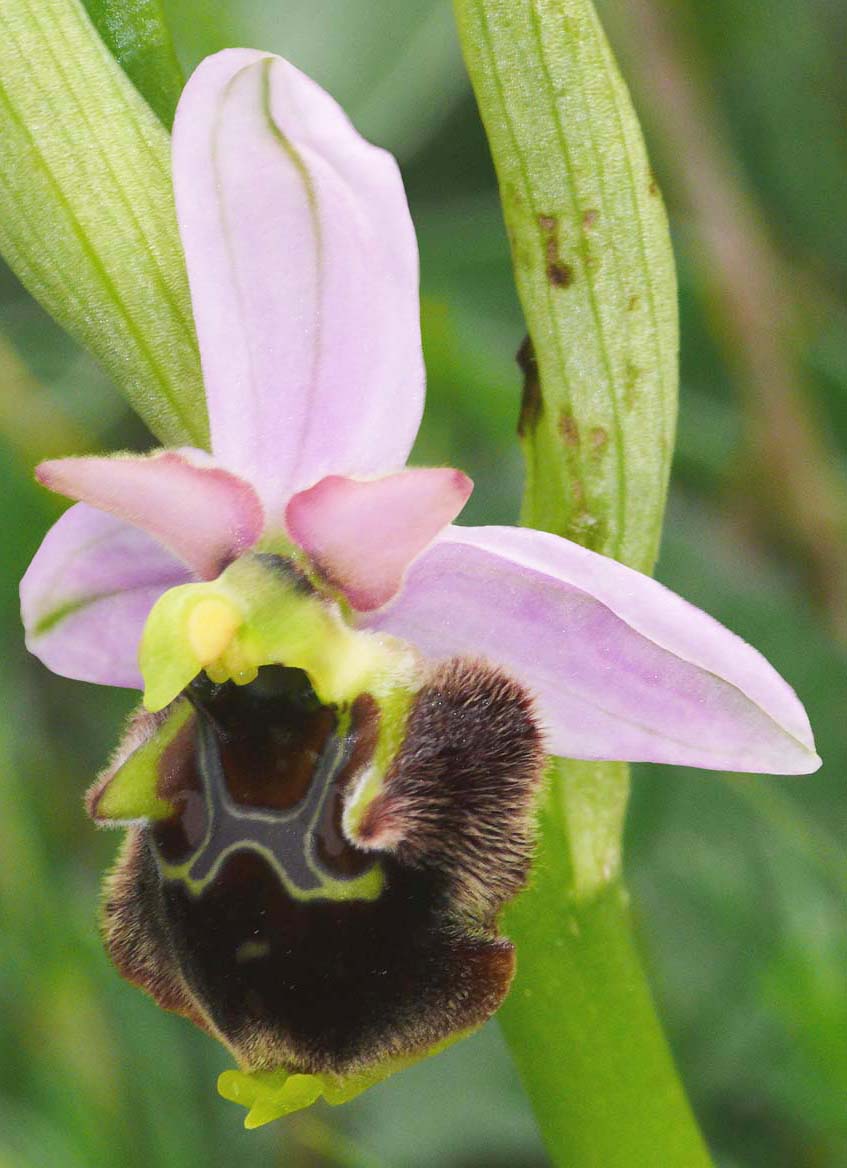
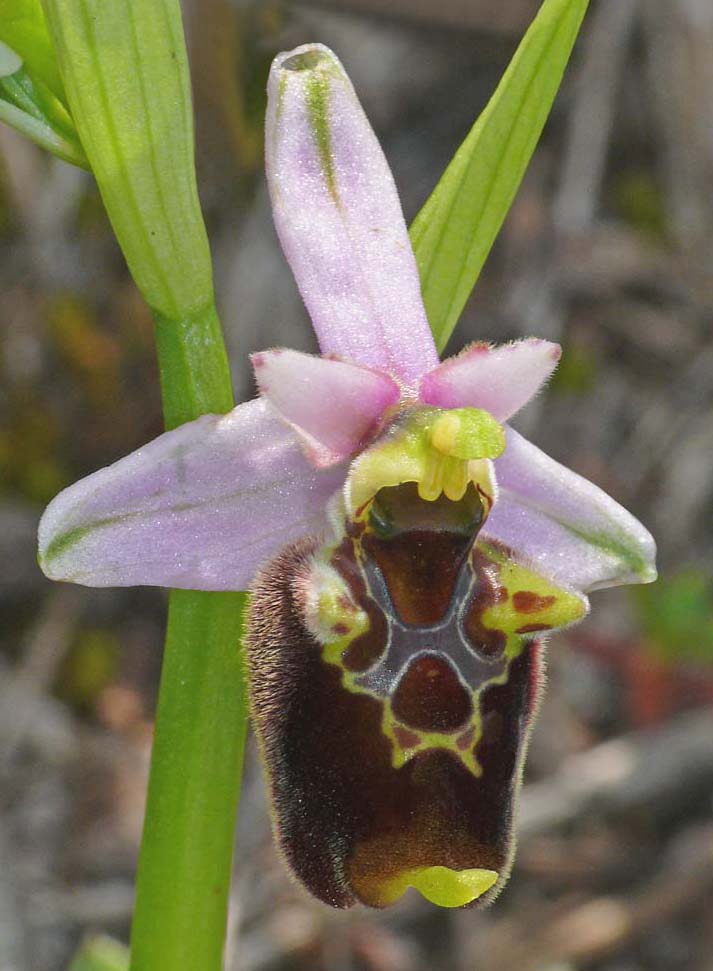
As far as was thought, O. serotina could only be found very locally in central Italy but although its precise range is still not known with certainty, it has now been established that it occurs more widely, including northern Italy and southern France. Identifying key characteristics that can yield a certain identification is difficult and there are few features that could not be equally indicative of other group members. The appendage is well developed, multi-toothed and forward pointing. The lip can be rectangular or sometimes scolopaxoid, exhibit prominent basal swellings and a limited, white edged, steel blue or violet speculum. The lip margins are often yellow tinged, a feature which makes it liable to confusion with the very similar O. posidonia. Some authorities see these two species as synonymous anyway.
The illustrations are from the central Appenines of Umbria and Abruzzo dating from the end of May.