O. dictynnae was first described by Delforge in 2005 and is a member of the O. tenthredenifera
group, endemic to the island of Crete. It is one of five new species
that resulted from Delforge's study and subsequent splitting of the O. villosa complex.
Of these new species, O. dictynnae is usually the first to bloom in mid February, followed closely by the equally early flowering O. villosa itself. The former does however have an extended flowering period that takes it through March and into early April, particularly those growing at higher altitudes. This results in some O. dictynnae still being in flower concurrently with the very similar group members O. dimidiata and O. leochroma, which first appear early that month. The four species can be difficult to separate, except that O. dictynnae should be distinguishable by its fading condition at the time these close relatives appear.
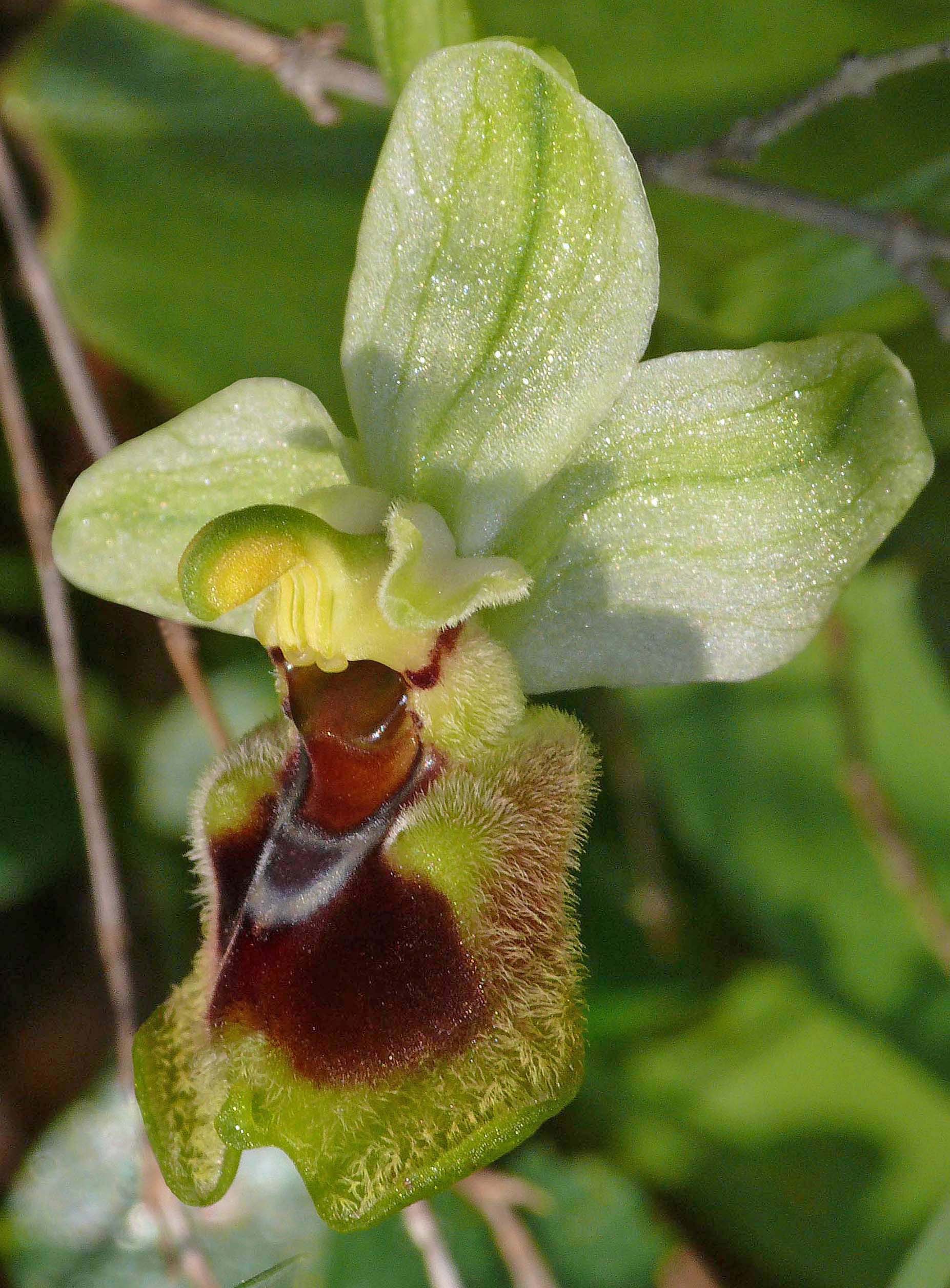
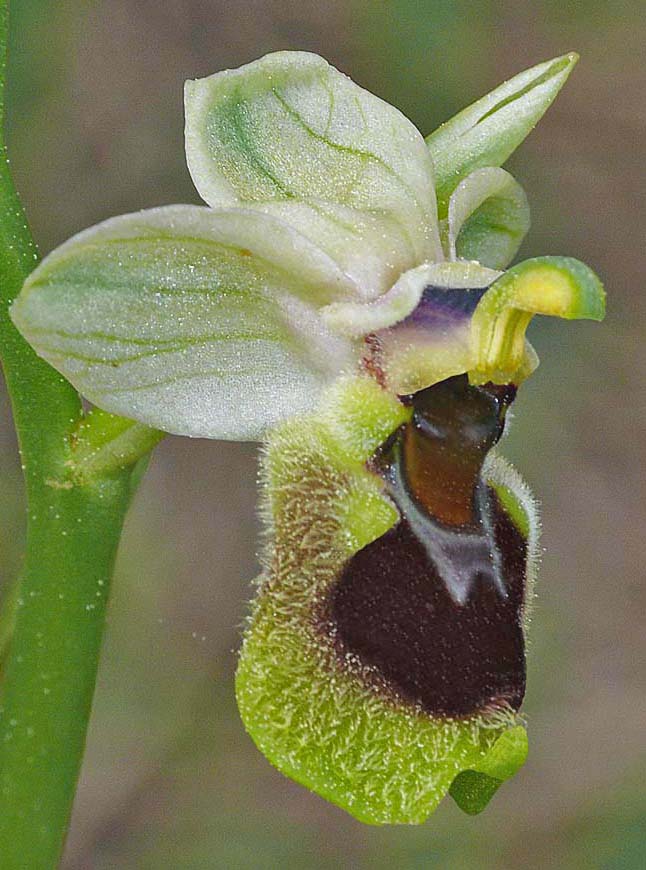
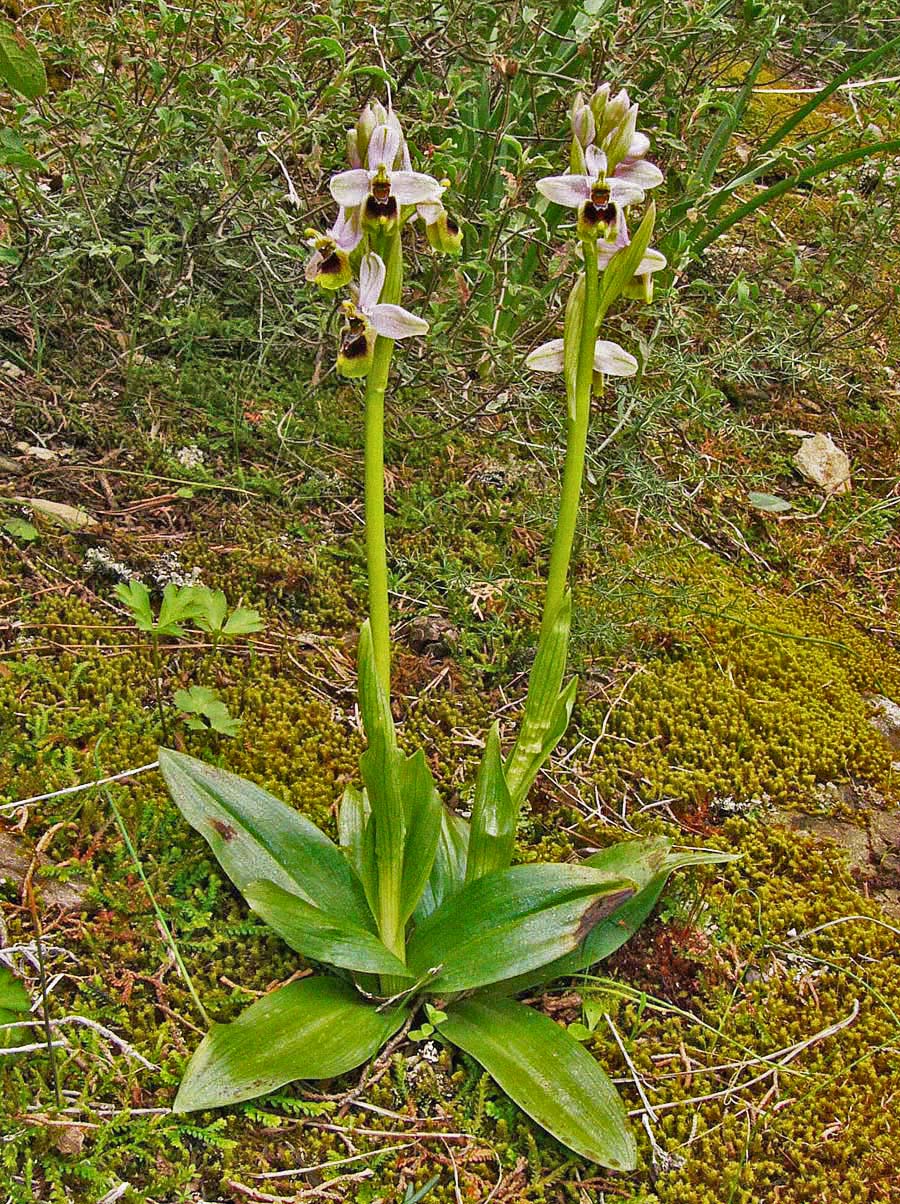
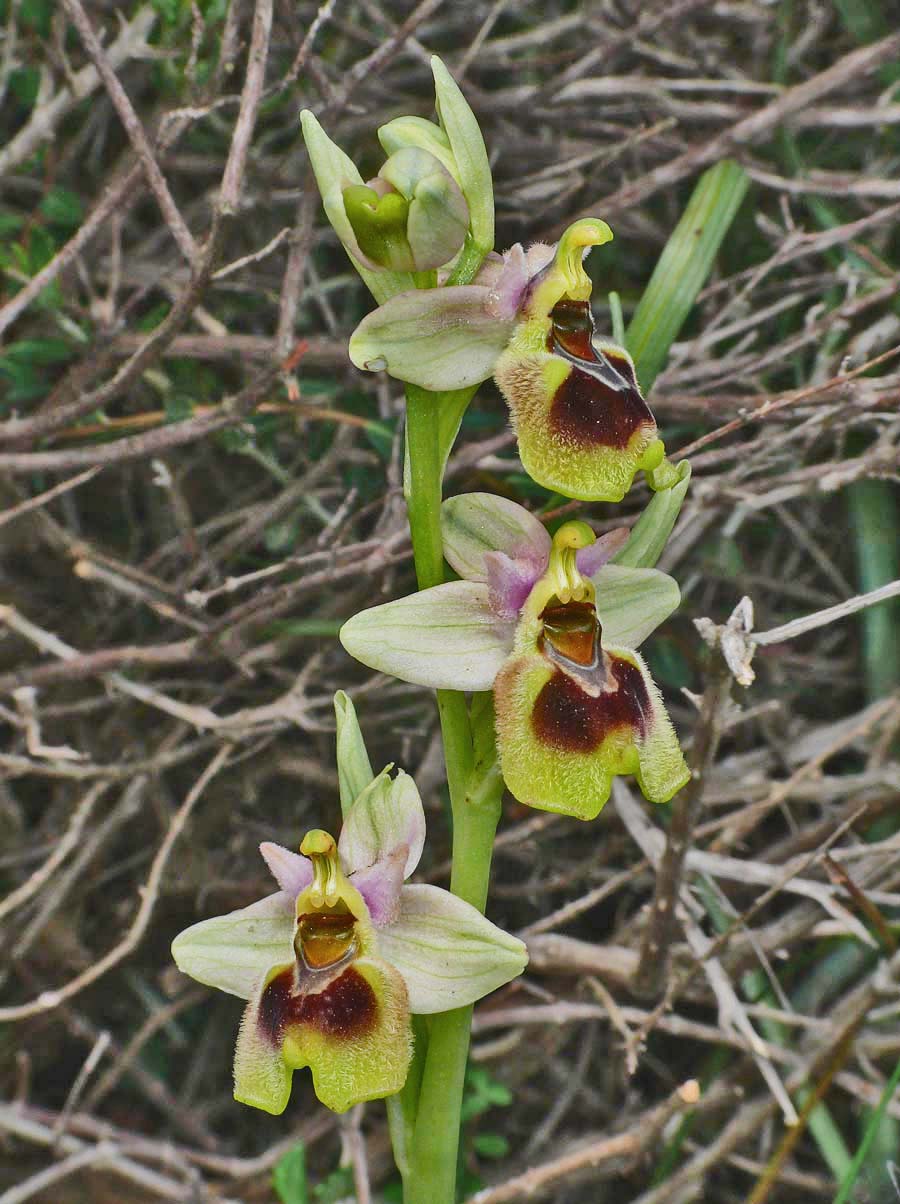
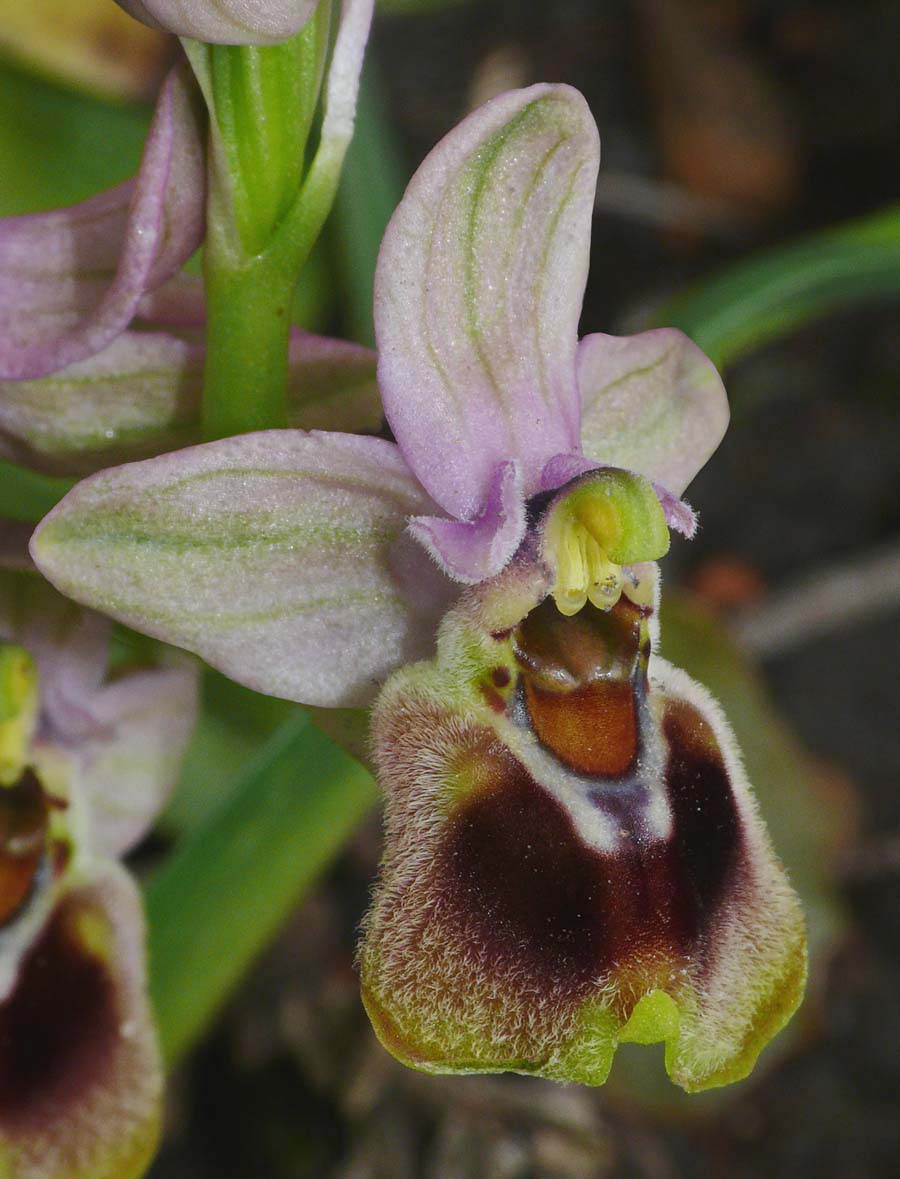
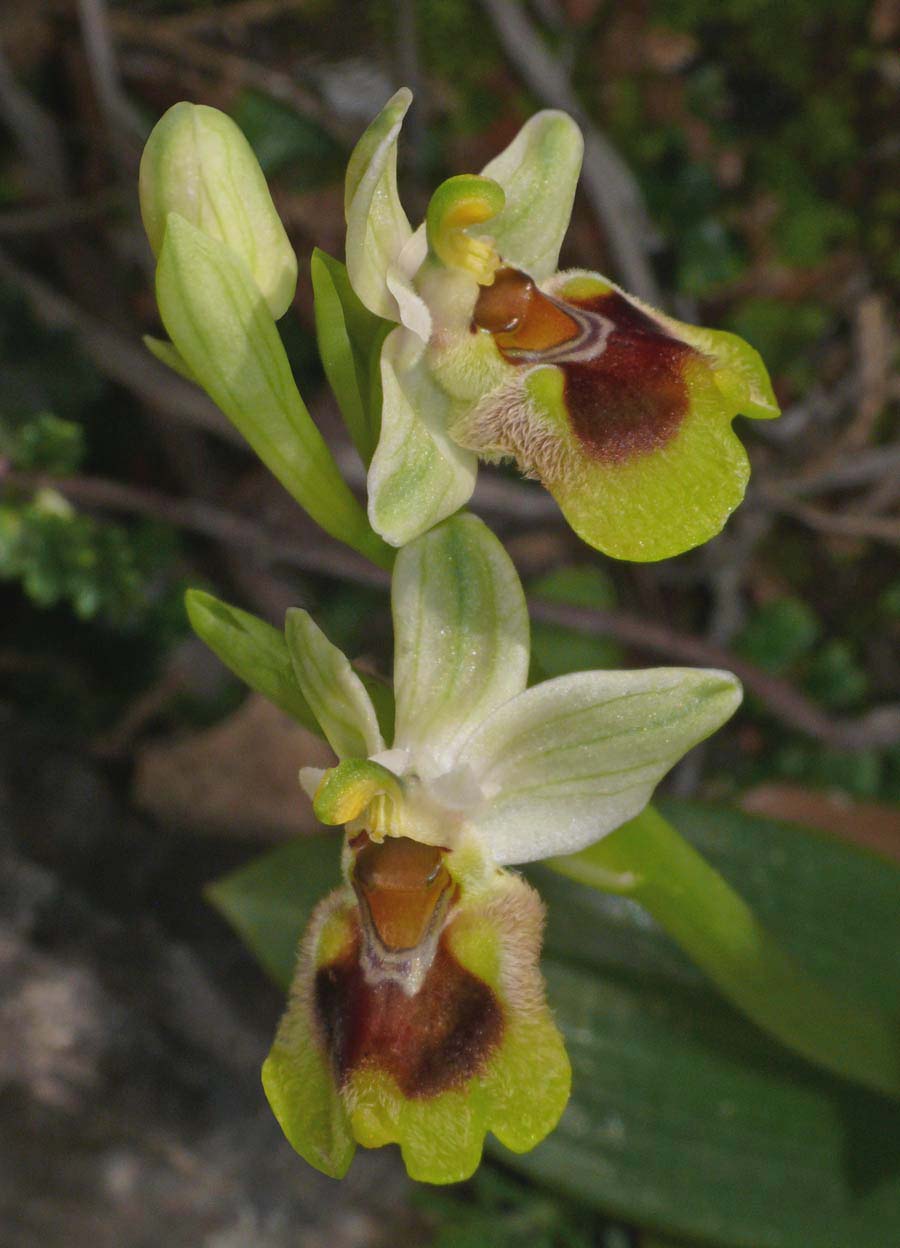
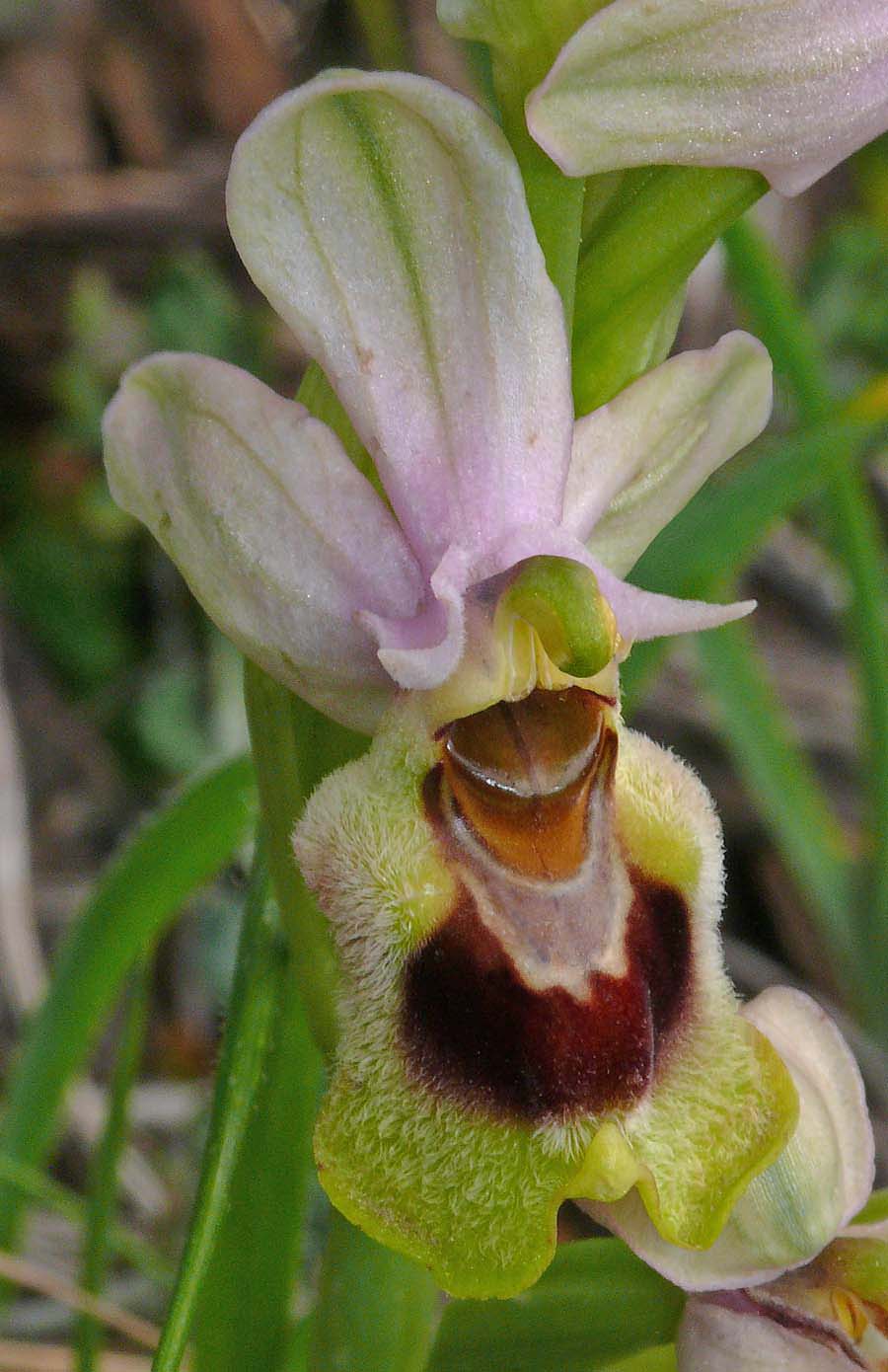
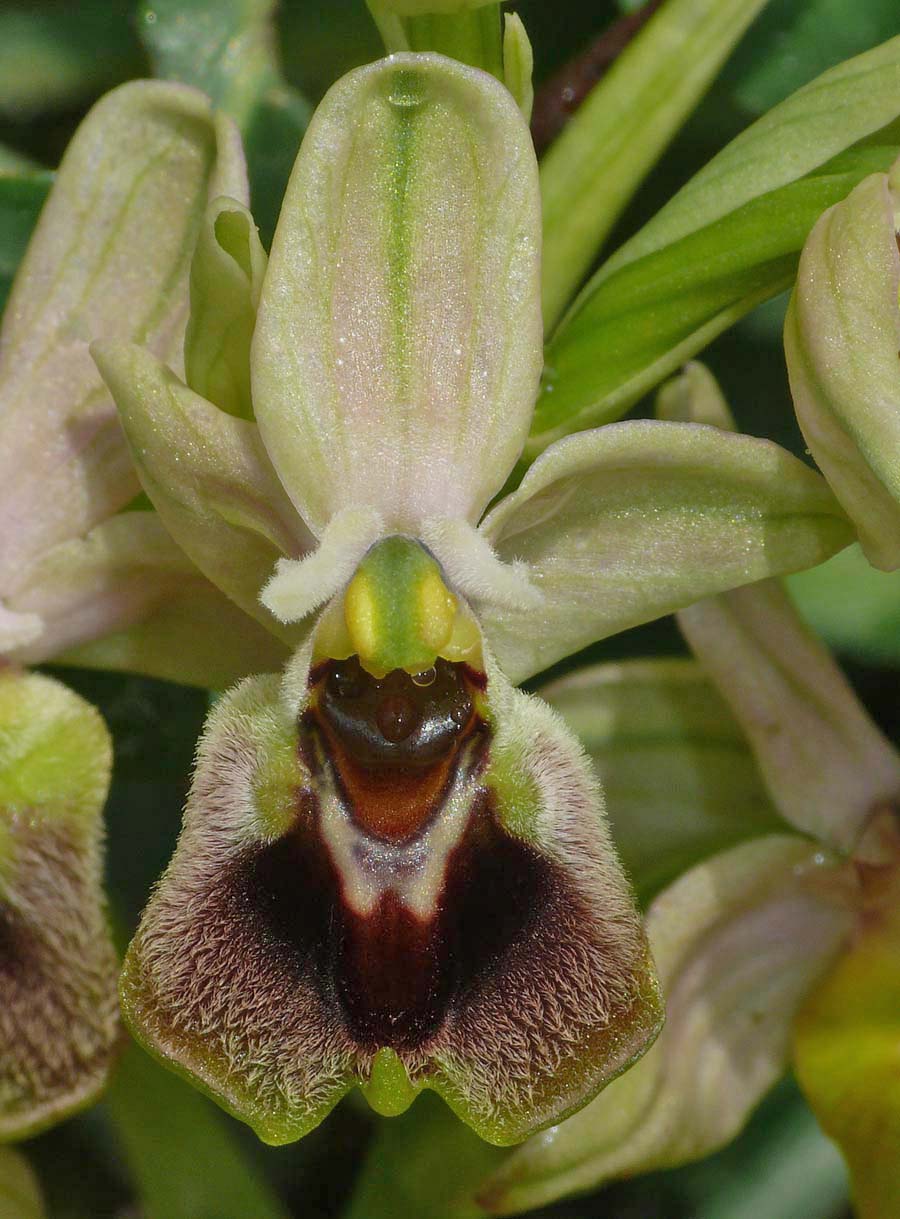
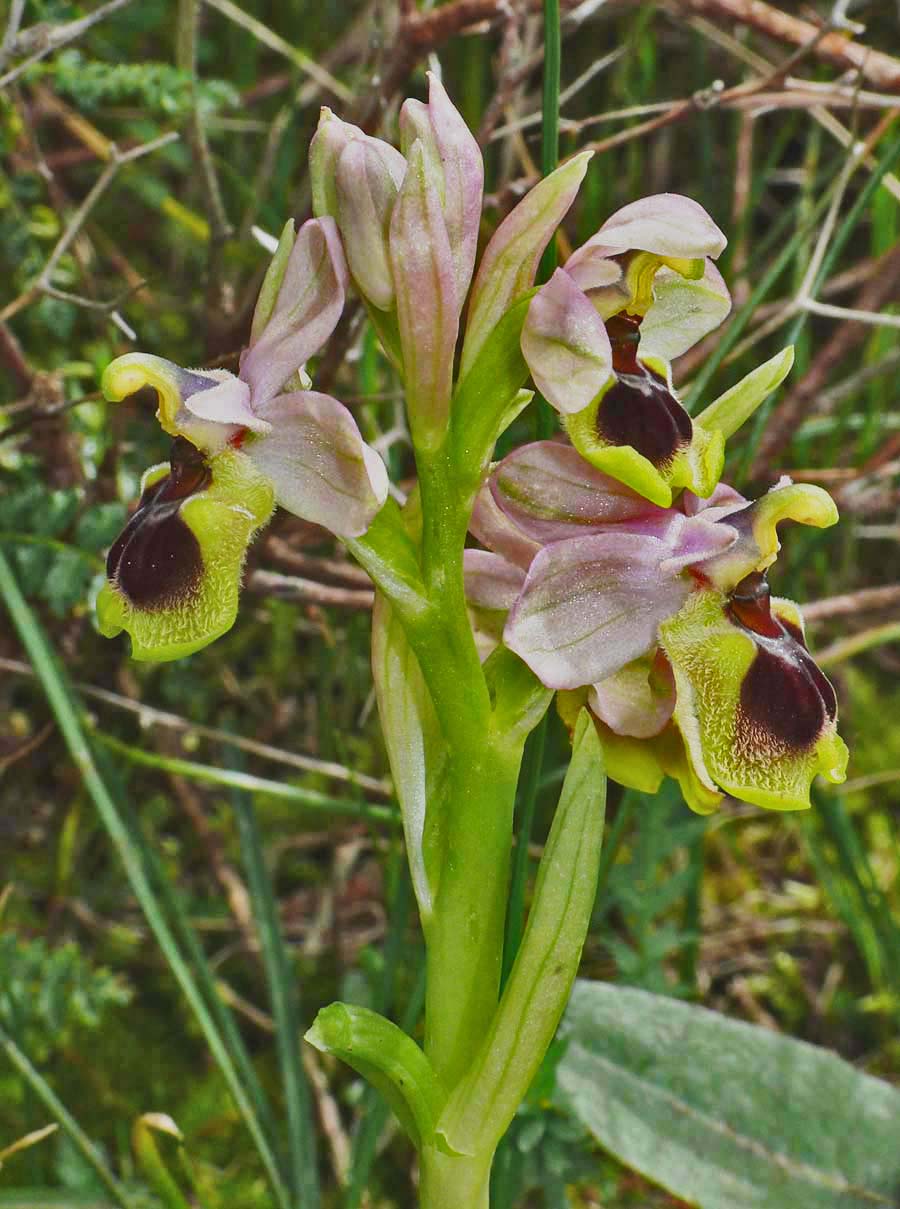
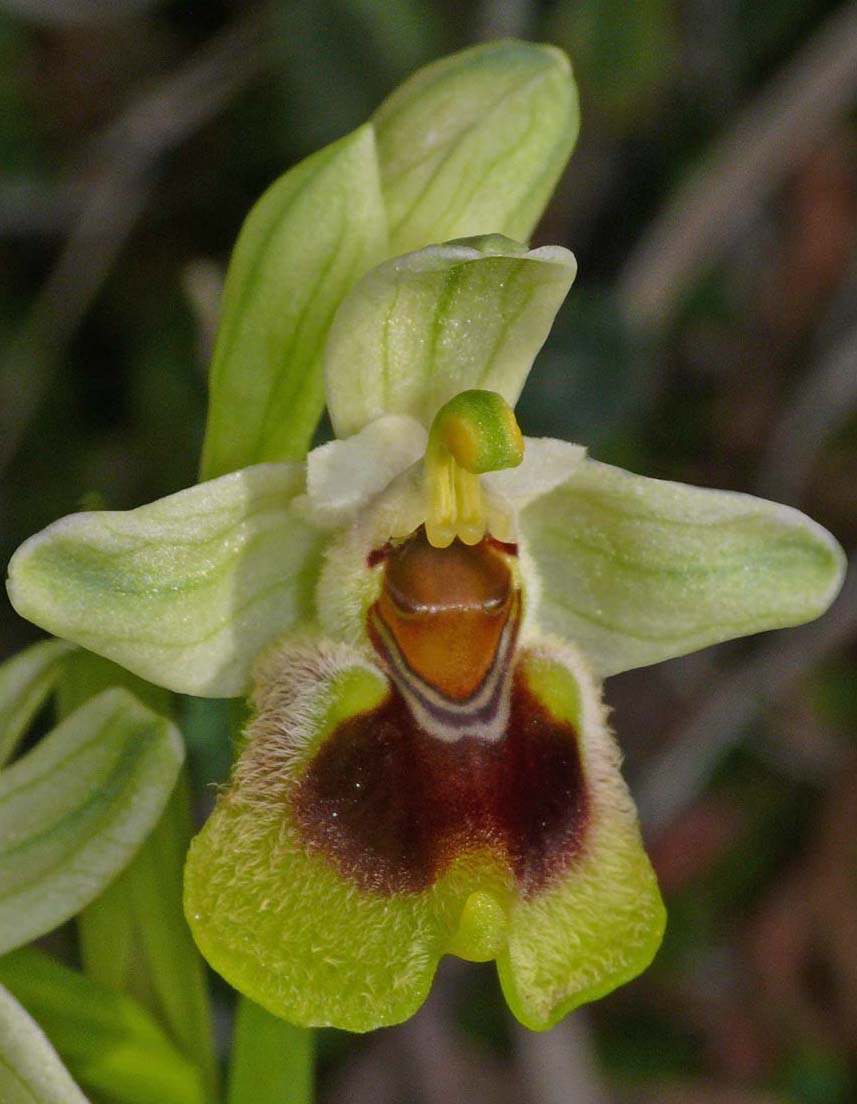
O. dictynnae is not small, being similarly proportioned to O. leochroma, with but with lighter coloured sepals that range from a very pale green to the palest pink and usually, though not always with concolourous petals. The labellum is generally yellow but dark phase individuals occur quite frequently and there is always a complete band of submarginal hair with a poorly developed tuft above the appendage. The stigmatic cavity is normally choclate brown and the basal field bright orange. A particular feature of the species is the narrowness of the shoulders of the lip. O. dictynnae is widespread across Crete, growing in various calcareous habitat types in both full sun and light shade.
The photos come from several locations around the island, dating from the last week of March, 2019, a year in which most plants were still in remarkably good shape.
Of these new species, O. dictynnae is usually the first to bloom in mid February, followed closely by the equally early flowering O. villosa itself. The former does however have an extended flowering period that takes it through March and into early April, particularly those growing at higher altitudes. This results in some O. dictynnae still being in flower concurrently with the very similar group members O. dimidiata and O. leochroma, which first appear early that month. The four species can be difficult to separate, except that O. dictynnae should be distinguishable by its fading condition at the time these close relatives appear.
O. dictynnae is not small, being similarly proportioned to O. leochroma, with but with lighter coloured sepals that range from a very pale green to the palest pink and usually, though not always with concolourous petals. The labellum is generally yellow but dark phase individuals occur quite frequently and there is always a complete band of submarginal hair with a poorly developed tuft above the appendage. The stigmatic cavity is normally choclate brown and the basal field bright orange. A particular feature of the species is the narrowness of the shoulders of the lip. O. dictynnae is widespread across Crete, growing in various calcareous habitat types in both full sun and light shade.
The photos come from several locations around the island, dating from the last week of March, 2019, a year in which most plants were still in remarkably good shape.