Until the late twentieth century O. calypsus was considered a variety of O. heldreichii but in 1994, Hirth and Spaeth conferred full species status and it was linked with three named varieties, maxima, scolopaxoides and pseudoapulica. These varieties have subsequently been reviewed and renamed O. colossaea, O. cycladeana and O. pseudoapulica respectively.
Whilst these changes have received general albeit not universal acceptance, their distribution within the Aegean basin is not without disagreement. It has been suggested that O. calypsus, once thought to be common on Rhodes, is in fact absent from this island despite its presence on several other of the eastern Aegean islands and southern Turkey. It is postulated that such plants are either O. pseudoapulica or O. colossaea.
O. calypsus is a relatively common Ophrys and it will be no surprise to learn that it was named after the Greek sea nymph Calypso, daughter of Titan and an important character in Homer's Odyssey. (See O. homeri ). Although a somewhat variable species (even within populations) its perhaps one of the easier Ophrys to identify in its typical form.
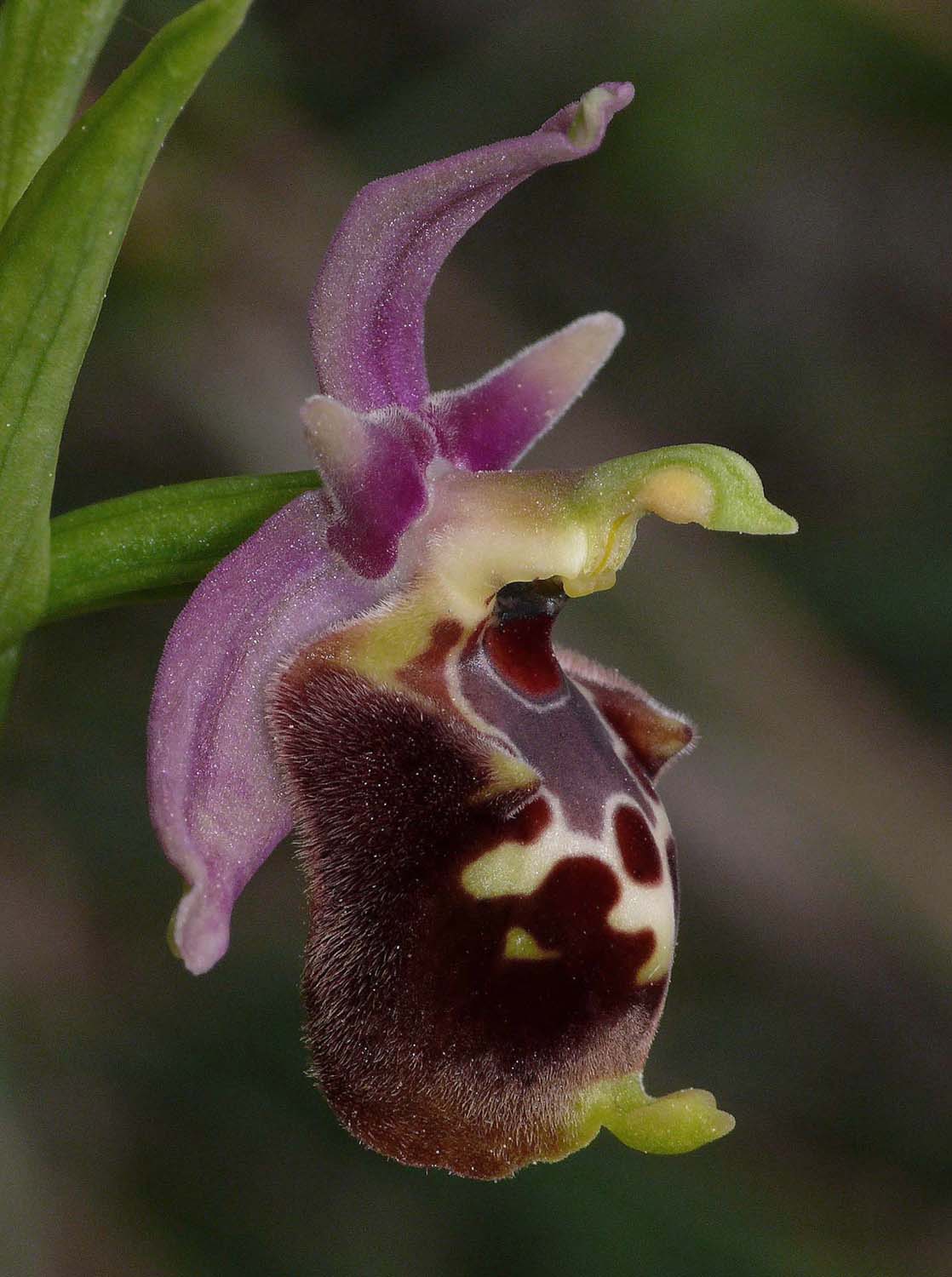
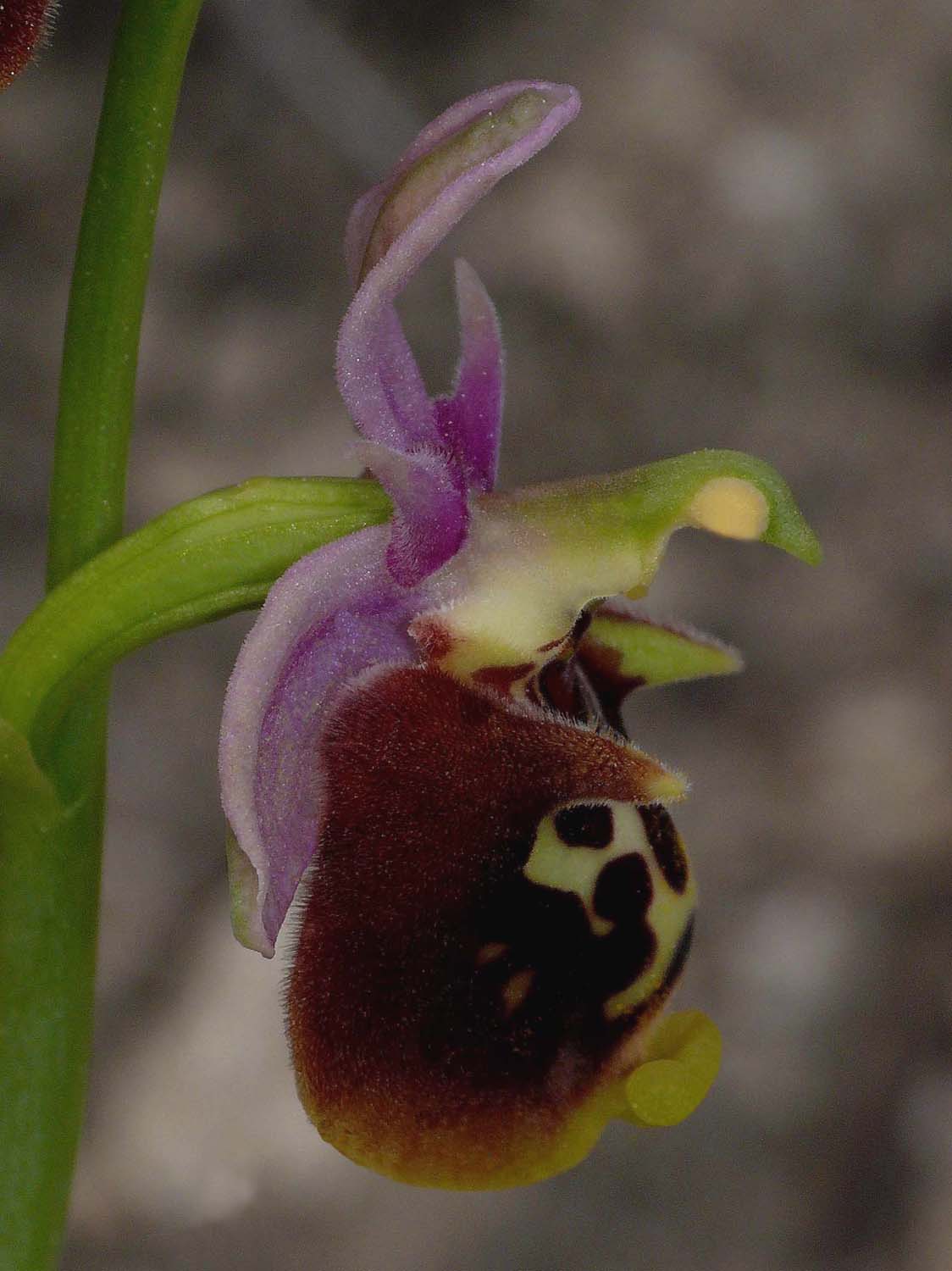
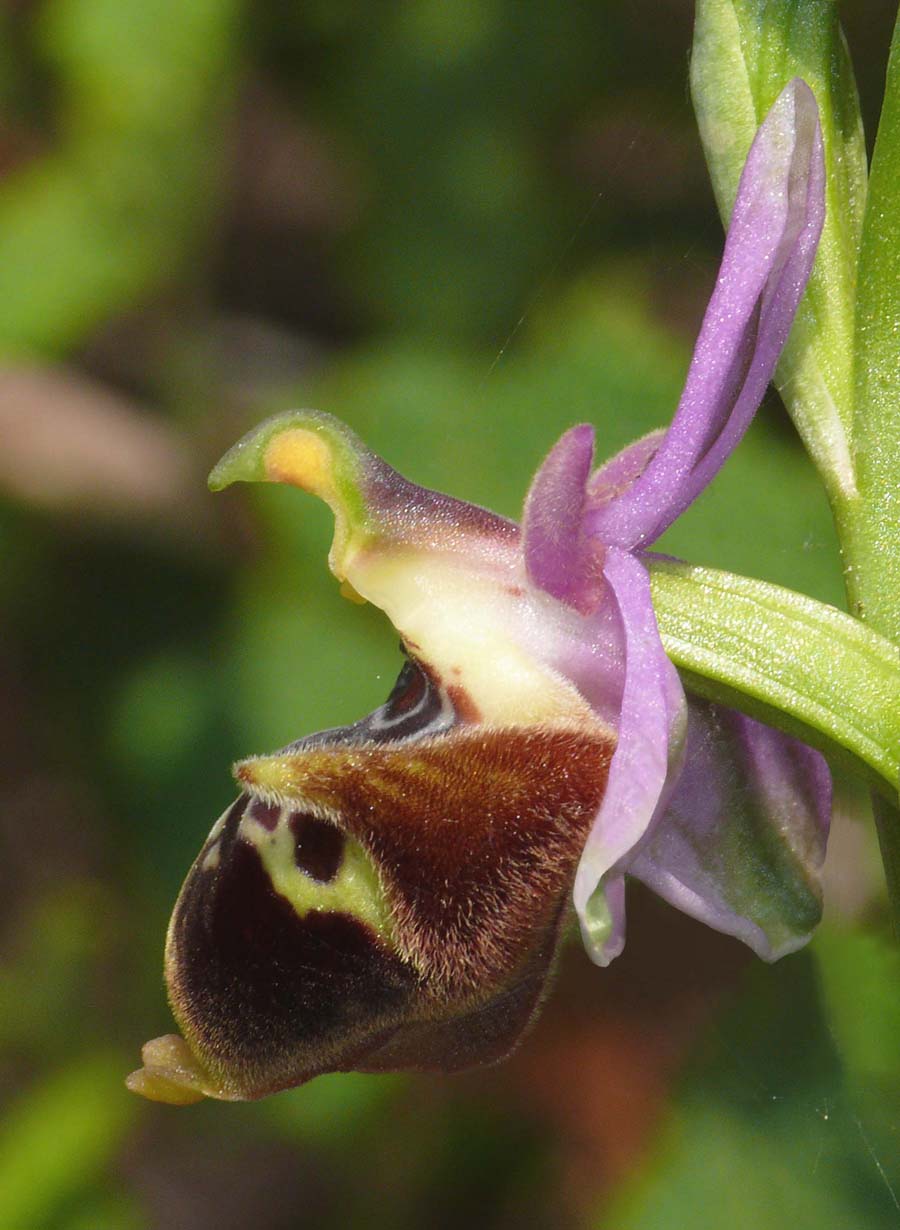
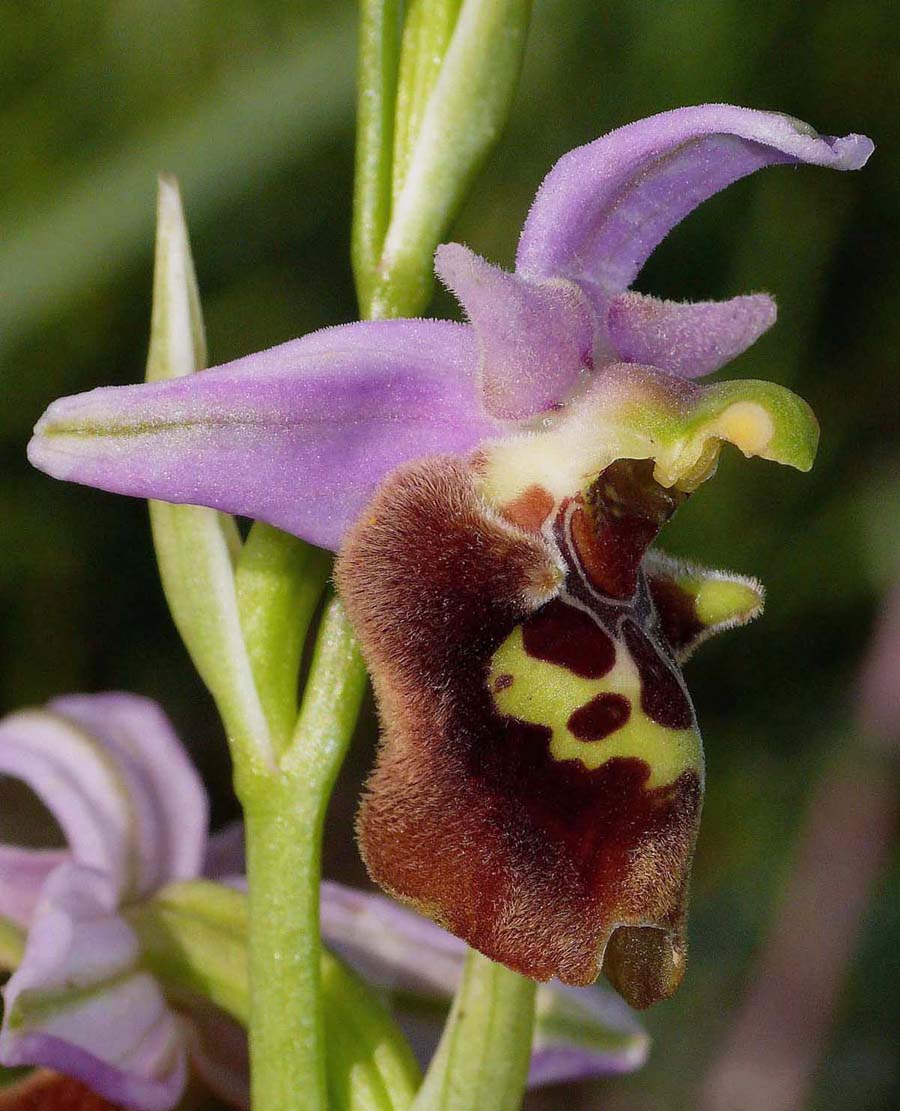
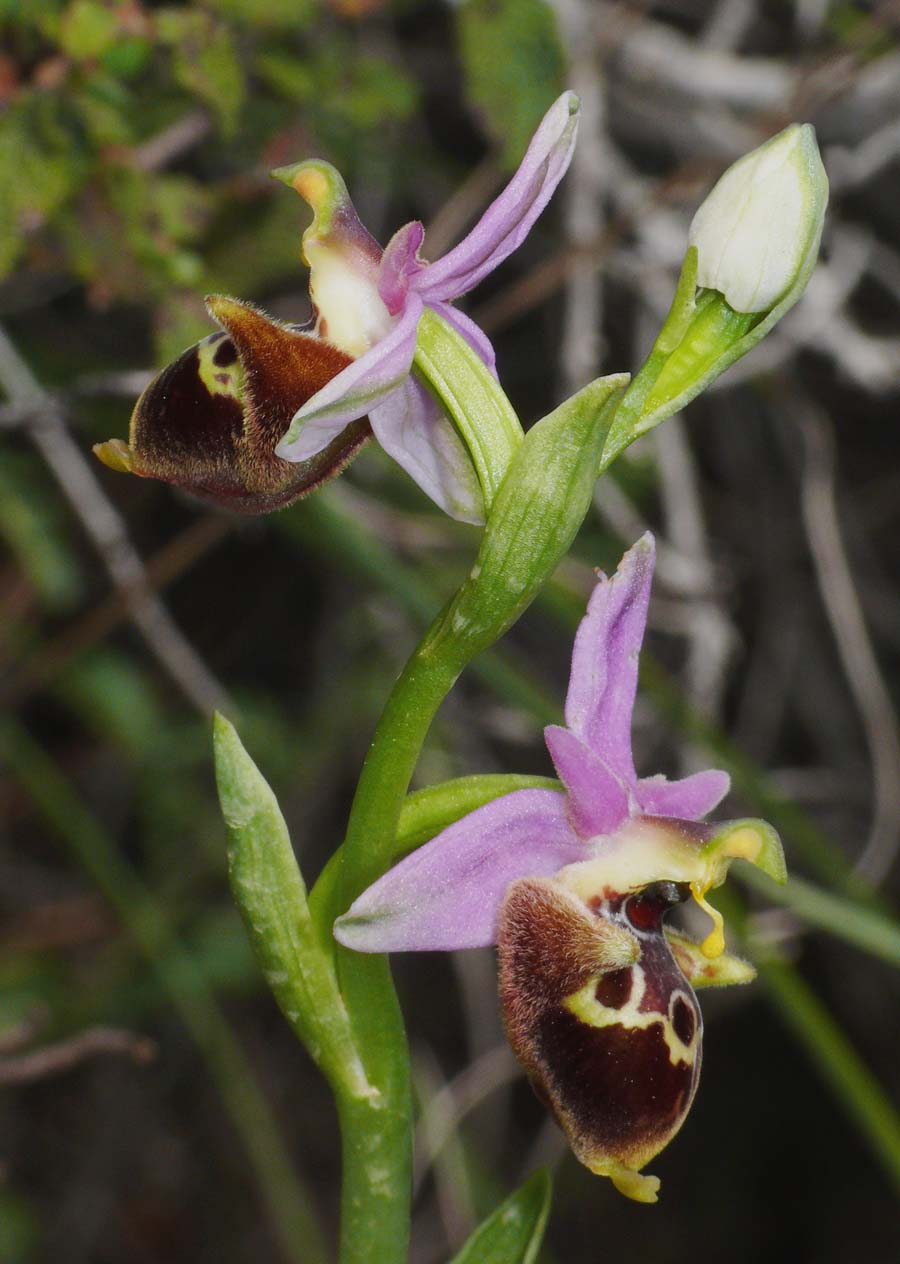
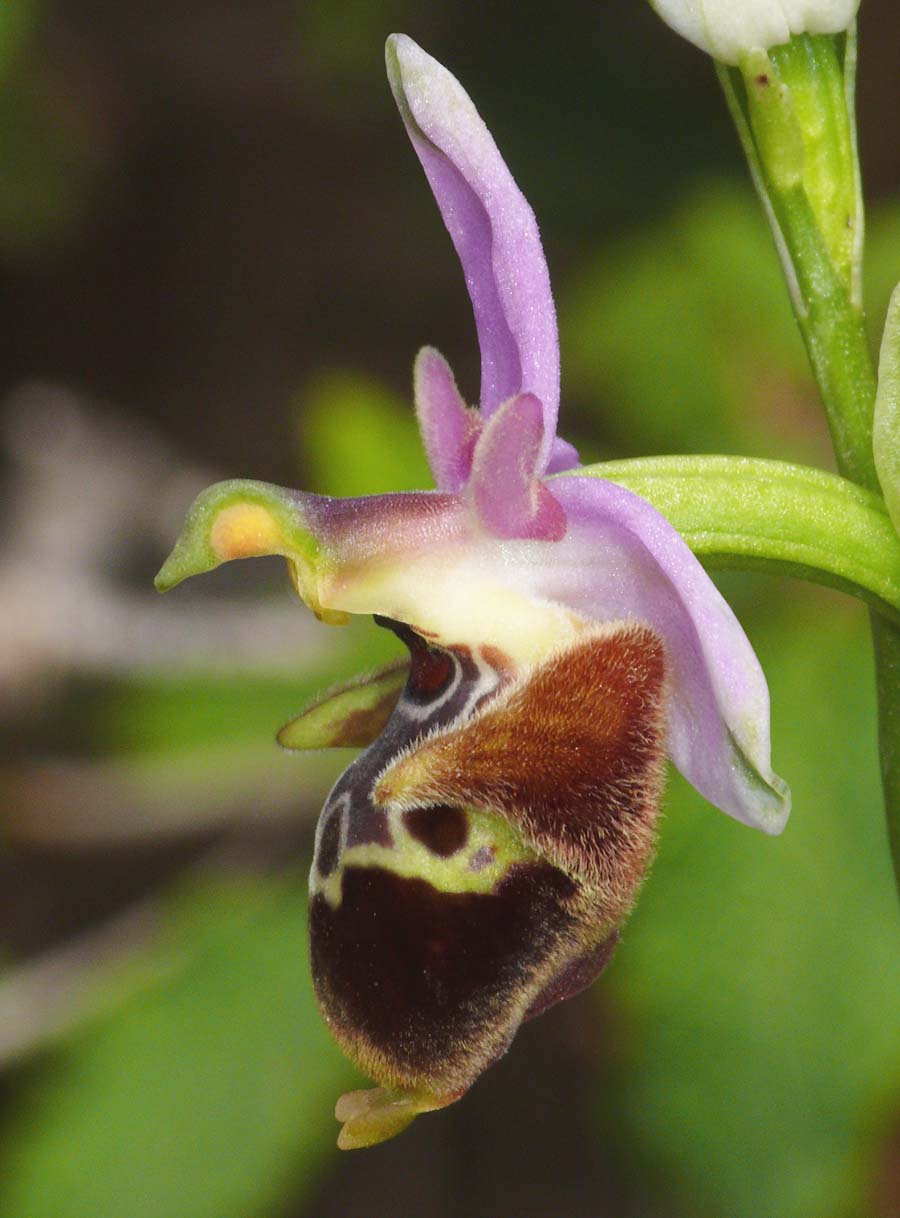
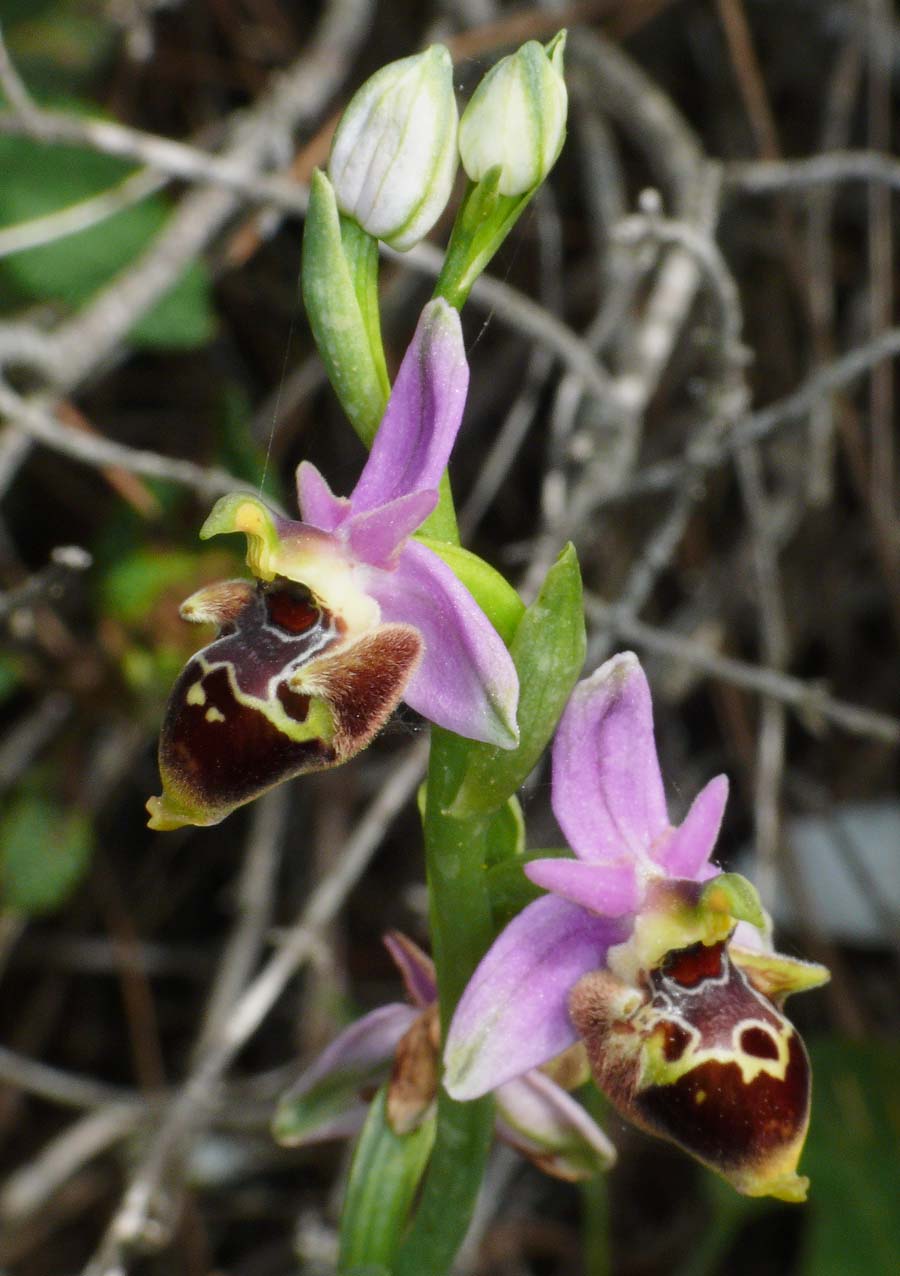
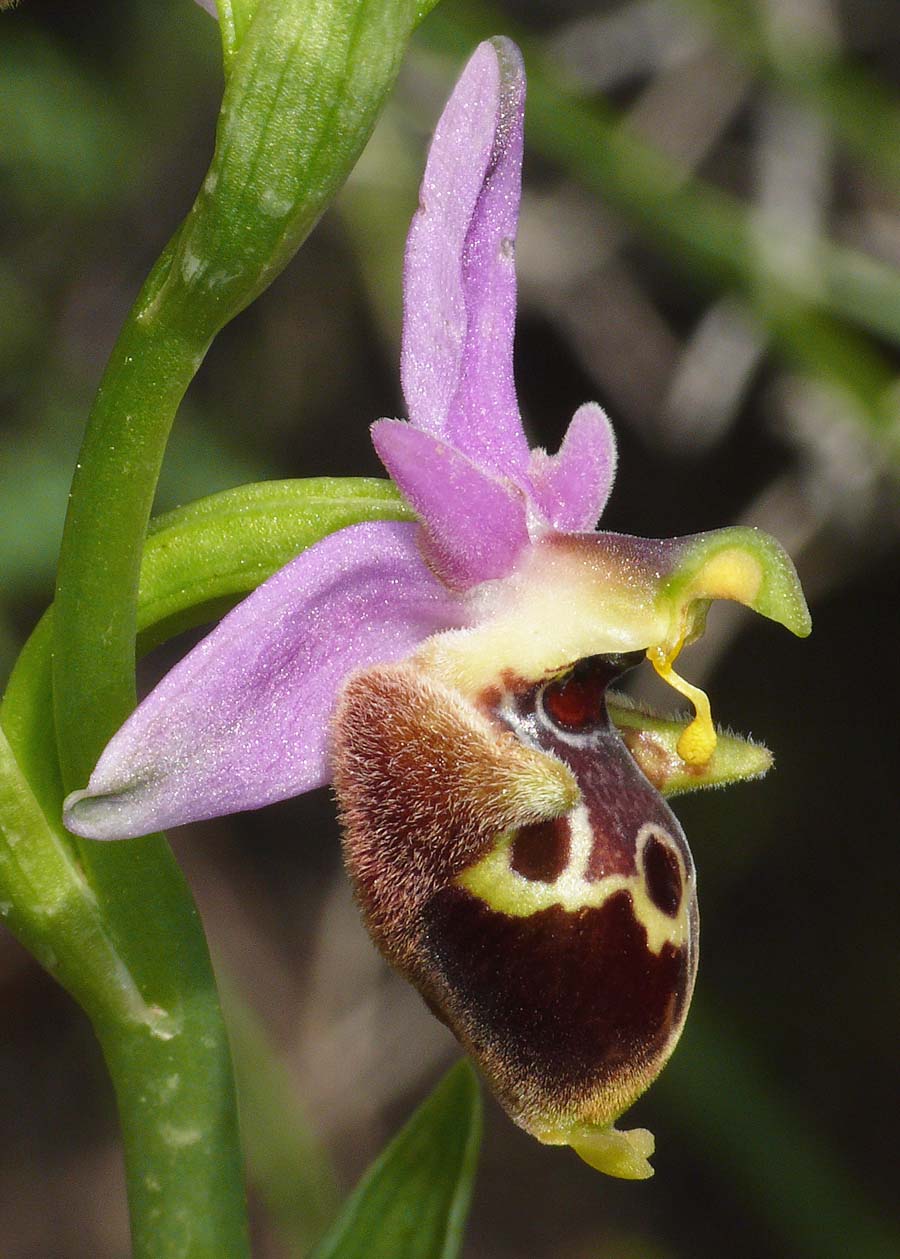
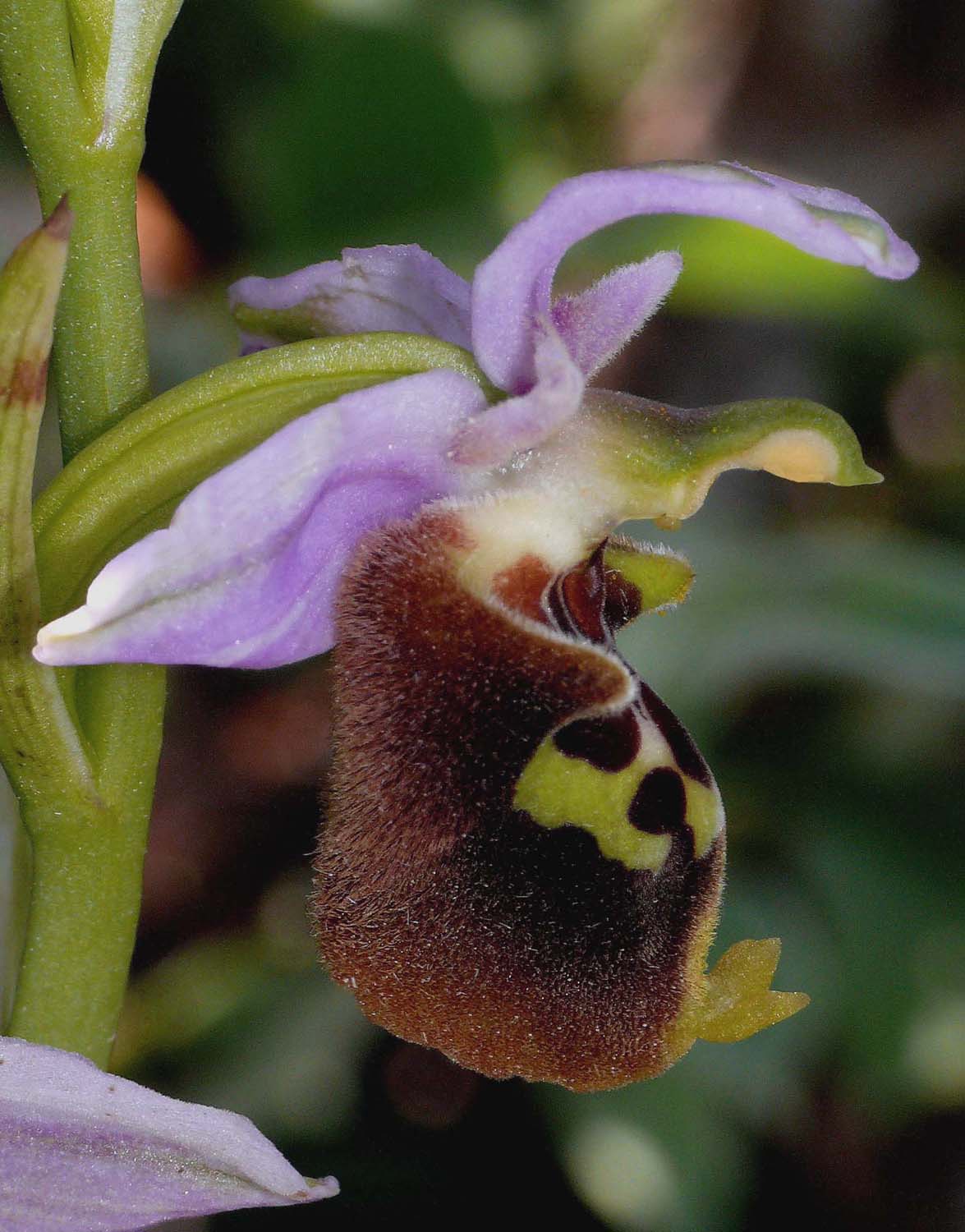
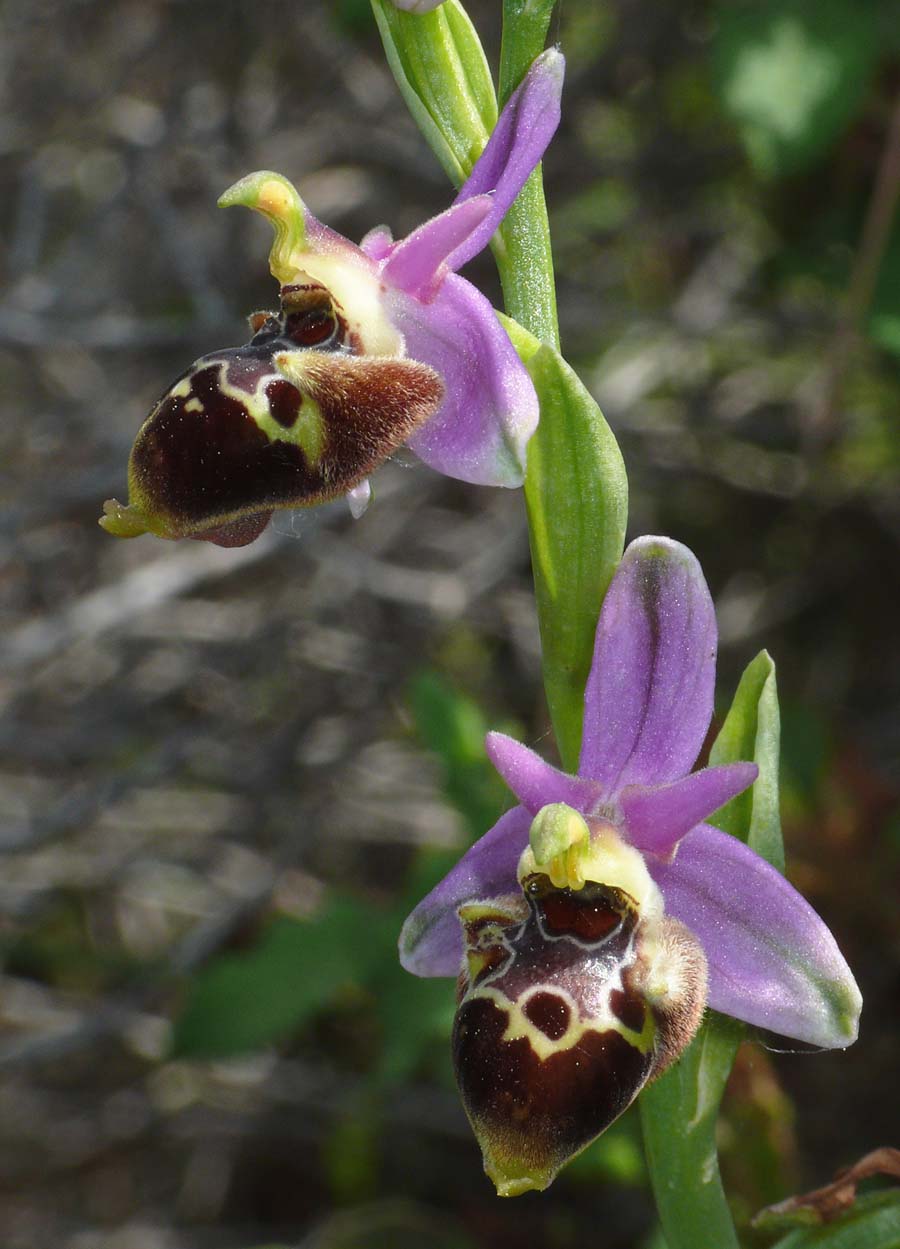
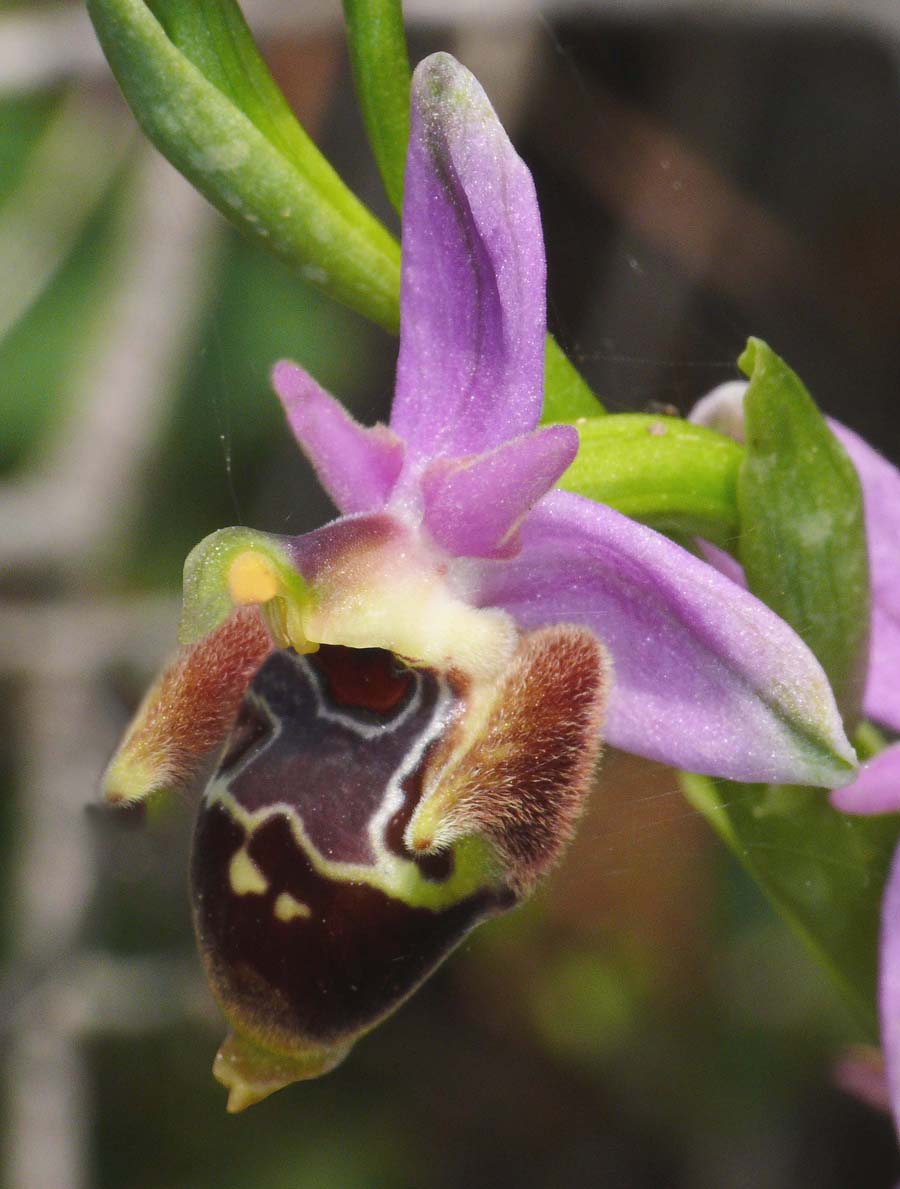
Important distinguishing features are ;- 1. The labellum appears "plump" and rounded with a noticeably low slung waistline. 2. It has a strongly recurved lip ( with a yellow/orange margin) which will often form a pleat at the back but more usually sits like a pair of half closed curtains. 3. It has long petals which are generally concolourous with the sepals and importantly, contiguous at the base.
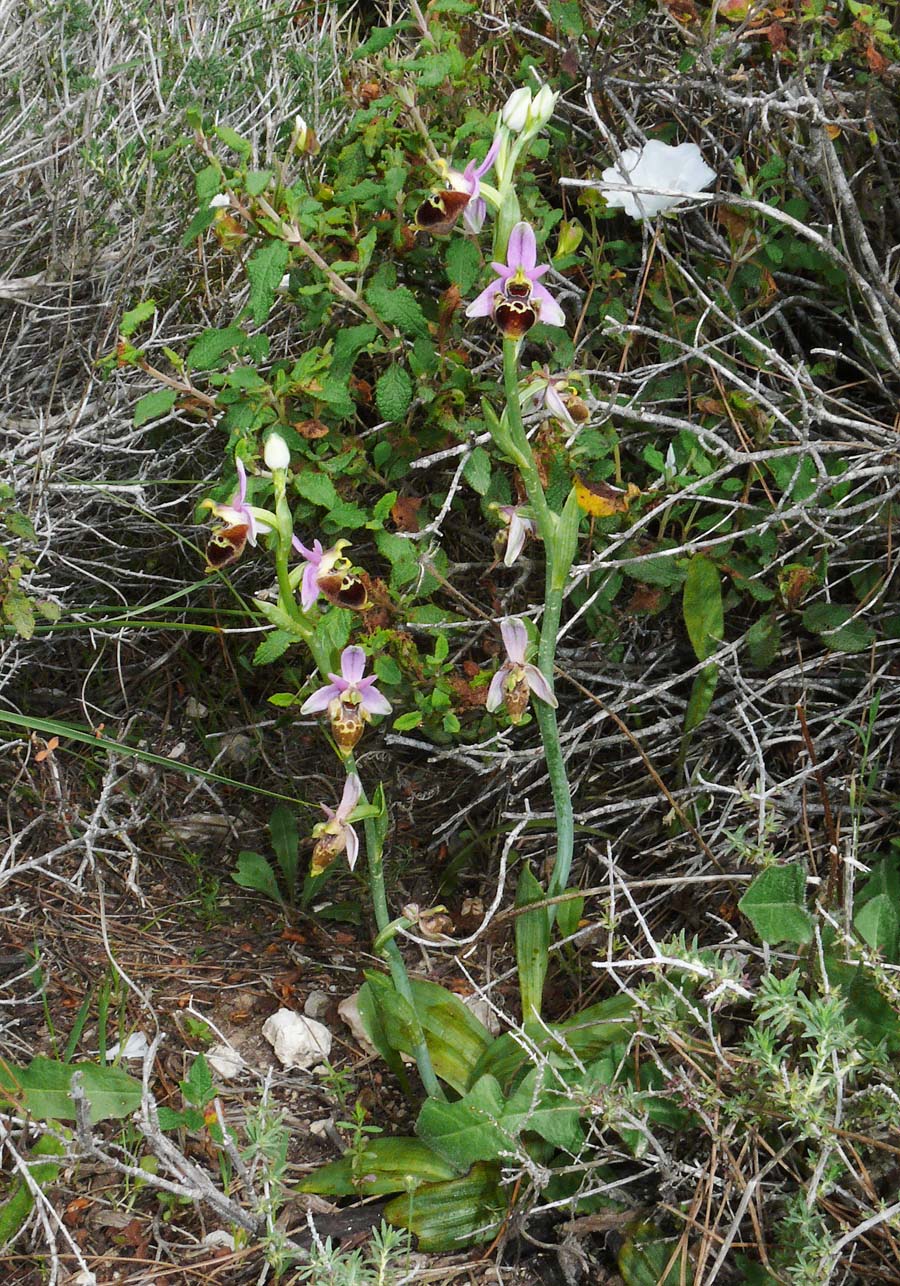
The photos come from the Dodecanese islands of Chios and Kos, dating from the first week of April.
Whilst these changes have received general albeit not universal acceptance, their distribution within the Aegean basin is not without disagreement. It has been suggested that O. calypsus, once thought to be common on Rhodes, is in fact absent from this island despite its presence on several other of the eastern Aegean islands and southern Turkey. It is postulated that such plants are either O. pseudoapulica or O. colossaea.
O. calypsus is a relatively common Ophrys and it will be no surprise to learn that it was named after the Greek sea nymph Calypso, daughter of Titan and an important character in Homer's Odyssey. (See O. homeri ). Although a somewhat variable species (even within populations) its perhaps one of the easier Ophrys to identify in its typical form.
Important distinguishing features are ;- 1. The labellum appears "plump" and rounded with a noticeably low slung waistline. 2. It has a strongly recurved lip ( with a yellow/orange margin) which will often form a pleat at the back but more usually sits like a pair of half closed curtains. 3. It has long petals which are generally concolourous with the sepals and importantly, contiguous at the base.
The photos come from the Dodecanese islands of Chios and Kos, dating from the first week of April.